 Live Chat



.png)





Written by: Joblogic
What is route optimisation software?
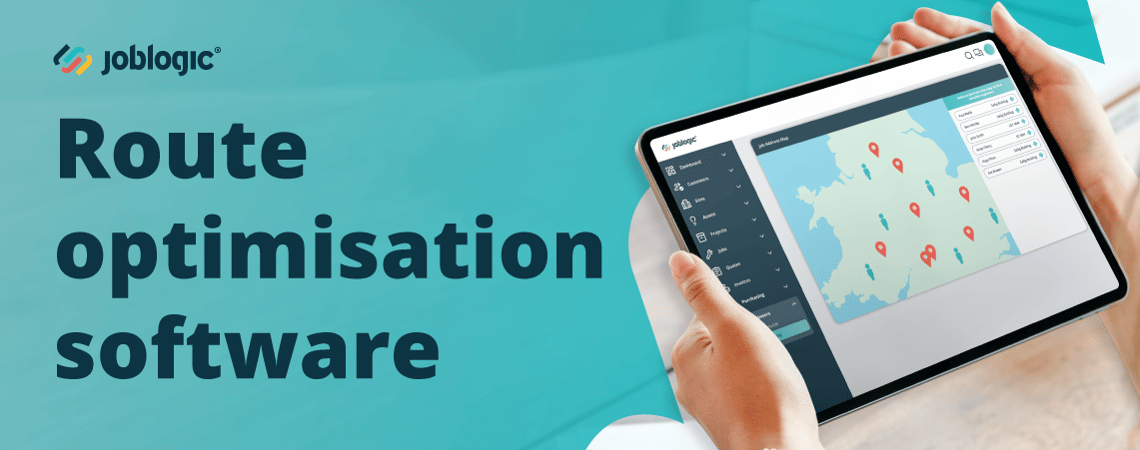
Route optimisation software automatically calculates the most efficient routes for engineers visiting multiple sites in a single day. It factors in real-world constraints including live traffic, job priority, time windows, engineer skills, and vehicle type to produce the most efficient stop sequence possible.
Most sat-nav tools find the shortest path between two points. Route optimisation software evaluates multiple possible stop sequences and selects the order that saves the most time and distance across your schedule.
For field service businesses, that difference is significant. Each wasted mile is a job not completed, a customer kept waiting, and a cost that grows across your fleet every day.
Route optimisation vs route planning
Route planning is the process of mapping a sequence of stops, usually done manually with spreadsheets or a map tool. Route optimisation automates that process entirely, using algorithms to build and update routes based on live data and operational constraints.
| Route planning | Route optimisation | |
|---|---|---|
| Method | Manual | Algorithm-driven |
| Data inputs | Addresses and basic order | Traffic, time windows, skills, vehicle type, job priority |
| Adaptability | Fixed once planned | Adjusts in real time |
| Best for | Low-volume schedules | Multi-stop, multi-engineer operations |
Manual planning works when your job volume is low and your team is small. As daily visits and engineer numbers grow, the variables become too complex to balance by hand, and the gaps in your schedule start to cost you.
How route optimisation software works
Route optimisation software builds routes from data. The cleaner and more current your data, the better the routes it produces.
Inputs that shape every route
Before any route is built, the software draws on several data points:
-
Job locations and priorities: site addresses, SLA deadlines, and urgency levels for each visit
-
Engineer availability and skills: who is working, where they are starting, and what qualifications they hold
-
Vehicle constraints: capacity, type, and any access restrictions for specific sites
-
Time windows: customer-agreed appointment slots or contract response times
-
Live traffic conditions: real-time road data that adjusts routes as the day unfolds
When route optimisation sits inside your job management platform, that data is already structured and current. You are not re-entering information from a separate system. Routes reflect the actual state of your jobs and your team.
This matters particularly for ad-hoc jobs, where the quality of information captured at the point of creation directly affects how accurately the route can be built. If site details, asset information, or SLA requirements are missing or incorrect when a job is raised, the route built around that job will reflect those gaps. Clean job creation leads to better routing decisions.
Real-time adjustments during the working day
Routes are not fixed once the day starts. Built-in route optimisation resequences stops as jobs complete or run long, keeping the rest of the day realistic. For businesses that want the AI to reassign jobs across the whole team automatically, not just resequence one engineer's stops, Dynamic Scheduler, a Marketplace add-on, recalculates allocation across engineers and pushes updated routes to each mobile app.
Either way, your dispatchers do not need to ring round the team. They see the live picture on screen and can reassign work with a click of a button, keeping the rest of the schedule intact.
Benefits of route optimisation for field service teams
Fewer miles driven means lower fuel costs, less vehicle wear, and a lighter carbon footprint across your fleet.
-
More jobs completed per day: less drive time creates capacity for additional visits without adding headcount
-
Better first-time fix rates: the right engineer, with the right skills and parts, reaches the right site on time
-
Protected SLA performance: routes that account for contract response windows mean fewer missed SLAs and fewer awkward conversations about why one came in late
-
Protected contract margin: less wasted drive time means more billable hours per engineer per day, and routes built around job value as well as location help protect profitability on fixed-price contracts
-
Improved customer satisfaction: tighter arrival windows and fewer missed appointments build customer trust
-
Reduced office admin: engineers receive updated routes on their mobile app, so calls back to the office drop significantly
-
Fleet optimisation: with less reactive rerouting and clearer mileage data, fleet managers can plan vehicle maintenance and report on usage with greater accuracy
The more engineers you run and the more visits they make each day, the bigger the return. A single hour saved per engineer per day adds up quickly across a fleet of 20 or 30, and so does a single avoided SLA breach across a book of contracts.
Route optimisation in practice for service and maintenance businesses
Most content on route optimisation focuses on logistics and delivery. Field service operations carry a different set of challenges: engineers carry specialist tools, jobs vary in duration, reactive callouts disrupt planned schedules, and contract SLAs drive response times.
Here is how route optimisation applies across common field service scenarios:
-
Planned preventive maintenance (PPM): visits are grouped by geography and engineer skill set, reducing cross-town travel between recurring site appointments. For businesses running PPM contracts, this also supports the mobilisation stage, where visit schedules need to reflect realistic travel times and engineer availability from the outset
-
Reactive and emergency work: urgent callouts slot into the existing day's schedule without dismantling it, with routes recalculating around the new visit
-
Multi-trade operations: engineers with different qualifications, such as electrical, HVAC, or plumbing, are matched to the right jobs, with routes built around those skill constraints
-
Subcontractor coordination: third-party engineers reach sites efficiently without duplicating visits already covered by in-house teams. When subcontractors are assigned clear job scopes with accurate site details and access information, routing works as intended and failed visits are less likely
-
Multi-site FM contracts: routes are built around SLA tiers per site, so the sites closest to breach get priority, not just the sites that happen to be closest geographically
Route optimisation delivers the most value when it is part of the platform managing your jobs, assets, compliance, and invoicing. A standalone routing app requires manual data entry, creates handoffs between tools, and introduces errors. When routing and scheduling share the same data, your plans reflect what is actually happening on the ground.
Why Joblogic is route optimisation software built for UK field service
Joblogic provides route scheduling and optimisation tools for UK field service businesses, alongside job scheduling, mobile engineer updates, live job visibility, customer communication, and reporting within its wider Field Service Management platform. For FM and contracts teams managing SLAs across multiple sites, that means routes are built with contract performance in mind from the outset, not bolted on as an afterthought. Because routing sits alongside jobs, engineer availability, skills, priorities, and location data, teams can plan routes using operational information already held in Joblogic rather than copying details between separate tools.
For your engineers in the field, updated routes, job details, asset histories, and compliance forms arrive directly on their mobile app. The app works offline, so engineers can keep working on site without a signal. Data syncs automatically once connectivity is restored.
For your office team, the platform includes:
-
Live GPS tracking: see every engineer's location overlaid on a map and make reassignments without phone calls
-
Drag-and-drop scheduling: move jobs between engineers and time slots quickly, with the route planner updating automatically
-
SLA and contract tracking: performance against SLA per site, so routing decisions can be weighted toward the contracts most at risk
-
Job costing: labour, materials, and travel time tracked against each job, so you can see whether tighter routing is actually moving the margin needle on a contract
-
Automated customer alerts: SMS and email notifications keep customers informed of arrival times, cutting no-access visits
-
Reporting and dashboards: track travel time, jobs completed, and fleet mileage to identify where further gains are available
With over 45,000 users across more than 7,000 businesses, the platform is built for the scale and complexity that real field service operations face every day. If you want to see how route optimisation fits into your current workflow, book a demo and one of our specialists will walk you through the platform.
Frequently asked questions
What is the difference between route optimisation software and fleet management software?
Route optimisation software focuses on calculating efficient multi-stop routes for engineers throughout the working day. Fleet management software is broader, covering vehicle maintenance records, compliance checks, fuel tracking, and driver performance alongside routing.
Can route optimisation software handle same-day emergency callouts without disrupting the existing schedule?
Yes. When a new emergency job comes in, the software recalculates affected routes in real time and pushes the updated schedule to the relevant engineer's mobile app. Visits that are unaffected stay in place.
Is route optimisation software suitable for businesses running only a few engineers?
It can be, but the return grows with scale. Businesses running 10 or more engineers across multiple daily visits typically see the clearest gains in fuel costs, time, and job capacity.
How does route optimisation reduce the number of no-access visits?
When engineers are routed more efficiently, estimated arrival times become more accurate. Automated customer alerts sent as the engineer travels give customers enough notice to be ready on site, which reduces the proportion of visits where no one is available to provide access.
Does route optimisation software work for businesses running engineers across different trades?
Yes. Route optimisation software accounts for engineer skills and qualifications as a constraint when building routes. A job requiring a gas-safe qualified engineer, for example, will only be routed to someone who holds that qualification, not just the nearest available person on the schedule.
Can route optimisation help protect SLA performance on multi-site contracts?
Yes, when SLA data sits inside the same system as the route planning. Response windows and risk of breach per site feed directly into how routes are built, rather than SLA tracking living in a spreadsheet the scheduler never sees. That link is what lets routing prioritise by contract risk rather than by job order or geography alone.