 Live Chat



.png)





Written by: Joblogic
Asset lifecycle management (ALM) tracks and manages a physical asset from purchase through to disposal or replacement, covering every major decision point along the way: when to acquire, how to maintain, and when to retire equipment.
For service and maintenance businesses, ALM answers a practical question: do you know the condition, cost, and compliance status of every asset you are responsible for, across every site, right now? If the answer involves digging through spreadsheets or calling engineers for updates, the lifecycle is being guessed at, not managed.
The goal of ALM is to give you a single, structured view of each asset's history, condition, and cost. When that view is complete and current, commercial and operational decisions are based on evidence rather than instinct.
The key stages of asset lifecycle management
ALM follows four stages: planning and procurement, deployment and operation, maintenance and performance, and renewal or disposal. Understanding what happens at each stage helps you identify where information gaps are quietly costing your business time and money.
Planning and procurement
Planning is where the lifecycle begins, and where many businesses underinvest. Before an asset is purchased, you need to know why it is needed, which contract or site it supports, and what maintaining it will cost over its working life.
Effective planning covers:
- Need identification: why the asset is required and which contract or site it supports
- Total cost of ownership: upfront purchase price combined with ongoing maintenance and parts costs
- Compliance requirements: any inspection schedules, certifications, or service level agreements (SLAs) tied to the asset
- Procurement: selecting, purchasing, and registering the asset in a central system with complete records
Getting this right sets up every stage that follows. If an asset is poorly specified or not recorded correctly at purchase, those gaps appear later during audits, contract reviews, or unexpected failures.
Deployment and operation
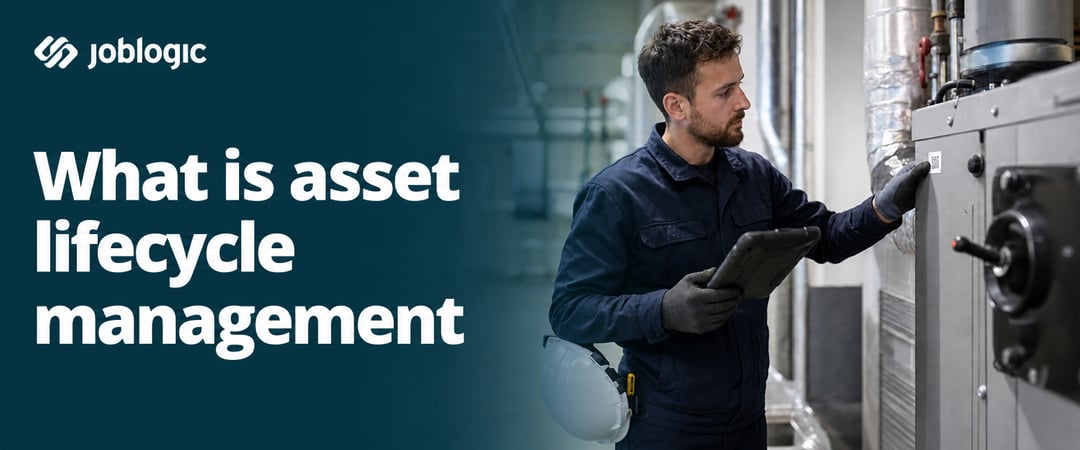
Deployment is when the asset is installed, commissioned, and put into active service. This includes tagging the asset with a QR code or label, recording its location and condition, and assigning it to the relevant site or contract.
How you set up an asset at deployment shapes the quality of every data point collected after it. A missing serial number or incorrect site assignment makes maintenance history harder to retrieve later, and when an ad-hoc job is raised against that asset, engineers arrive on site without the preparation they need.
Getting this stage right protects the asset's commercial value across its full working life, not just the paperwork trail behind it.
Maintenance and performance
This is the longest stage of the lifecycle and where most of the day-to-day effort sits. Maintenance covers both planned preventative maintenance (PPM), which are scheduled visits defined in the contract, and reactive repairs triggered by a failure or fault.
Tracking maintenance history at asset level is where most of the commercial value sits. When every job, part, and visit is linked back to a specific asset, patterns become visible: which assets are generating repeat callouts, which are costing more to maintain than they are worth, and where compliance certificates are approaching expiry.
Good maintenance tracking covers:
- PPM scheduling: automated visit schedules tied to each asset and contract
- Reactive work logging: every callout recorded against the specific asset, not just the site
- Condition monitoring: condition data captured through asset surveys at each visit to build a performance history over time
- Compliance checks: inspections and certifications kept current and auditable across every site, whether that's Gas Safe, F-Gas, or NICEIC depending on the asset type
Renewal and disposal
Every asset eventually reaches a point where repair costs outweigh the value of keeping it in service. Disposal covers decommissioning the asset, arranging safe recycling or removal, and planning for what replaces it.
For service businesses, disposal also carries compliance responsibilities. Electrical and electronic equipment must be disposed of through a licensed waste carrier or specialist recycler under WEEE duty-of-care rules, alongside any contractual obligations to the client or secure data destruction for connected equipment.
A clear audit trail from acquisition to disposal protects you during client reviews and formal audits. What you learn from one asset's disposal should also feed directly into how you plan, specify, and procure the next one.
Why asset lifecycle management matters
The cost of poor ALM rarely appears all at once. It builds gradually: a contract's margin tightening month by month, compliance certificates edging toward expiry without anyone noticing, engineers returning to the same asset repeatedly with no clear picture of why it keeps failing.
This pattern is common in businesses that rely on reactive maintenance and disconnected records. The data exists somewhere, but it is spread across job sheets, engineer notes, and separate systems that were never designed to work together. By the time the problem is visible, it has already had commercial consequences.
The risk is not purely operational. If you cannot demonstrate a clear maintenance and compliance record for an asset during an audit or contract renewal, you are exposed. Clients expect that record to exist and to be accurate; they should not have to ask for it.
A structured lifecycle approach shifts the balance from reactive to planned. You spend less time firefighting individual failures and more time using asset data to make decisions, such as when to replace rather than continue repairing, or which contracts are delivering the margins you expected when you priced them.
How software supports the asset management process
Asset lifecycle management software brings every stage of the lifecycle into one system. It replaces disconnected spreadsheets and paper records with a single system that both office staff and field engineers can access and update.
For a Contract Manager overseeing assets across multiple sites, this kind of visibility changes how the working day feels. Without it, answering a simple question, such as which assets are generating the most reactive callouts this quarter, requires manually piecing together records from systems that were never built to communicate with each other.
The right asset lifecycle solutions give you:
- A centralised asset register: every asset recorded with location, condition, maintenance history, and linked contracts
- Automated PPM scheduling: visits generated automatically based on contract terms and compliance deadlines
- Mobile access for engineers: asset details, job history, and compliance forms available on-site through a mobile app, including offline
- Real-time reporting and dashboards: visibility into asset performance, costs, and compliance status across the entire estate
- Audit-ready records: a complete trail from acquisition through every maintenance event to disposal
An asset lifecycle manager using Joblogic can see the full history of any asset across any site without making a single phone call. Engineers scan a QR code on-site to pull up asset records and complete compliance forms through the mobile app, with all updates feeding back to the office in real time. When a reactive job comes in, the asset is already linked, so engineers arrive prepared rather than having to piece together history on the doorstep.
That live connection between field and office is where the asset management process stops being a record-keeping task and starts becoming a tool for running the business more confidently.
Bring asset lifecycle management into one system
When planning, maintenance, compliance, and disposal records all sit in a single asset register, you spend less time chasing information and more time acting on it. A Contract Manager gets a clear view across every site and client without depending on engineers to report back or office staff to manually consolidate updates.
Speak to one of our specialists about your asset estate specifically. They can show you what an audit-ready record looks like for one of your own assets, not a demo script.
Frequently asked questions
Here are answers to questions that often come up after understanding the basics of ALM.
What is the difference between ALM and a Computerised Maintenance Management System?
A Computerised Maintenance Management System (CMMS) focuses specifically on managing maintenance work orders and scheduling. ALM is broader: it covers the full lifespan of an asset from procurement through to disposal, with a CMMS supporting the maintenance and performance stage within it.
Who is responsible for managing the asset lifecycle in a service business?
Responsibility typically sits with an Operations Director or Contract Manager, though engineers, office staff, and finance teams all contribute data at different stages. The asset lifecycle manager role brings those contributions together into a single, coherent view.
How does asset-level tracking improve contract renewal conversations with clients?
When every repair, inspection, and part is recorded against a specific asset, you can show a client exactly what has been done, when, and at what cost. That level of detail supports pricing conversations and gives clients confidence in the service record before they commit to a renewal.
How do you decide when to replace an asset rather than continue repairing it?
When cumulative repair costs approach or exceed the replacement value, or when repeat failures start affecting service delivery, replacement is usually the better commercial decision. Asset-level cost tracking makes this clear before the asset becomes a critical problem.
What information should be recorded when an asset is first added to the system?
At minimum: the asset type, location, serial number, linked contract or site, installation date, and any compliance requirements or inspection schedules attached to it. The more complete the initial record, the more useful the asset's full history becomes over time.