Live Chat



.png)





Written by: Admin
The top 35 tools for HVAC businesses in 2026
Keeping commercial and residential HVAC units operational takes more than just a skilled workforce. To work efficiently and deliver the standard your customers expect, engineers need the right tools, from everyday essentials to advanced equipment.
We’ve put together a list of 35 essential tools your engineers need to deliver a professional service.
Our guide covers:
- Essential HVAC tools
- Advanced HVAC tools
- HVAC safety equipment
Essential HVAC tools 
1. Screwdrivers
Simple yet indispensable, screwdrivers are a must-have for any HVAC engineer. Keep a range of screwdrivers and bits on hand so no screw size becomes a problem.
2. Pliers
Pliers are used to handle wires, bolts, and pipework. A range of sizes, including needle-nose pliers, will cover most jobs. An insulated set offers added safety and durability. .
3. HVAC Software
Physical tools get the job done, but HVAC software helps engineers arrive informed and ready to work. Even with the right equipment, jobs take longer when teams are missing key information. From scheduling and quoting through to invoicing,g, HVAC management software helps your business improve efficiency, reduce admin, and deliver a more professional service..

- Give engineers the information they need before they arrive
- Keep scheduling, quoting and invoicing connected in one system
- Improve visibility for customers, engineers and office teams
- Use AI to support faster, better-informed decisions
- Sync financial data with QuickBooks
4. Hammer
A hammer earns its place in an HVAC toolkit through its versatility. For general adjustments and on-site fixes, a standard-sized, lightweight model is usually the most practical choice. Fibreglass construction and an easy-grip handle add durability and convenience.
5. Tape Measure
Accurate measurements are a vital part of HVAC work. We recommend keeping a 25-foot tape measure on hand so your engineers are never caught short.
6. Torch
A reliable torch helps engineers inspect heating and air conditioning systems clearly, especially in dark spaces. A head torch is useful for hands-free working.
7. Spanners
Having a range of spanners on hand helps improve first-time fix rates. Fixed, adjustable, crescent, and pipe spanners should all be part of your toolkit.
8. Step Ladder
Often overlooked but never underused, a lightweight 4-foot step ladder is ideal for jobs that require extra height.
 9. Cutters
Metal and tubing cutters are a must for tougher materials. Quarter-inch and half-inch cutters are a good starting point, with a wider range needed as your engineers take on more varied work.
10. Drills
A cordless, battery-powered drill is a must for HVAC engineers. A spare charged battery helps keep jobs moving in the field.
11. Refrigerant Scale
A refrigerant scale is used to measure the amount of refrigerant being added to or removed from a system. This increases accuracy, helping engineers get the job done right first time.
12. Gauges
AA must-have for air conditioning work, refrigeration gauges measure pressure across different types of refrigerant and can also help identify leaks. Brands such as Testo and Fieldpiece are widely used in HVAC work for their reliability in the field.
13. Extension Cords
Extension cords increase an engineer’s working range. A durable, easy-to-carry cord of around 50 feet gives engineers more flexibility without adding too much weight.
14. Staple Gun
Keep a staple gun in your engineer’s toolbox to secure joists and foil lines to increase airflow.
Knowing the essential tools your engineers need is one thing, but understanding the challenges your HVAC business faces is what really helps you prepare. Our HVAC eBook looks at the key pressures affecting the industry and how service businesses can stay ahead.
Advanced HVAC Tools 
Beyond the basics, advanced tools help engineers handle more technical jobs with greater accuracy and control. They are typically used for specialist diagnostics, repairs, and maintenance, making them a worthwhile investment for businesses that want to deliver reliable service and keep customer systems performing at their best..
15. Thermometer
Temperature control is central to HVAC work. A portable, durable digital thermometer helps engineers take accurate readings and complete jobs with confidence.
16. Core Removal
Used when removing and replacing broken valve cores, a core removal tool makes the job safer and more efficient.
17. Coil Fin Straightener
Used on air conditioning units with dirty or bent coils, a coil fin straightener helps clear debris and restore airflow by cleaning and straightening the fins.
18. Multimeter
EElectricity demands precaution. A multimeter helps engineers carry out safe, accurate checks when testing for electricity and measuring voltage. Without it, engineers risk incorrect diagnosis and potential safety hazards when working with live components. Brands such as Fluke are widely trusted for reliable electrical testing in the field.
19. Saw
A reciprocating saw is one of the most dependable cutting tools for HVAC work. It handles a wide range of materials on site, with regular blade changes helping to keep cuts clean and efficient.
20. Caulking Gun
A dripless caulking gun helps engineers seal air ducts and fill gaps cleanly. Keeping it in good working condition helps avoid unnecessary rework.
21. Pumps
A HVAC vacuum pump is used to remove moisture from the lines before charging the system. Moisture left in the system can cause performance issues, internal damage and long-term system failure, so a pump with enough power is essential.
22. Nitrogen Regulator
A nitrogen regulator reduces highly pressurised gas into a safe, usable flow. Without one, gas can be released too quickly, creating safety risks and reducing control on the job.
23. Leak Detector 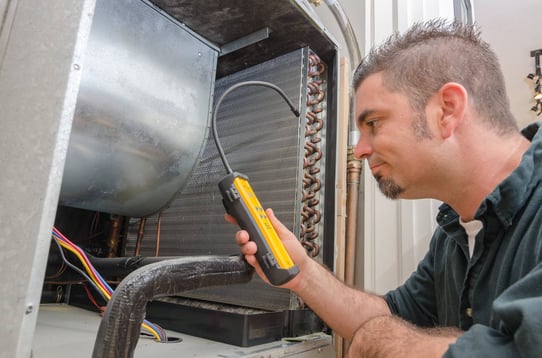
Leaks are time-consuming and can be dangerous. A leak detector helps engineers identify where a system is compromised, improving safety, reducing delays and catching small leaks before they turn into repeat faults or return visits.
24. Psychrometer
A psychrometer helps engineers measure airflow, air mixtures and humidity within an HVAC system. It gives engineers a better understanding of the environmental conditions affecting performance, not just the unit itself.
25. Hand Seamers
Hand seamers allow engineers to bend and flatten sheet metal on site, reducing the need for larger equipment or off-site work. This helps keep jobs moving efficiently.
26. Crimper
A crimper helps engineers shape metal for connection to the next section of piping. This makes it easier to create clean, secure joins on site.
27. Awl
The awl is used to score sheet metal so HVAC field staff can cut it straight. It is also versatile enough to be used on both wood and metal when needed.
28. Thermal Imaging Tools
Accuracy plays a big role in both productivity and customer satisfaction. Knowing exactly what the issue is improves both, and thermal imaging tools help engineers find faults faster by reducing guesswork. Testo is one of the brands commonly used for reliability in field conditions.
29. Flushing Solvent
Ageing refrigeration lines are more likely to develop blockages and contamination. Flushing solvent helps clear the line quickly, keeping systems efficient and reducing the risk of ongoing performance issues.
30. HVAC Mobile App
Even with the right tools, engineers can lose time when they arrive without the right information. An HVAC mobile app helps them get to site informed, on time and ready to capture proof of work, while keeping field and office teams connected with compliance built into every step.

- Receive new work orders to their mobile device.
- Access key job and site information before arrival.
- Capture proof of work, notes, and photos on site.
- Complete forms, signatures, and payments digitally.
- Send updates back to the office in real time.
The right tools support better work in the field, but growth depends on the systems behind them. Take our benchmarking quiz to see how your HVAC business compares across efficiency, visibility, and readiness to scale.
HVAC Safety Equipment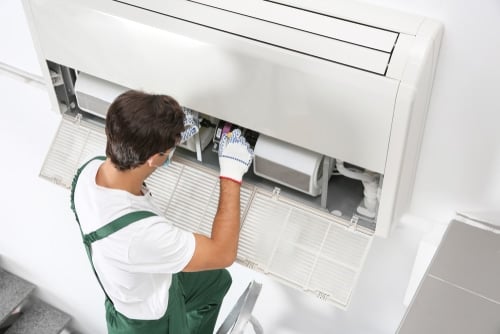
On any HVAC job, keeping people safe on site should always come first. Alongside the tools needed to complete the work, engineers also need the right safety equipment to reduce risk and work confidently on site.
31. Gloves
HVAC engineers wear gloves every day, so they need to be both protective and practical. A durable pair should provide enough thickness for safety, while still allowing the dexterity needed to handle smaller tools.
32. Masks
Masks help protect engineers from dust, debris, and other airborne particles on site. Keeping a supply on hand means they are ready when needed.
33. Goggles
Your engineers’ eyes are too important to leave unprotected. Goggles help keep them free from irritants, while magnification makes smaller components easier to see clearly.
34. Earplugs
Prolonged exposure to loud power tools can damage hearing over time. Industrial-strength earplugs help protect your engineers when working in noisy environments.
35. Shoes
HVAC engineers move between different job sites and surfaces every day, so the right footwear is essential for both safety and comfort. Steel-toe boots help protect against slips, falling objects and the general demands of site work.
Having the right HVAC tools in your inventory improves engineer performance and customer experience. To see how Joblogic can help you build a more efficient HVAC operation, book a demo today.