
The part that is not on the van
An engineer arrives and the part the job needs is in the stores or on another van, so the visit comes back as a second visit.
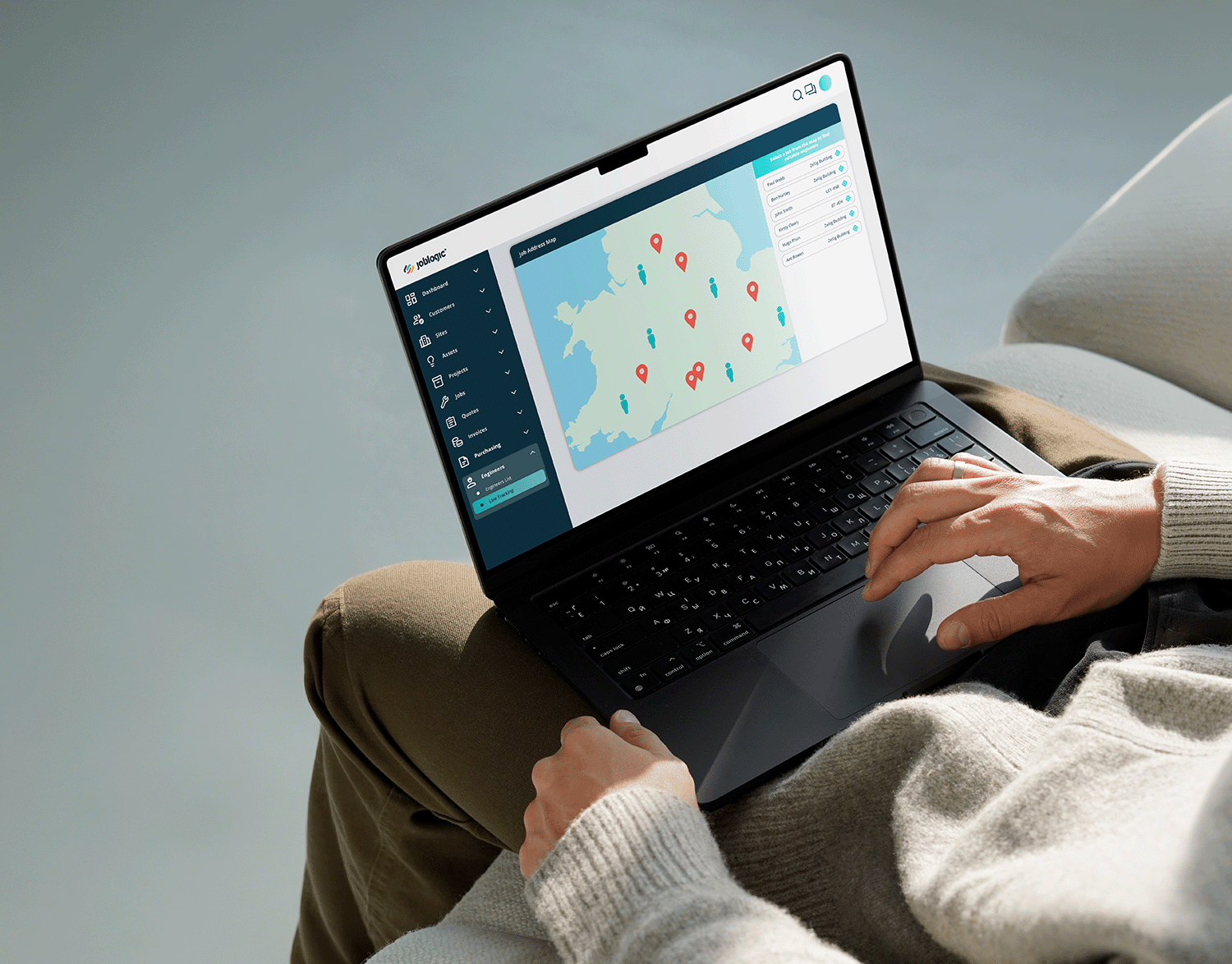
For stock managers
You can’t control stock you can’t see. Parts go out without being booked to a job, vans run short of the one part an engineer needs, and the same purchase order gets raised twice. Each one costs you time, money, and a return visit.
Joblogic tracks every part against the van that carries it and the job that uses it, so you know what’s where, what’s been used, and what needs reordering, without chasing engineers for answers.
The cost of poor stock control rarely shows up as stock. It shows up as a second visit, a rushed order or a job margin that does not add up.
An engineer arrives and the part the job needs is in the stores or on another van, so the visit comes back as a second visit.
Stock leaves for a job and does not get booked against it, so the job cost looks lower than it was and the count is wrong.
Purchasing runs on what someone remembers is low, not on what has actually been used, so you over-order one line and run out of another.
Without parts booked to jobs, the margin figures finance reports on are built on incomplete costs.
One system for parts, purchasing and jobs, so stock is booked as it is used and costs follow it.
Raise and track purchase orders from the system that already knows what jobs need, so ordering follows demand instead of memory.
Parts booked to a job feed straight into its cost, so the margin that finance reports reflects what was actually used.
Engineers record the parts they use from their phone as they work, so stock is booked at the point of use, not remembered later.
See usage and costs across jobs and teams on one dashboard, without compiling it by hand.
Parts booked to jobs mean job cost is complete, so margin is visible before you invoice.
See how job margin gets trackedParts and usage logged once, on the job, so the numbers match across the business.
See how stock records stay in one placeStock booked from the phone on site, not written up afterwards.
See how parts get booked from the phoneOrdering, job and invoice linked, so nothing is re-keyed between systems.
See how purchasing connects to the jobOne view of jobs and engineers, so you know what parts the day needs.
See the job and parts viewReports on margin built from the parts costs you book, using the same completed job records.
See how it helps finance managersTracks the vans that carry your stock, so vehicle location and stock location tell one story.
See how it helps fleet managersSchedules the jobs that your stock has to serve, from the same job data.
See how it helps operations managersParts-heavy servicing and callouts across heating, cooling and refrigeration work.
See how it works in HVACRSeasonal demand and reactive callouts that depend on the right parts being to hand.
See how it works in plumbing, heating and drainageMaterials used across many small jobs that need booking to the right one.
See how it works in electricalParts and materials across many sites and contracts, booked to the job that used them.
See how it works in facilities managementThe same booking, purchasing and costing holds whether you stock one store or several vans and sites.
Each van’s parts are booked to jobs the same way, so adding vehicles does not mean adding guesswork.
Parts usage is recorded on every job, so volume does not erode the accuracy of your costs.
New sites work from the same purchasing and costing, so stock reporting stays in one place.
Yes. The mobile engineer app records the parts used on the job as the work happens, so stock is booked at the point of use.
Yes. Parts booked to a job feed into its cost, so job costing and margin reporting reflect what was actually used.
Yes. Purchase order software sits in the same system as your jobs, so ordering can follow what the work needs.
Yes. The dashboard draws on the same job data, so you can view usage and cost by job, team or the whole operation.
Yes. Costs sit against the job record that finance already invoices from, so both teams work from the same figures.
Joblogic integrates with accounting platforms including Xero, Sage and QuickBooks, alongside API access for other systems. Confirm your specific stack with us directly.
Yes. The same booking and costing structure holds whether you run one store or several vans across sites.
It depends on the number of vans, sites and how much stock data needs migrating. A named implementation lead scopes your data and integrations before go-live.
Thirty minutes on your own stock flow: parts booked from the van, purchase orders that follow demand, and costs that reach the job.