No single view of what each lift is due
Passenger lifts need thorough examination every six months, escalators and hoists on their own cycles, spread across a portfolio of buildings. Without one record, you can’t say what’s compliant today.
Elevator & Escalator
Lift and escalator maintenance runs on two clocks: the six-monthly thorough examination that never moves, and the entrapment callout that can’t wait. Certificates end up in vans and inboxes, so nobody in the office can say what’s covered, overdue, or still a live defect.
Joblogic gives lift service managers, schedulers, and finance teams one record for every LOLER thorough examination, entrapment callout, and defect, tied to the exact lift or escalator it covers, so certificates stay current and remedial work reaches an invoice.
Certificates go missing, entrapment callouts collide with the planned round, and remedial work never reaches an invoice.
Passenger lifts need thorough examination every six months, escalators and hoists on their own cycles, spread across a portfolio of buildings. Without one record, you can’t say what’s compliant today.
A trapped passenger doesn’t wait for a slot in the diary. Send an engineer to every entrapment and the six-monthly round is the thing that ends up overdue.
Traction, hydraulic, MRL lifts and escalators are different disciplines. Send the wrong engineer and you pay for the visit twice, once by someone who shouldn’t have been on site.
A thorough examination flags a defect, the report gets filed, and you’re left chasing whether the remedial work actually happened, or whether it’s still sitting there unresolved.

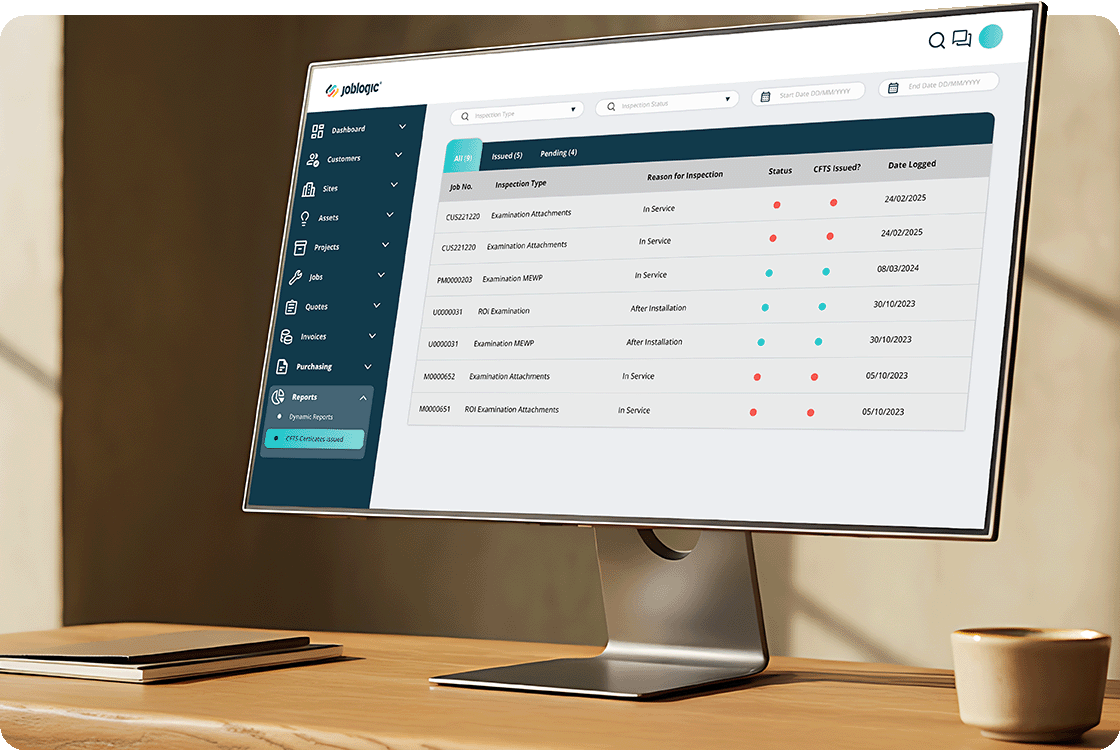
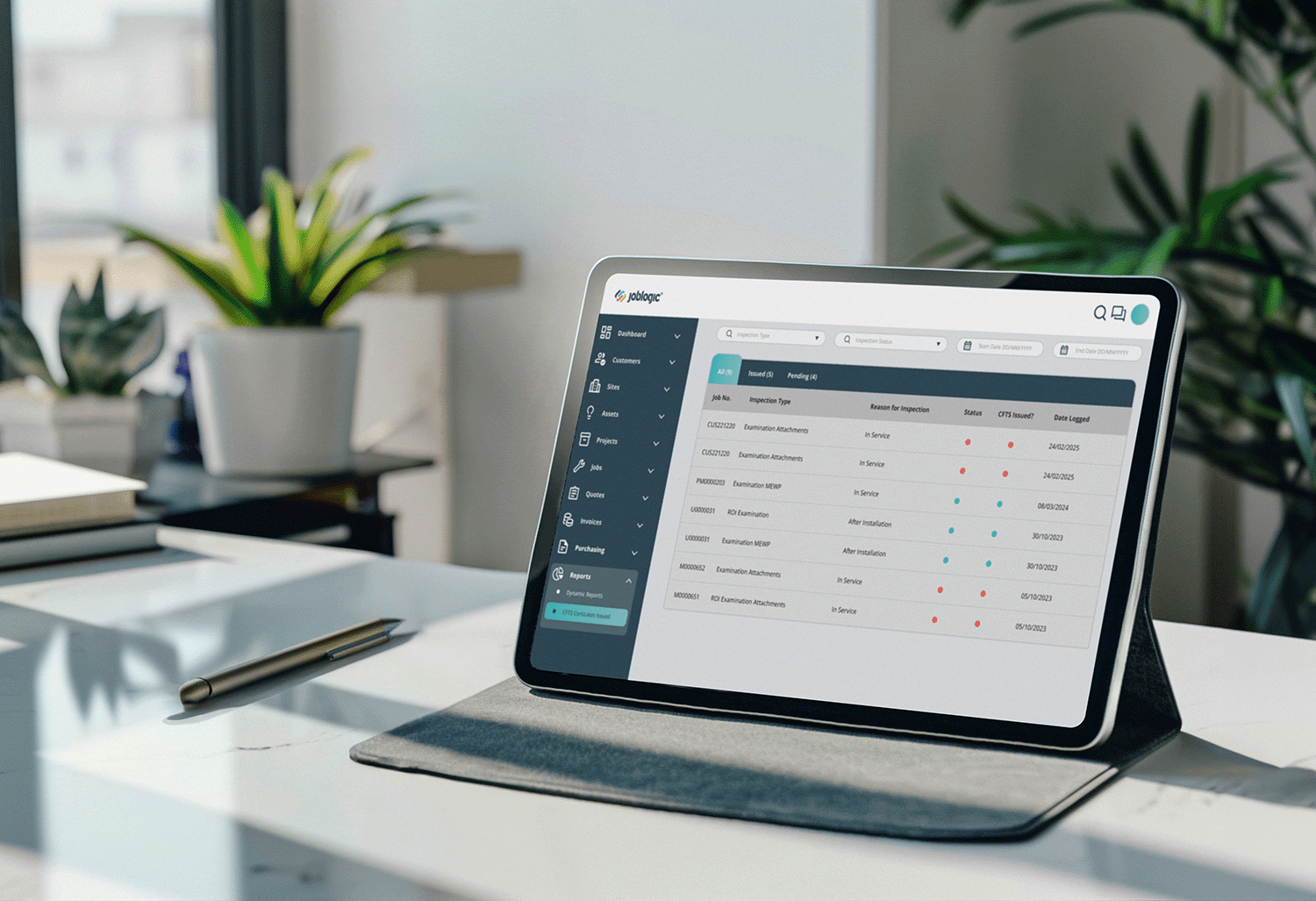
Pull the thorough examination history for any lift or escalator in minutes, not by working through vans, inboxes, and old paper reports.
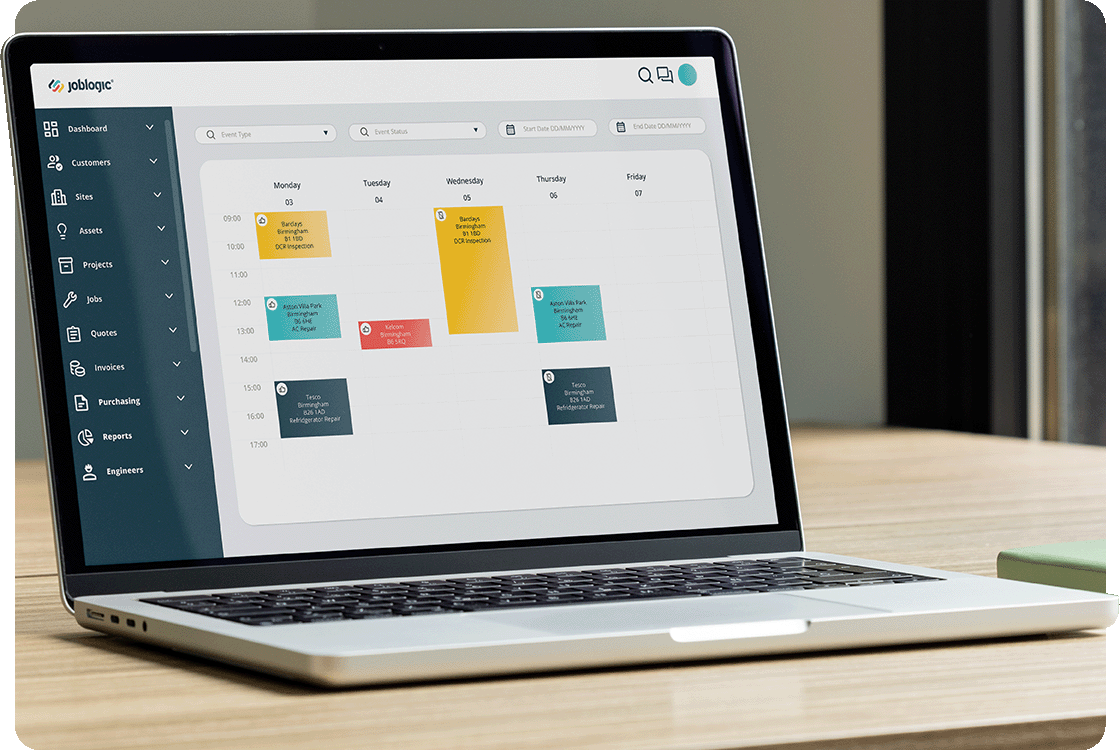
Match certified engineers to the equipment they're qualified on, so an entrapment out of hours goes to someone who can actually resolve it first time.

Notify the client or facilities team the moment a lift goes down, and again the moment it's back in service.

Carry a defect from the examination straight into a quote and an invoice, so remedial work gets paid for instead of written off.
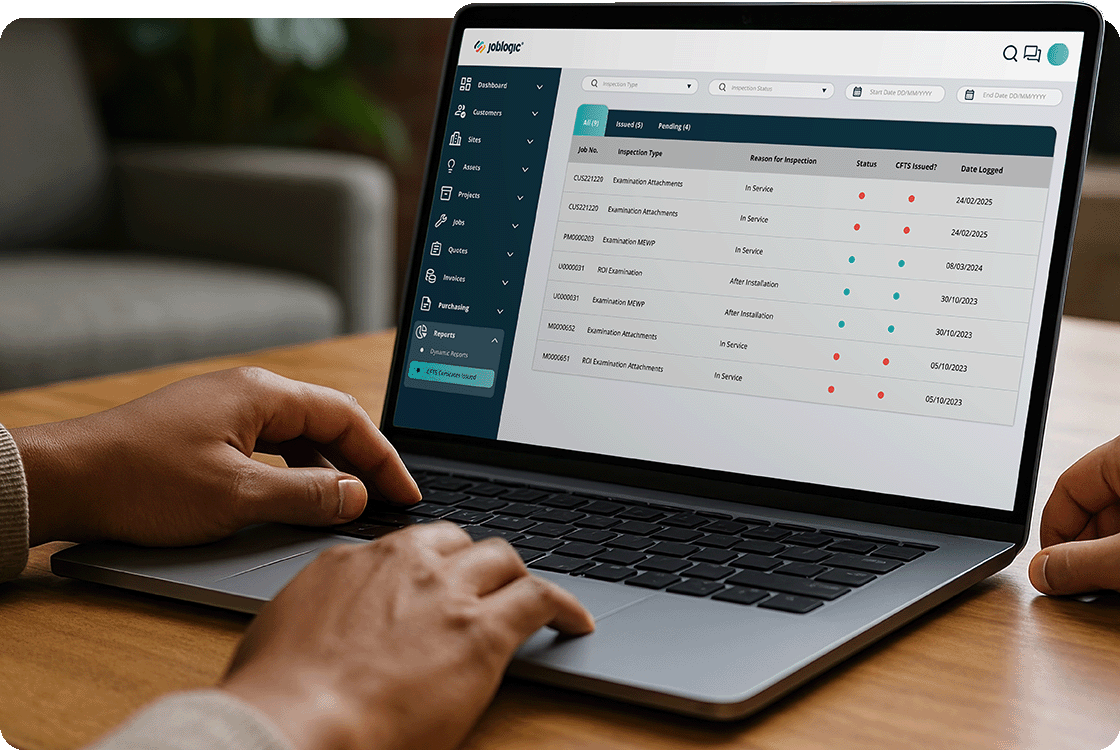
Keep the examination, defect, and remedial trail intact for every lift, so liability doesn't land back on you unproven after an entrapment or a failure.
See examination status, scheduling, and remedial billing for every lift and escalator from one place.
Every lift and escalator sits on the asset register with its own examination cycle, so the six-monthly LOLER round surfaces automatically instead of living in someone’s memory.
An entrapment callout slots straight into the diary without bumping the planned round off its cycle, so a genuine emergency stops meaning the six-monthly examination runs late.
Each engineer’s profile carries what they’re actually qualified on, traction, hydraulic, MRL or escalator, so a job only routes to someone certified for that specific type of equipment.
A defect flagged on a thorough examination carries straight through to a remedial quote and then an invoice, so a finding on the report doesn’t just sit there unbilled.
Examination status, entrapment history, and remedial billing sit on one dashboard across every building in the portfolio, so adding another site doesn’t mean losing sight of any lift on it.
Every six-monthly thorough examination is logged against the lift or escalator it covers, with defects, remedial actions, and sign-off dates stored against that asset, not a separate spreadsheet.
When an insurer, HSE inspector or building owner asks for the LOLER history on a specific lift, you produce it in minutes, not a search through years of paper reports.
Being able to automate certificates and tie them to jobs and assets means we can answer compliance questions straight away.
Who this touches depends on how big your operation is. A two-engineer lift servicing firm runs everything through one person; a national contractor splits it across a full team.
You run examination schedules, entrapment callouts, and remedial billing yourself. Joblogic keeps every LOLER record current and every defect tied to an invoice, even when you’re the only one tracking it.
See how it works for ownersExamination schedules and entrapment callouts sit in one diary, so an out-of-hours emergency doesn’t mean losing track of tomorrow’s planned round.
See how it works for service managersA defect flagged on a thorough examination carries through to an invoice automatically, so remedial work stops sitting unbilled while the paperwork catches up.
See how it works for finance leadersYou walk into a renewal with a building owner or FM client needing the LOLER examination and remedial history for every lift, not a scramble through old reports. Joblogic builds that record automatically.
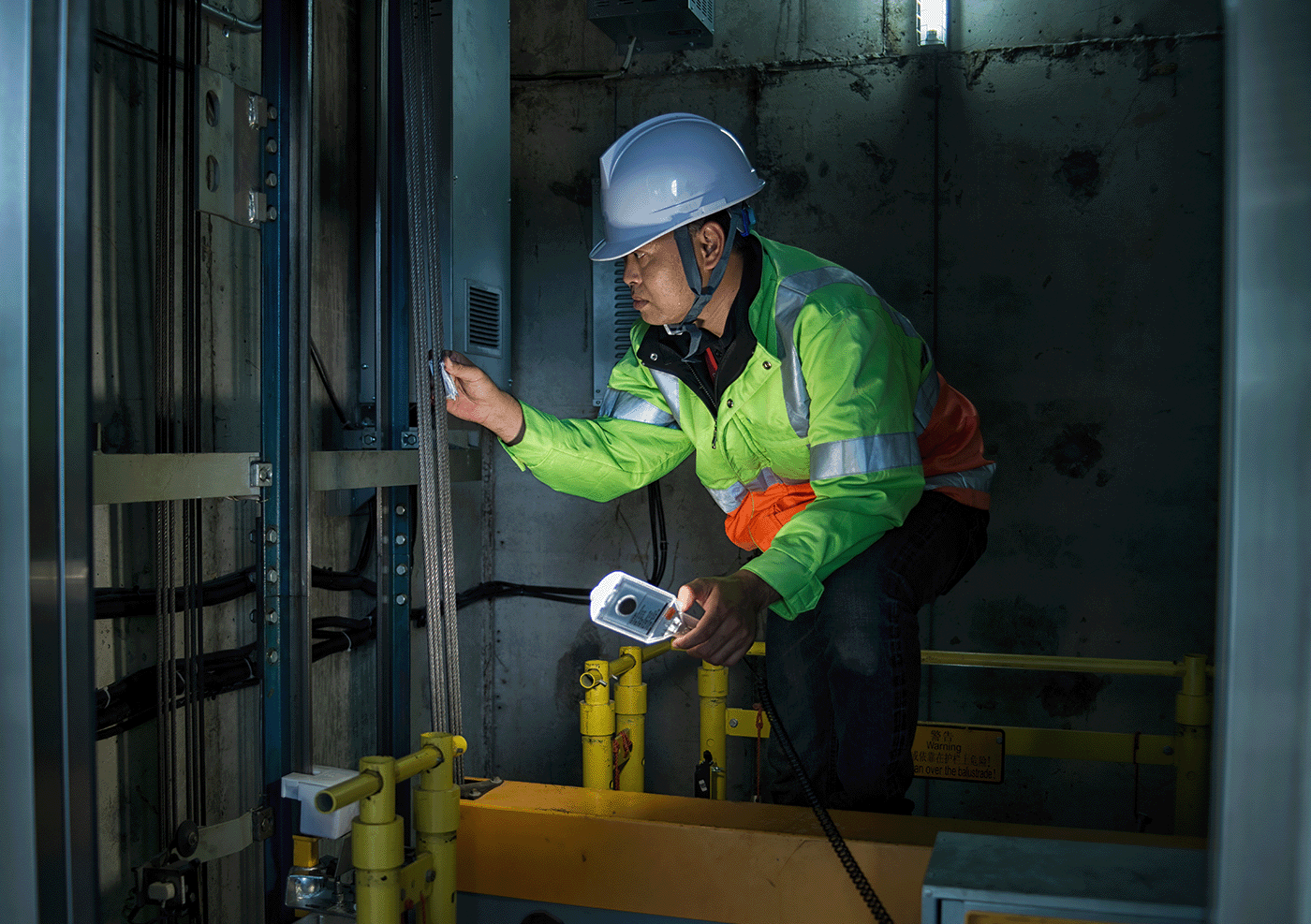
See how it works for contract managersEngineers attending an entrapment callout alone, often out of hours, are matched by the certification already recorded against their profile, so a safety-critical job never lands with someone unqualified for that lift type.
See how it works for HR managersAcross Joblogic customers, 80% of engineers use the mobile app day to day, a cross-vertical figure rather than one exclusive to lift and escalator work. On site, that means the thorough examination form, the defect note and the entrapment callout details get logged on the phone that’s already in the engineer’s pocket. That’s the adoption question answered before it’s asked.
Works with the accounting and CAFM tools you already use, and scales as you add buildings and engineers.
Connects to Xero, Sage, and QuickBooks, and shares data with the CAFM systems your building owner and FM clients already run.
Set up each building and its maintenance contract once, with its own examination cycle, and add more without rebuilding what’s already running.
Examination and defect records map to LOLER and PUWER, following SAFed guidance on inspection frequency, not a generic compliance category that doesn’t name them.
Yes. Every lift and escalator on the asset register carries its own examination cycle, typically six months for passenger lifts, and the system flags what’s due, what’s overdue and what’s just been completed. You see it across every building you cover, not building by building.
It doesn’t have to derail it. An entrapment slots into the diary as an emergency job without cancelling or overwriting the planned examination round, so the six-monthly cycle stays on track even on a day with a genuine emergency.
Yes. Escalators, passenger lifts, goods lifts, and other lifting equipment are all configured as assets with their own examination cycle and history, not tied to a single equipment type by default. You set up the asset types you actually service.
Yes. Subcontracted or freelance lift engineers get access scoped to the jobs and buildings you assign them, so they can log examinations, defects, and completions without seeing the rest of your account. The compliance trail stays yours even when the hands doing the work aren’t your direct employees.
No, most lift maintenance companies bring records across lift by lift and contract by contract rather than in one cutover. Historical examination history can be imported, and your team keeps working through the transition instead of stopping to switch systems. A named contact runs the plan with you.
Both. Most lift and escalator maintenance customers start with a handful of engineers covering a portfolio of buildings. The same examination, scheduling and invoicing structure holds as you add engineers, contracts, or subcontractors, without needing to move to different software.
Thirty minutes on your own portfolio: how examination dates track against every lift and escalator, how entrapment callouts slot in without derailing the schedule, and how remedial work turns into an invoice.