industrial engineers on site | Joblogic

Manufacturing and logistics

Lines running. Assets tracked. Compliance proven.

In manufacturing and logistics, downtime costs money by the minute. Yet most maintenance teams only find out what’s failing once it already has.

Joblogic tracks every asset, schedules planned maintenance, and sends the right engineer to the right site. You catch problems before they stop the line and fix the cause when they do.


Four gaps every manufacturing and logistics site fights

Uptime, planned maintenance, dispatch, and compliance all break the same way when nobody can see the whole site.

No record of why the line actually stopped

You find out the conveyor’s been failing for weeks only once it stops the whole line, because nobody logged the small faults before the big one.

The breakdown that costs you a shift

You schedule maintenance around whoever complains loudest this week, not around the assets actually due a service, so the breakdown that costs you a shift was booked in nobody’s diary.

No visibility of engineers across sites

An engineer sits idle at one warehouse while a line goes down at another site twenty minutes away, and nobody knew which one was actually closer.

No answer when the inspector asks

A lifting inspection or a guard check happened somewhere, on some date, but proving it to an HSE inspector means chasing down whoever did it and hoping the paperwork survived.

Where manufacturing and logistics connects to the wider risk

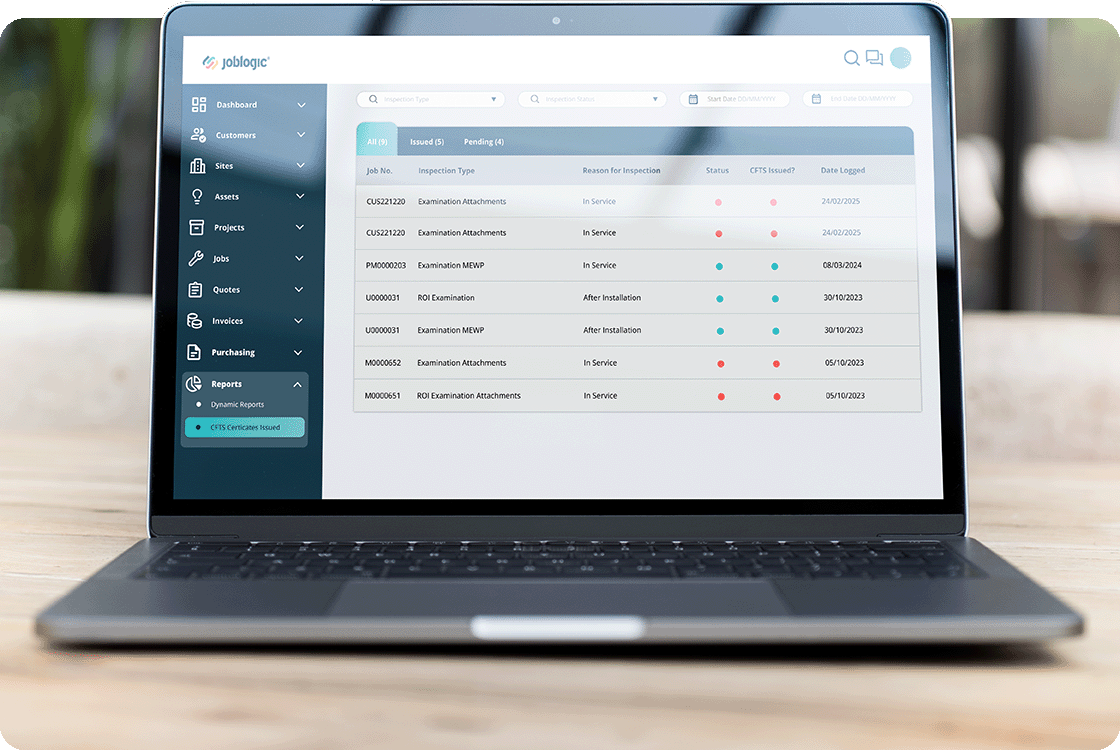
Laptop on a table showing the Joblogic job and asset list table with compliance status columns

Turn safety checks into an export

Produce LOLER and PUWER inspection records for any asset the moment an inspector or insurer asks, instead of chasing paper.
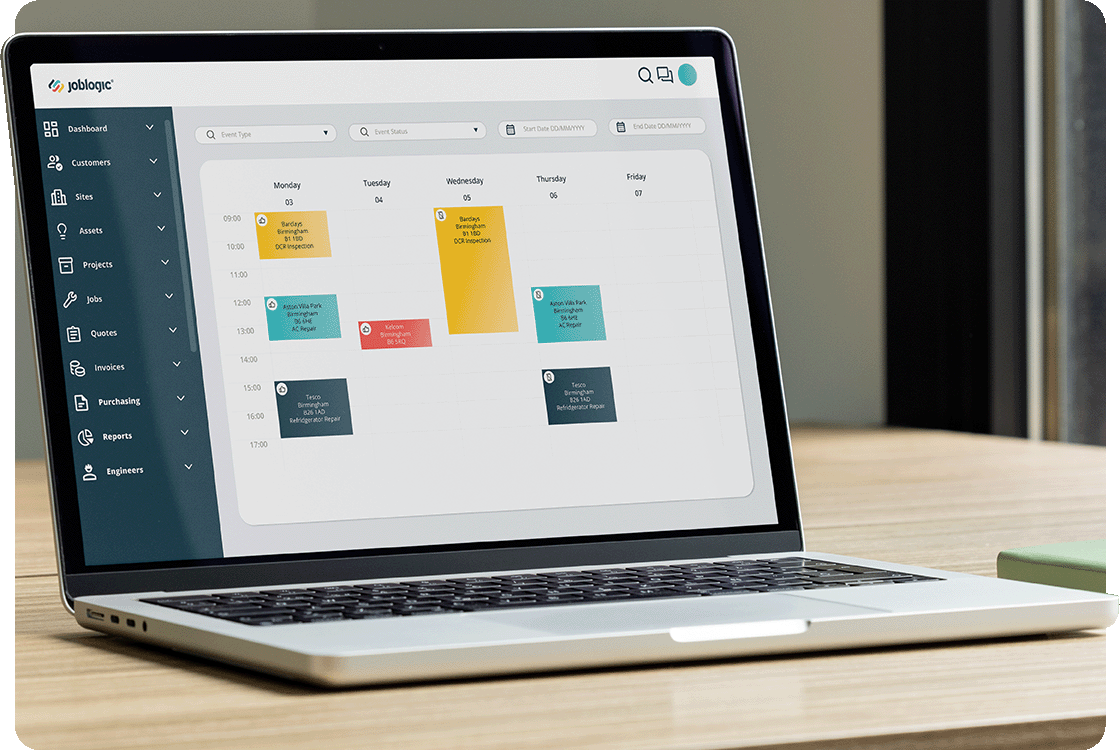
Laptop on a desk showing the Joblogic scheduling interface with coloured job cards arranged in a weekly calendar view

Dispatch the nearest qualified engineer

Send the engineer actually closest and certified for the job, instead of whoever picked up the phone first.

Man in a white hard hat, safety glasses and yellow hi-vis jacket using a tablet in an industrial factory setting with large cylindrical machinery behind him

Turn downtime into a cost you can see

Track what an unplanned stoppage actually costs in lost output and engineer time, so the case for planned maintenance writes itself.

Male IT engineer in a blue shirt holding a laptop in a server room with racks of network cables and equipment

Feed maintenance data into your ERP

Pass job, asset, and compliance data into the ERP or warehouse system you already run, so nobody re-keys the same record twice.

One system for the whole plant network

Every asset, every line, and every site tracked from breakdown to invoice in one place.

Service assets before they fail

PPM schedules generate automatically against each asset’s own service interval, so servicing gets planned ahead of failure instead of booked after it.

Dispatch whoever’s actually closest

Job status, engineer location and site all sit on one screen, so dispatch goes to whoever is actually closest and free, not whoever answered first.

Turn inspections into an export

Inspection and safety-check records attach to the asset and the site as the engineer completes the work, so an HSE request becomes an export, not a search.

See uptime and PPM in one view

Build one view of uptime, PPM compliance and engineer performance across every plant and site, and reuse it for every operations review.

Inspected. Evidenced.

LOLER thorough examinations, PUWER inspections and planned maintenance certificates attach to the asset and the site, stored in one system, not a folder on someone’s desk.

When the HSE inspector, the insurer or a client’s audit team asks for the lifting equipment record on one machine, you export it, not reconstruct it from memory and email.
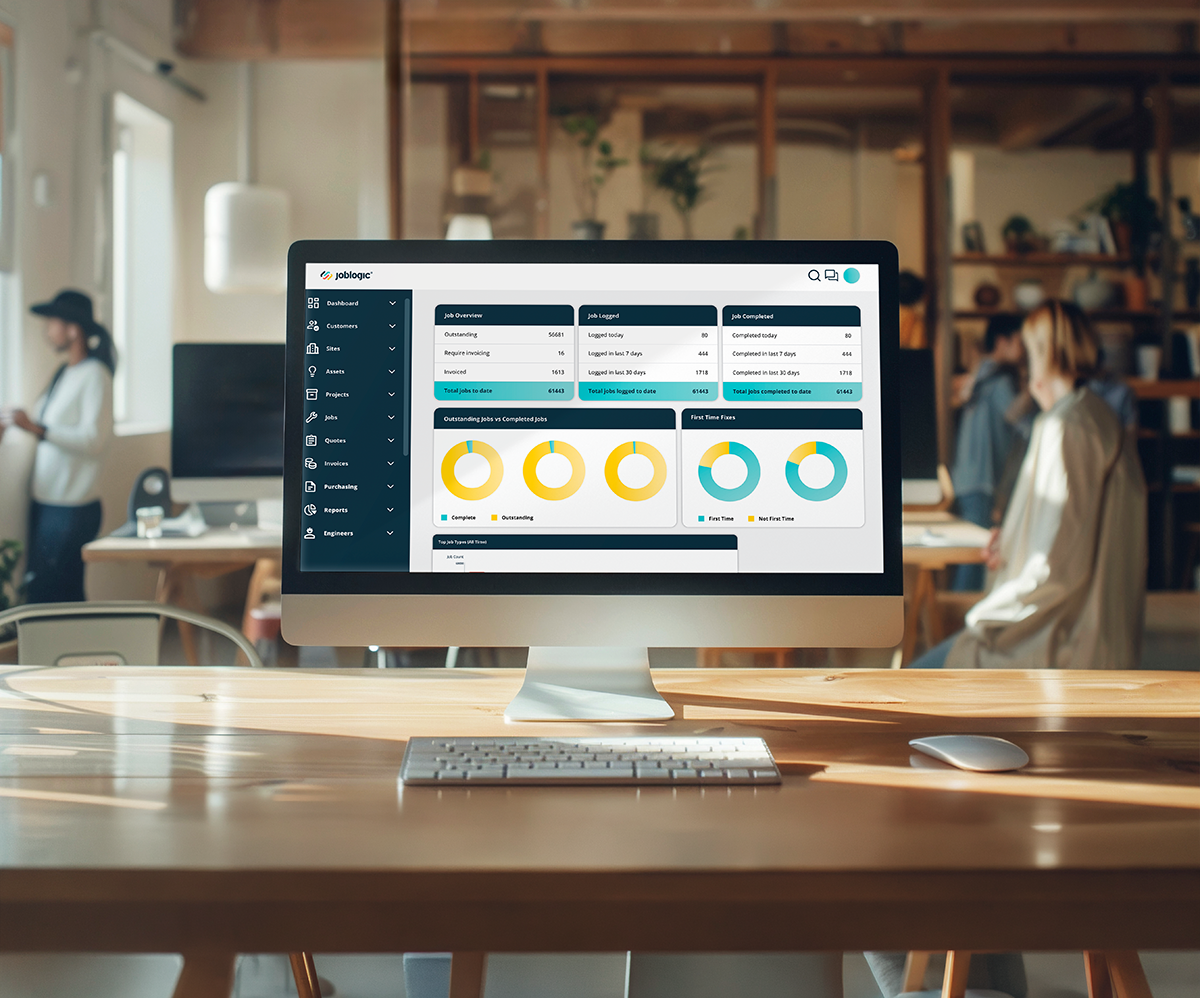
Joblogic dashboard for reporting on a computer screen | Joblogic

Proof, not a pitch

Joblogic has allowed us to stem this workflow into a manageable global system allowing us to continually grow without ever becoming overwhelmed.

Paul MoloneyAssistant General Manager & Service ManagerTurnkey Instruments
80%of engineers use the mobile app daily, cross-vertical, not sector-specific
99.99%platform uptime guarantee, cross-vertical, not sector-specific
95%reduction in paperwork reported by one FM customer, used only as a cross-vertical proxy

What this means for your team

Who this touches depends on how big your operation is. A five-person maintenance team runs everything through one person; a multi-site manufacturing and logistics network splits it across a full team.

Business Owner

You run maintenance, dispatch, and compliance yourself. Joblogic keeps asset history, PPM schedules and safety records straight even when you’re the only one keeping track.

See how it works for owners

Operations Manager

You see line status, engineer location and PPM progress across every site from one screen, instead of ringing round the plant to find out what’s actually running.

See how it works for operations

Finance Manager

You see what a stopped line actually cost in engineer time and lost output, so the case for planned maintenance budget isn’t a guess anymore.

See how it works for finance leaders

IT/Digital Lead

You’re the one who inherits every one-off integration between disconnected systems. Joblogic connects natively to your accounting platforms, with API access for other systems, so a new site doesn’t mean another integration project.

See the role

HR Manager

Your engineers and warehouse operators carry lifting and safety certifications that expire without warning. Joblogic schedules by the certification a job needs and flags renewals before they lapse, not after.

See how it works for HR managers

Engineers actually log it, not just carry it

Across the Joblogic customer base, 80% of engineers use the mobile app day to day, a cross-vertical figure, not a manufacturing-specific one. On the factory floor or the warehouse, engineers log faults, parts used and safety checks against the job itself, so the record exists the moment the work happens, not back at a desk.

Engineers on site inspecting | Joblogic

Fits the systems already running your plant

Connects to the accounting and asset systems you already run, and scales from one site to a distribution network.

Accounting and ERP systems

Integrates with accounting platforms including Xero, Sage and QuickBooks, alongside API access for ERP and warehouse management systems where a connection is scoped and built.

Plants, warehouses, sites

Team structures and permissions split by plant, warehouse or distribution site, so reporting stays accurate as the network adds locations.

LOLER and PUWER compliance

Tracks lifting equipment examinations and work equipment inspections against the asset and the site, ready for the next HSE review or insurance renewal.

Manufacturing and logistics questions

Is this built for factory floor equipment, not just vans?

Honestly, we haven’t confirmed this with a heavy manufacturing customer yet. Joblogic is built for field service and engineer-led maintenance work, and the asset, PPM and compliance tools apply directly to plant and equipment maintenance. Whether it fits a full production-line CMMS role, alongside specialist manufacturing software, depends on your setup, and that’s worth a direct conversation before you commit.

Do we still need a separate CMMS for the plant?

For most contract and engineer-led maintenance work, no. Asset history, PPM scheduling and compliance records live in Joblogic against the job and the site. If your plant already runs a dedicated CMMS for line-level asset engineering, that’s a separate system; we haven’t confirmed how the two would sit side by side, so treat this as scoped case by case.

Can third-party maintenance contractors get scoped access?

Yes. Subcontracted engineers get a portal scoped to the jobs and assets you assign, so they can log completion and compliance evidence without seeing the rest of your sites or your commercial data. This works the same way for third-party maintenance firms as it does for your own engineers.

How do we prove LOLER compliance across every site?

Every lifting and work equipment inspection attaches to the asset and the site as the engineer completes it, whether that’s one plant or a distribution network. When an inspector, insurer, or client asks for a site’s record, you export it. This assumes your inspection regime is LOLER and PUWER; if your sector’s compliance frameworks differ, tell us during scoping.

Does this work for one plant or a national network?

Both, in principle. The same asset, PPM and compliance structure holds whether you run one site or a network of plants and warehouses, and permissions split by site or region as the estate grows. We haven’t validated this against a genuinely large, multi-plant manufacturing estate yet, so treat the largest end of this as an open scoping conversation, not a guarantee.

How does this balance breakdowns against planned work?

PPM schedules generate automatically against each asset’s service interval, so planned work sits in the diary alongside reactive jobs, not fighting for space with them. When a breakdown does happen, dispatch goes to whoever is actually closest and certified, and the asset’s fault history helps you judge whether it’s a quick fix or a sign the asset needs replacing.

See it across your network

Thirty minutes on your plant or network: asset and PPM history in one place, engineer dispatch that knows who’s actually closest, and compliance evidence ready before the inspector asks.