The day’s schedule collapses under volume
You book ten jobs into a day and one late repair, one wrong postcode or one no-access call knocks the rest of the schedule sideways.

Appliance Repair & Maintenance
Appliance repair runs on volume: a full day of short jobs, each one hinging on a part being on the van, and an engineer keeping to the window a homeowner’s waited in for. Miss either and the day never catches up.
Joblogic gives you one system for scheduling, parts and billing, so the engineer arrives with the part checked, the day holds its shape, and every job bills correctly.
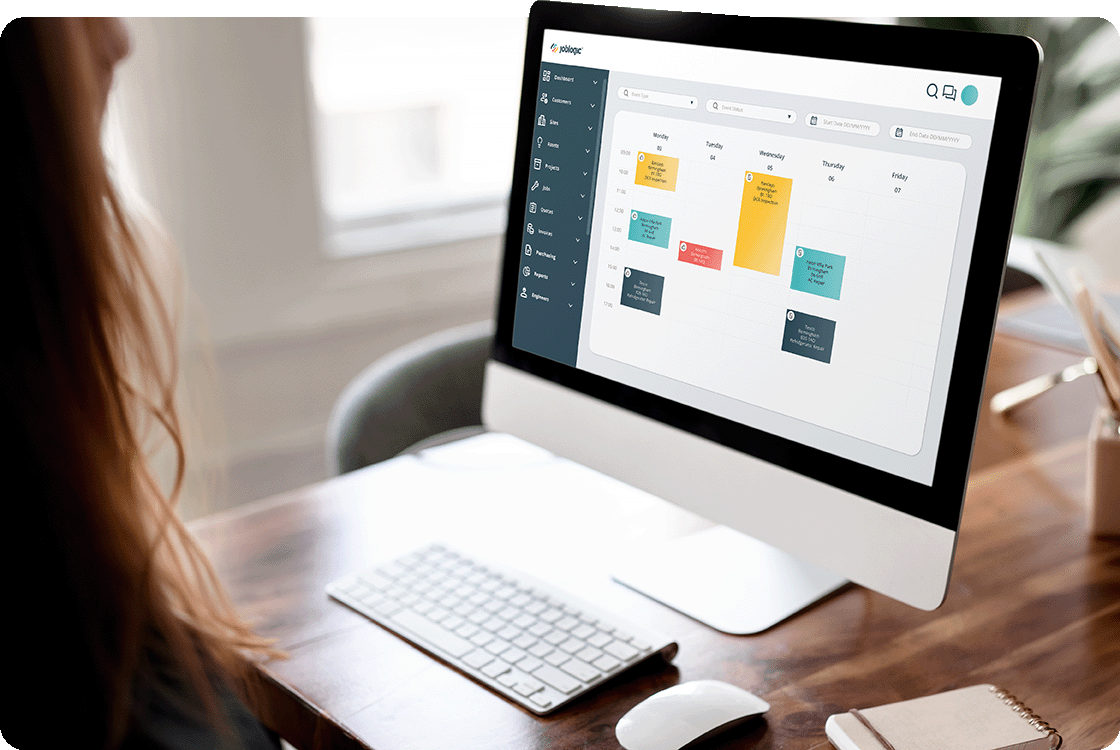
Short jobs pile up fast, and the day only holds if the part, the window and the paperwork land right.
You book ten jobs into a day and one late repair, one wrong postcode or one no-access call knocks the rest of the schedule sideways.
You send an engineer to a repair and they diagnose it, order the part, then come back a second time while the customer waits again for the same appliance.
A repair gets logged the same way whether the customer’s paying you directly or a manufacturer’s warranty scheme is, and the gap only shows up when the invoice gets queried.
The homeowner’s taken the morning off, rings the office twice to ask where the engineer is, and you’re guessing at an ETA from a schedule you can’t actually see.

Route jobs by location, skill and appointment window automatically, so a full day of short visits still runs to time.
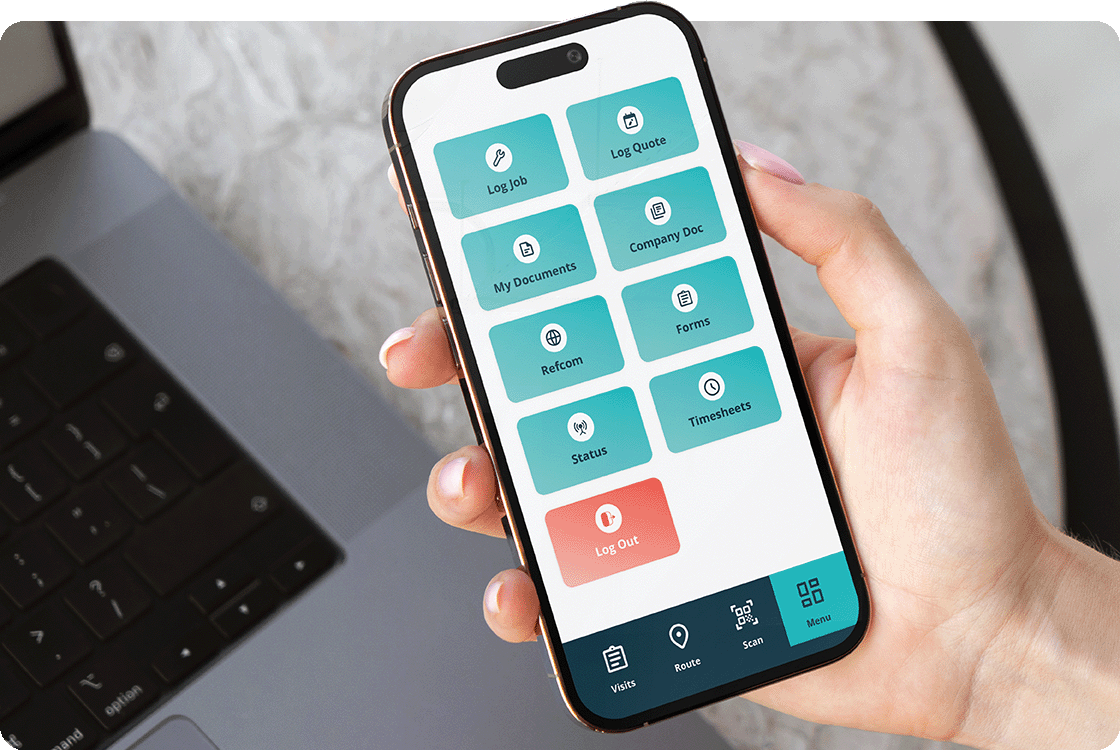
Capture parts used, work done and photos on the job itself, so the visit closes with the record already written, not chased up later.

Send live ETA updates as the engineer's day runs, so the homeowner isn't ringing the office to find out when someone's actually coming.

Set fixed rates per manufacturer or warranty scheme once, so the right invoice goes to the right payer without checking every job by hand.

Pass job, parts and cost data straight into your accounting and supplier systems, so nobody re-keys the same record twice.
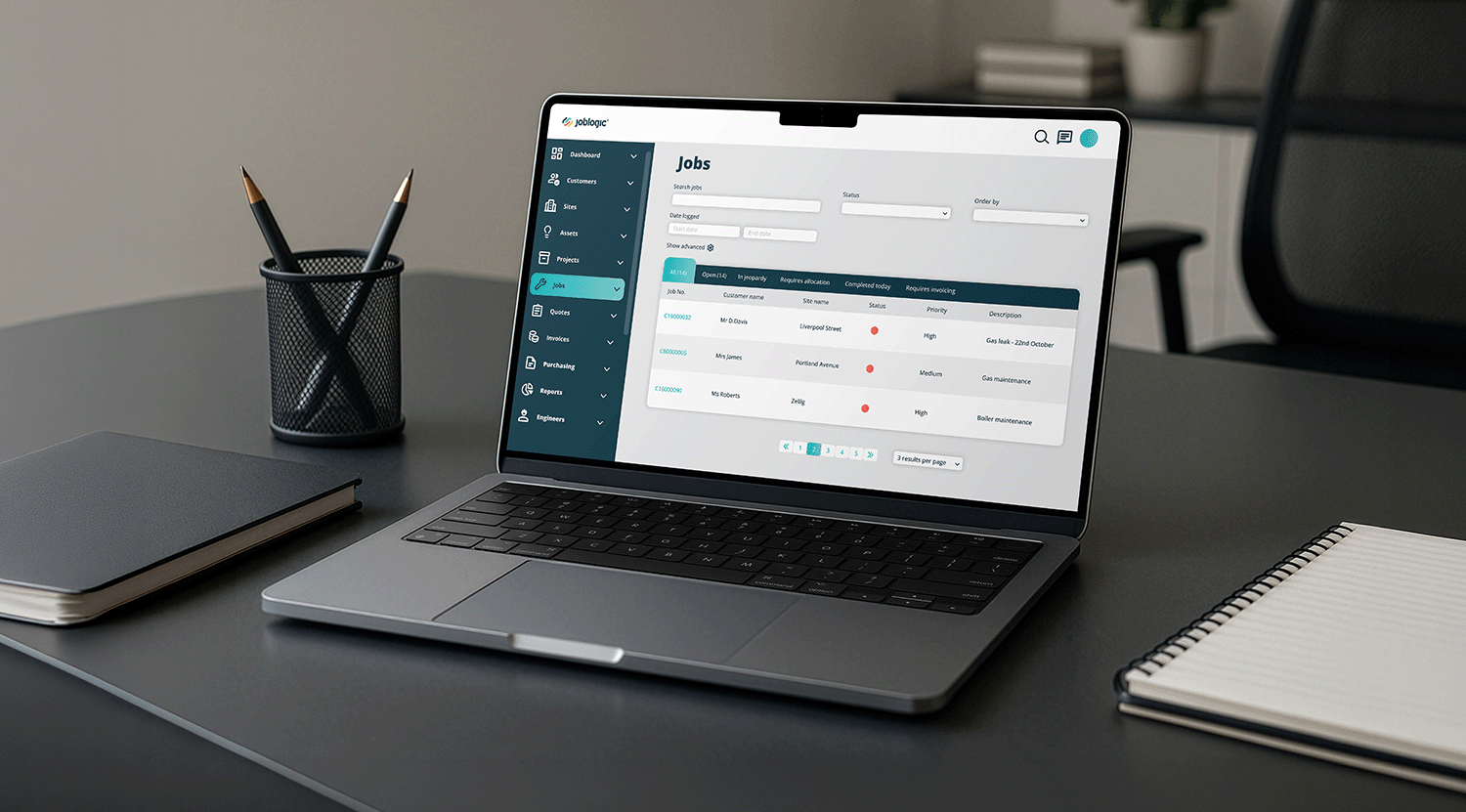
Every job, every part and every payer, tracked from booking to invoice in one place.
Jobs route automatically by location, skill and appointment window as the day runs, so a full book of short visits still holds its shape when one job overruns.
Live parts availability sits inside the job before the engineer leaves the depot, so the visit that needs a compressor or a door seal doesn’t need a second one.
Fixed rates per manufacturer, retailer or warranty scheme are set up once, so a job bills correctly whether the customer’s paying or a scheme is.
Automated ETA texts and status updates go out as the engineer’s day runs, so the homeowner stops ringing the office to check where the visit’s got to.
First-time fix rate, job volume and scheme performance report across the whole network, so a slipping number gets caught before it’s a renewal conversation.
Every job captures the part fitted, the engineer’s Gas Safe or F-Gas number where the work needs one, and the manufacturer’s own repair criteria, stored against that job.
When a manufacturer disputes a warranty claim or a regulator asks for the Gas Safe record behind a job, you export the evidence instead of rebuilding it from memory.
We've slashed job-related man-hours by 50% with Joblogic, every job is now monitored, processed, updated, and invoiced in half the time, doubling our operational efficiency.
Who this touches depends on how big your operation is. A two-van repair business runs everything through one person; a national repair network splits it across a full team.
You run the schedule, the van stock and the payer billing yourself. Joblogic keeps parts, jobs and invoices straight even when you’re the only one keeping it.
See how it works for ownersYou dispatch the next job to whoever’s free and closest, and see it close with the part used and the payer confirmed, not chased up after invoicing.
See how it works for service managersYou bill each job at the right rate to the right payer automatically, so a manufacturer scheme and a direct customer never get mixed up on the same invoice run.
See how it works for finance leadersYou see parts availability by van and by warehouse in one stock record, so a job doesn’t stall halfway through because nobody knew the part had already gone.
See how it works for stock managersYou see which repair van is actually nearest an urgent callout, plus mileage, fuel and MOT dates by vehicle, instead of guessing from memory or chasing paperwork.
See how it works for fleet managersAcross the Joblogic customer base, 80% of engineers use the mobile app day to day, a cross-vertical figure that holds here too. On each short visit they check part availability, log what they fitted, and capture a photo the manufacturer can’t dispute later. Adoption isn’t the risk; the paper trail it replaces is.

Works with the accounting, parts and warranty systems you already run, and scales from one branch to a national network.
Integrates with accounting platforms including Xero, Sage and QuickBooks, plus Parts Arena for live parts availability and supplier ordering.
Team structures and permissions split by branch, franchise or engineer team, so reporting stays accurate as the network grows.
Tracks Gas Safe and F-Gas engineer numbers against the job, and keeps WEEE disposal records for units taken away for scrap.
Yes. You can set a fixed rate per manufacturer, retailer or warranty scheme, so a job under that scheme bills automatically at the agreed rate instead of a standard customer invoice. The reporting behind exactly how that reconciles against a specific manufacturer’s payment process is something we’d want to confirm with you directly.
Not entirely, and we won’t claim otherwise. Live parts availability sits inside the job before it’s dispatched, so the planner and the engineer both see what’s in stock. If the part genuinely isn’t available anywhere, no system puts it in the van; you’ll see that gap before the van leaves, though.
Yes. The job record isn’t built around one appliance type or one manufacturer. Every job, whatever the unit, gets the same structure: part fitted, engineer number where relevant, and payer, logged the same way alongside everything else you repair.
Yes. Subcontracted and agency engineers get a portal scoped to only the jobs you assign them. They log what they fitted and close the visit there; they don’t see your other clients, your other manufacturer schemes or your commercial data at all.
Yes. The same scheduling, parts and payer structure holds whether you’re running one branch or several regions. Permissions split by branch or team as the operation grows, so oversight doesn’t get harder as the volume does.
Every job records the engineer and their registration number where the work needs one, attached to that job permanently. If a regulator or a manufacturer asks for the record behind a specific repair, you export it instead of checking a certificate file by hand.
No. Fixed-rate billing sits alongside however you’re set up with a manufacturer or warranty provider today; it doesn’t replace that commercial agreement, it just applies the agreed rate automatically when a job under that scheme closes. Confirm the exact reconciliation format with us directly before rollout.
Thirty minutes on your own repair schedule: parts availability checked before the van leaves, every job billed to the right payer, and the day holding its shape under volume.