The install that loses to whatever rang first
A network install is booked for Tuesday, a warranty fault comes in on the same site, and whichever job started first wins, not whichever job actually matters more.

IT & Communication
A client reports a fault on a network you installed six months ago. Is it under warranty? What was installed, and who signed it off? The install crew knows, but they’re on another site, and the reactive engineer is starting from scratch.
Joblogic keeps every install, warranty, and support contract in one record. When a fault comes in, your engineer can see exactly what’s on site and what’s covered before they arrive.
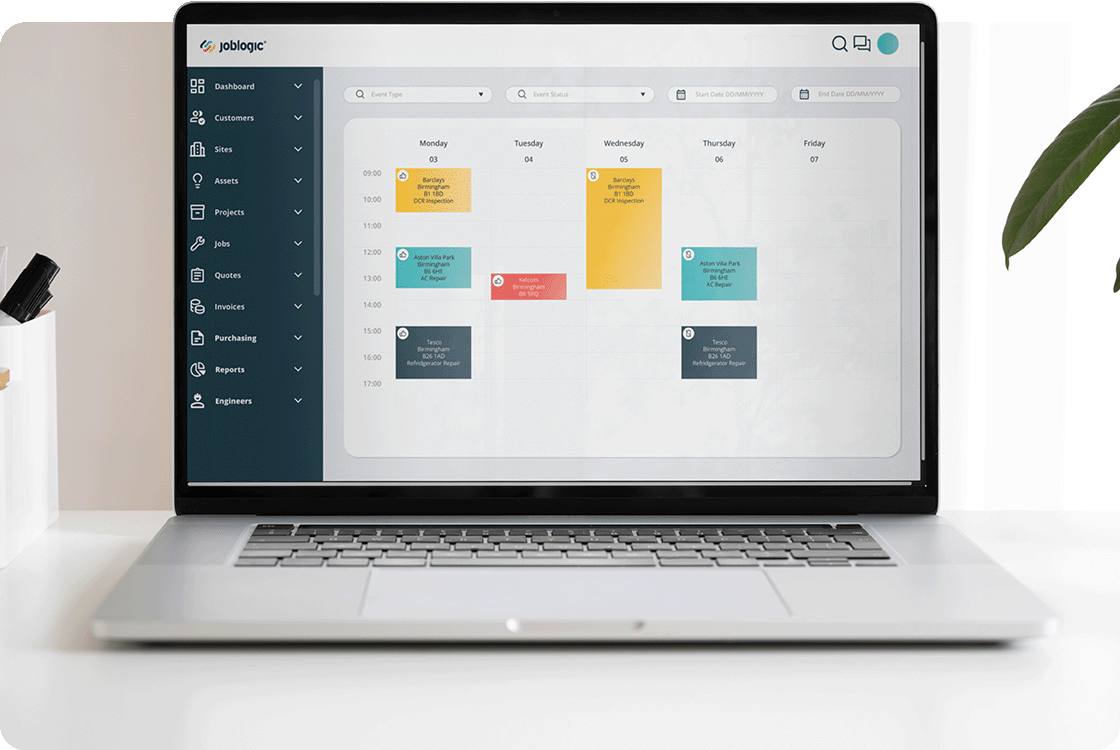
Installs, faults, warranty cover, and compliance paperwork all slip the same way when nobody can see the whole job.
A network install is booked for Tuesday, a warranty fault comes in on the same site, and whichever job started first wins, not whichever job actually matters more.
A client rings about a fault on kit you installed eighteen months ago, and finding out whether it’s still under warranty means digging through old install paperwork first.
A structured cabling install goes to a subcontracted crew, and proving who certified the final test means chasing a name and a paper copy that might not exist.
A client asks for the cable test certificate, and proving it exists means chasing five different inboxes, because it was emailed and saved wherever the engineer happened to leave it.

Plan network installs and reactive faults against the same engineer diary, so a warranty callout doesn't wait behind a job that isn't urgent.
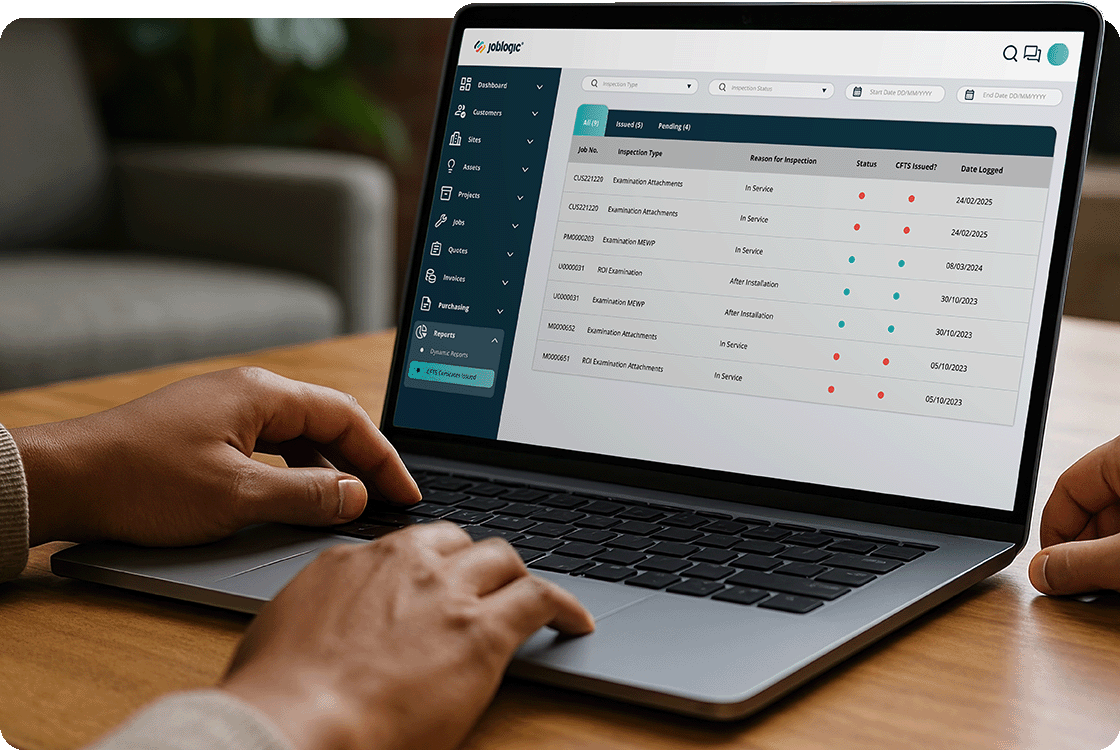
Attach cable test results, RAMS and sign-off sheets to the job itself, so a client audit or warranty dispute gets an answer in minutes.
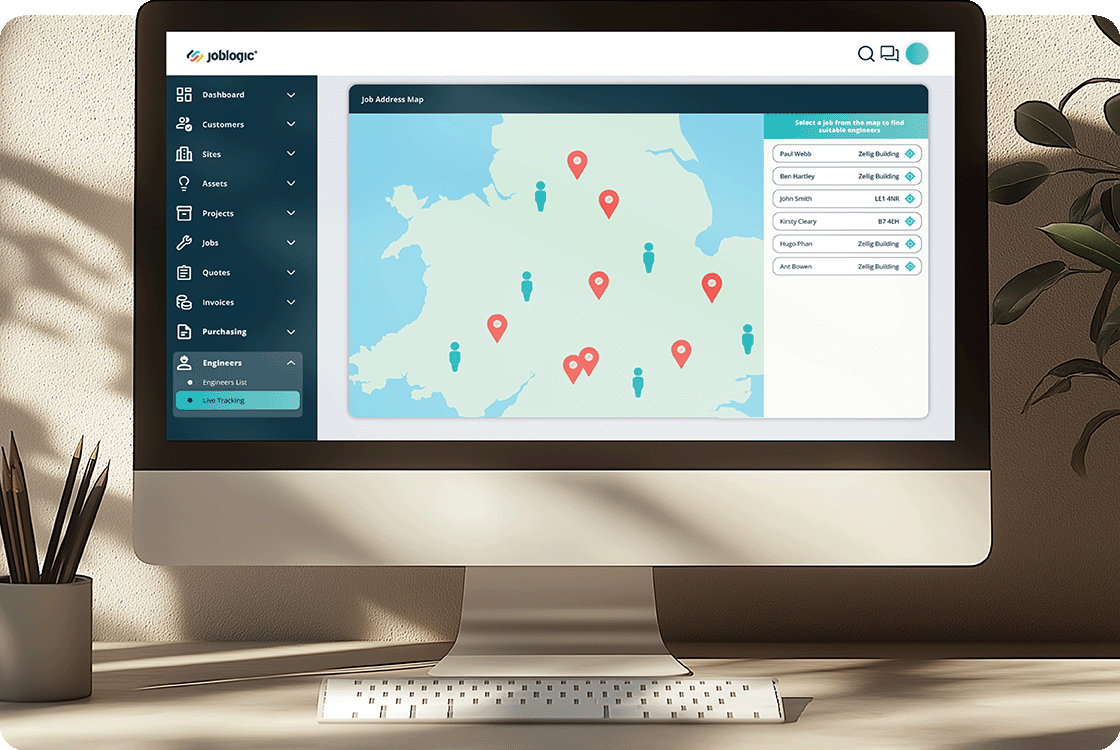
Check the status of every install crew, subcontracted engineer, and reactive job across every site from one screen, not a string of phone calls.

Flag whether a job falls inside a warranty window or is billable the moment it's booked, so invoicing doesn't depend on remembering the contract terms.

Pass job, engineer and completion data into the ticketing or helpdesk system you already run, so nobody re-keys the same fault twice.
Every install, fault, and certificate tracked from booking to sign-off in one place.
Installs and reactive faults sit on the same engineer diary, tagged by job type and site, so a warranty callout never queues behind a job that can wait.
Warranty periods and support contract terms attach to the asset and the client record, so a fault gets checked against cover before anyone quotes for it.
Subcontracted install crews get scoped access to log job completion, photos and certification directly, so the record of who did the work never depends on an email.
Cable test results, RAMS, and sign-off sheets get captured on the engineer’s phone against the job itself, so a client request finds one record, not five inboxes.
Build one view of install progress, SLA response and certificate compliance across every site and every crew, and reuse it for every client review.
Cable test certificates, RAMS documents, and sign-off sheets attach to the job and the asset as the engineer completes the work, stored in one system, not a laptop folder.
When a client’s IT team, an insurer, or an end user disputes a fault under warranty, you produce the test certificate and the job record, not a search through emails.
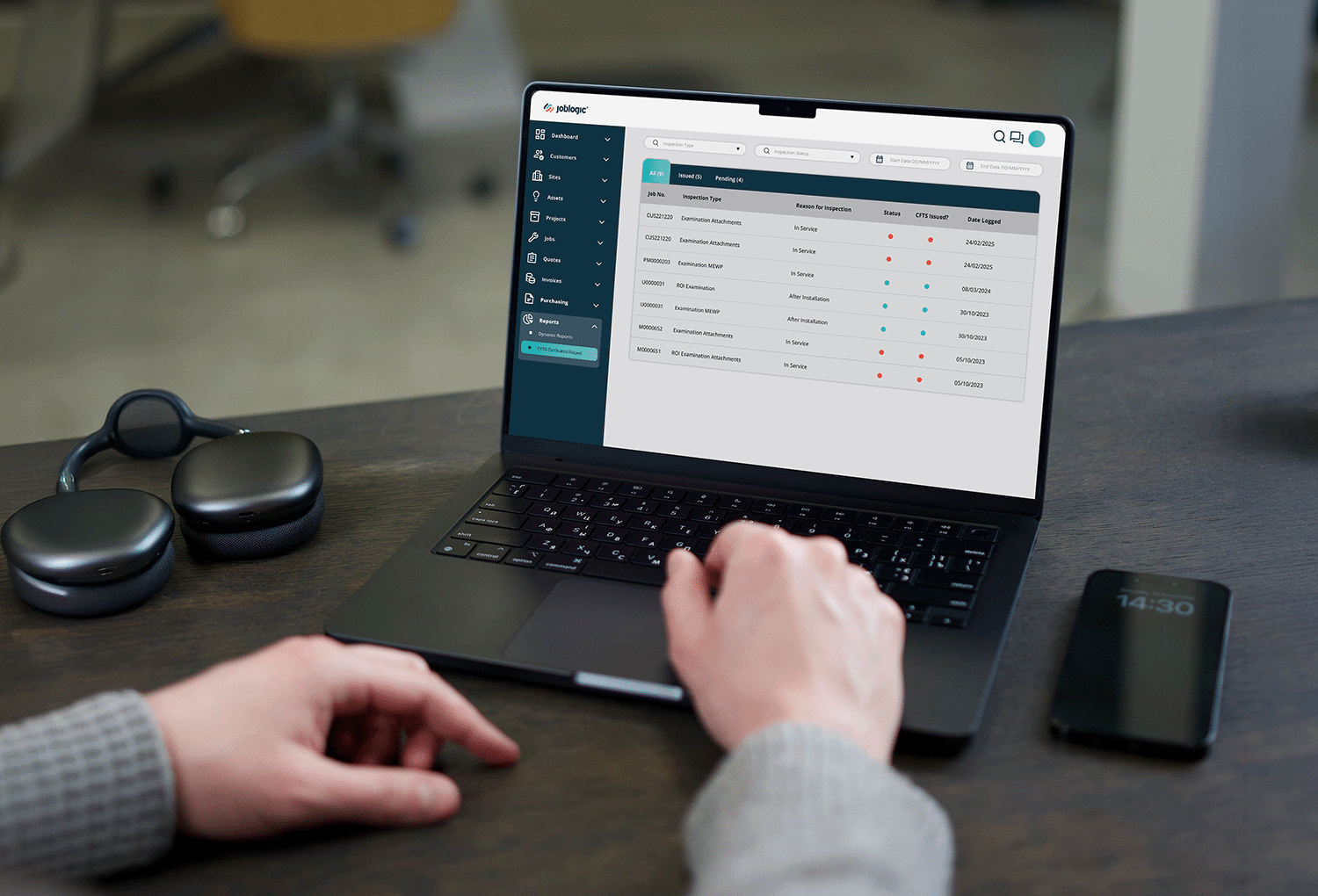
After just a couple of days reviewing the system, it was a complete no brainer for us. Joblogic gave us everything we were looking for, with even more potential than we expected, and it stood out straight away because it fully supports the entire lifecycle of a job from start to finish.
Who this touches depends on how big your operation is. A five-person install team runs everything through one person; a national telecoms network splits it across a full team.
You run installs, warranty cover, and invoicing yourself. Joblogic keeps job records, test certificates and billing straight even when you’re the only one keeping track of it all.
See how it works for ownersYou dispatch the right engineer to an install or a warranty fault with the certification and contract terms already visible, instead of finding out after the job’s already been done.
See how it works for service managersYou see whether a job is warranty-covered or chargeable before it’s invoiced, so margin doesn’t disappear into work nobody checked the contract terms on.
See how it works for finance leadersYou connect job, warranty and completion data into the ticketing or helpdesk system you already run, so nobody re-keys the same fault twice across systems that don’t agree.
See the roleYou track SLA response and warranty cover across every install and support contract in the network, so renewal builds itself from evidence already in the system, not a scramble.
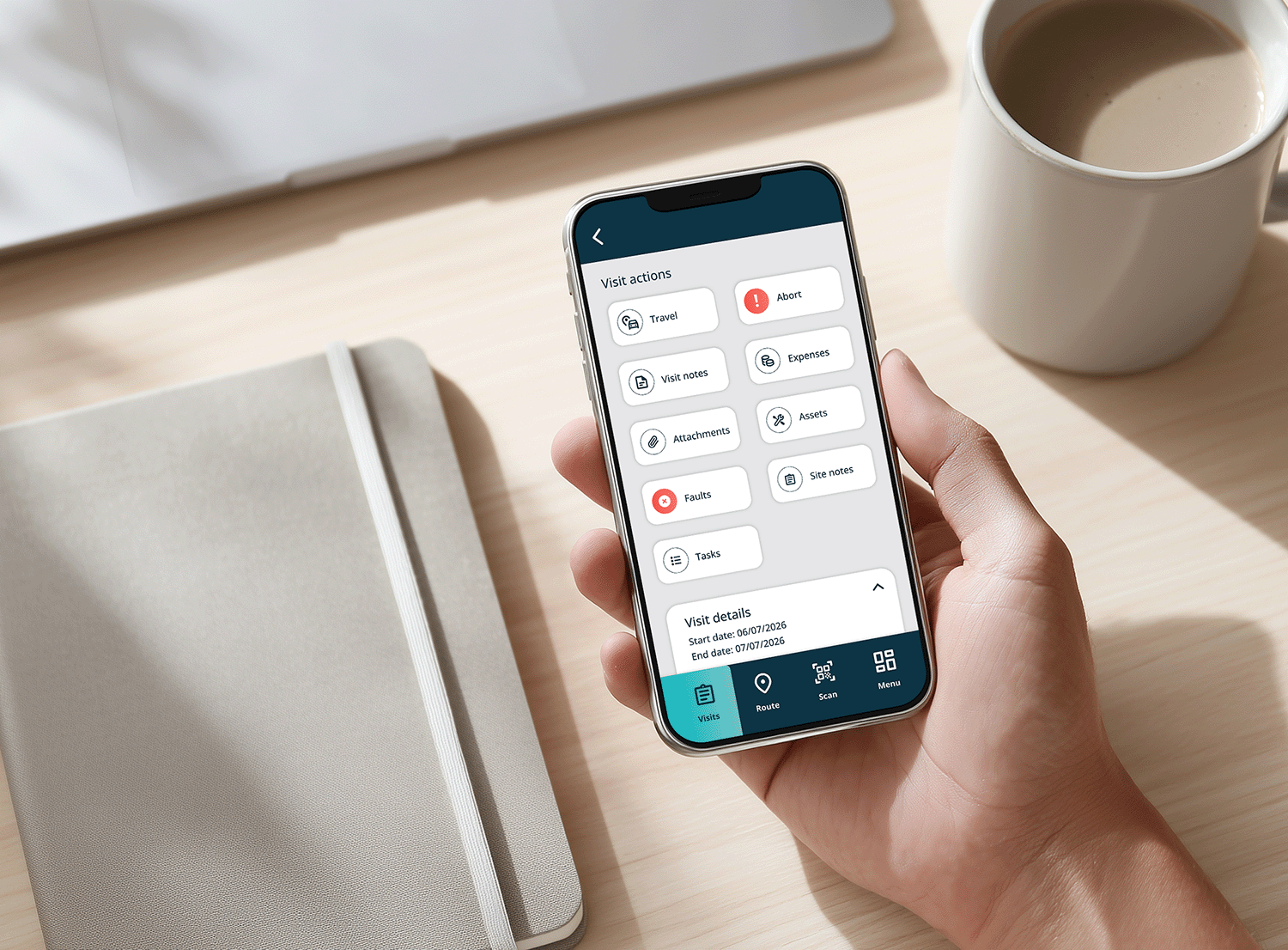
See how it works for contract managersAcross the Joblogic customer base, 80% of engineers use the mobile app day to day, a cross-vertical figure, not an IT and communication-specific one. On site, engineers log test results, photos and sign-off against the job itself, whether it’s a new install or a warranty callout, before the van leaves the car park.
Connects to the accounting and ticketing tools you already run, and scales from one engineer to a national network.
Integrates with accounting platforms including Xero, Sage, and QuickBooks, alongside API access for the ticketing or helpdesk system you already run.
Team structures and permissions split by client, contract, or site, so reporting stays accurate as you add install and support contracts.
Tracks cable test certificates, RAMS documents and site sign-off against the asset and the client, ready for the next audit or warranty dispute.
Honestly, we haven’t confirmed this with an IT or telecoms installer yet. Joblogic is built for field service and engineer-led work, and the job scheduling, contract and mobile forms tools apply directly to install and warranty callout work. Whether it fits highly technical network engineering or telecoms project work depends on your setup, and that’s worth a direct conversation before you commit.
Both. Installs and reactive faults sit on the same job and scheduling structure, whether that’s a new network build, a structured cabling job or a warranty callout. Larger project work with multiple phases and milestones is something we haven’t tested against a heavy telecoms rollout, so treat multi-phase project management as a scoping conversation, not a confirmed fit.
Yes. Subcontracted crews get a portal scoped to the jobs and sites you assign, so they can log completion, test results and sign-off without seeing your other clients or commercial data. This works the same way for a one-off cabling subcontractor as it does for a regular install partner.
Every cable test certificate, RAMS document and sign-off sheet attaches to the job and the site as the engineer completes the work, whether that’s one client site or a hundred. When a client, insurer, or end user asks for the record, you export it. This assumes your compliance regime is cable testing and RAMS; if your sector’s frameworks differ, tell us during scoping.
Both, in principle. The same job, contract, and compliance structure holds whether you run a handful of install engineers or a national service network, and permissions split by client or region as the estate grows. We haven’t validated this against a large telecoms or network operator yet, so treat the largest end of this as an open scoping conversation.
Warranty periods attach to the contract and the asset, so a job gets flagged as covered or chargeable before an invoice ever goes out. If the warranty terms on a piece of kit aren’t already recorded in the system, that flag depends on someone entering them correctly first, so this reduces the risk rather than removing it entirely.
Thirty minutes on your install and warranty work: job and fault scheduling in one diary, subcontractor visibility, and compliance evidence ready before a client or auditor asks.