Joblogic Dashboard | Joblogic

Challenge · Data accuracy

Nobody trusts the numbers in the report anymore

Every engineer, scheduler and subcontractor logs a job slightly differently: one field skipped here, one address typo there, one job logged twice by two different people. Nobody notices until someone builds a report from it, and the numbers don’t match what anyone remembers actually happening.

Joblogic ties every job, certificate, and cost to one record from the moment it’s created, so the same job can’t exist twice under two different names. What becomes visible is which numbers were always right, and which were only ever a guess dressed up as a report.


Which version of the data do you trust?

Enterprise

At multi-site scale, every region enters data slightly differently, so the board-level report is a best guess built from records nobody can fully vouch for, and leadership makes decisions on numbers that were never quite right to begin with.

Enterprise

Growing business

As the team grows, several people enter the same kind of job differently: one skips a field, another logs it under a slightly different name, and the same job quietly ends up recorded twice, or not at all.

Growing business

Small business

For a small team, data accuracy means one person typing job details from memory after the fact, so a missed field or a guessed figure becomes the only record anyone has, and nobody’s there to catch it.

Small business

Enterprise

By the time the numbers from every site are pulled into one report, nobody can say which figures were ever actually accurate

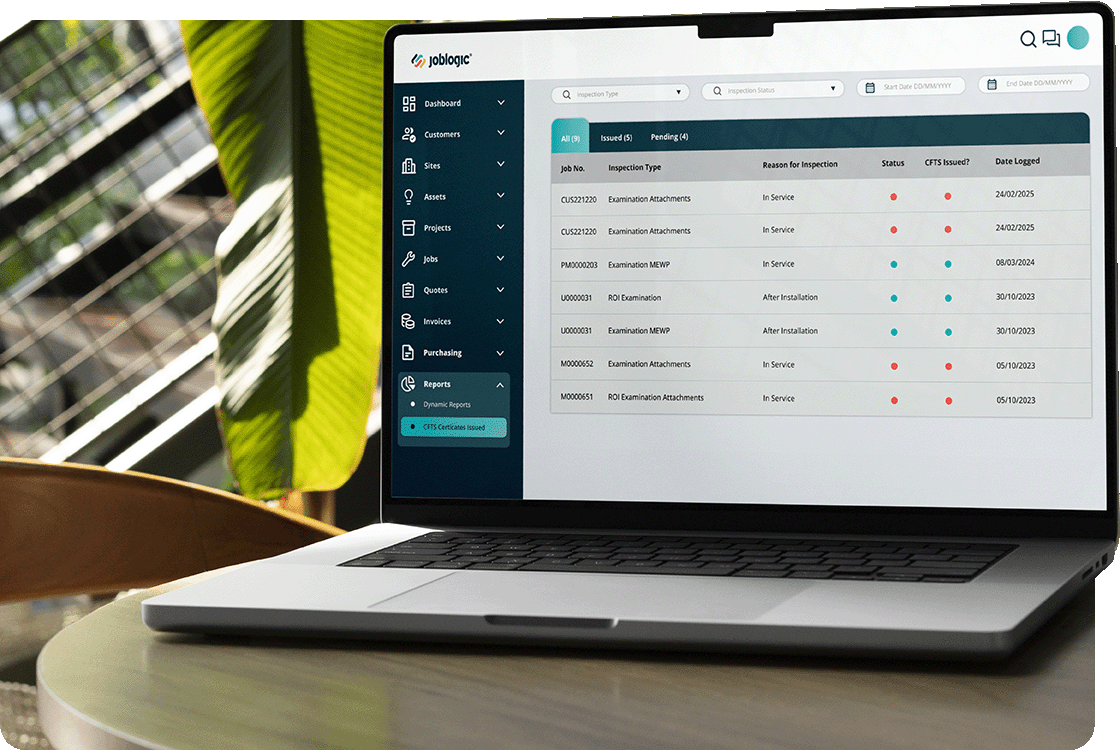
Joblogic CAFM asset management list showing inspection records and status indicators on a laptop

Every region keeps its own version of the truth

Head office asks for a consolidated view of jobs, assets and compliance across every site, and gets back several spreadsheets that don’t agree with each other, because each region has quietly kept its own record all along.

Engineer in coveralls and hard hat using a tablet on a mezzanine platform in an industrial facility

Nobody can tell missing data from ignored data

Without one consistent asset and certificate record across every site, a genuinely missing compliance document looks identical to one that was logged somewhere nobody can find, until an audit forces the difference into the open.

Two engineers in grey overalls and hard hats in a heavy industrial facility, one writing on a clipboard

The board approves numbers nobody can vouch for

By the time site-level figures are combined into a group report, whoever presents it to the board is vouching for numbers built from records they never personally checked, and can’t fully defend if challenged.

One accurate record, enforced across every site

One group report, not a spreadsheet per region

One dashboard rolls up job, asset and compliance data from every site into a single group-level report, so head office is reading one consistent record instead of reconciling a different spreadsheet from every region.

New sites inherit the record, not start over

Every asset across every site carries one certificate and service history, applied to the same standard group-wide, so a new site joining the business inherits an accurate record instead of starting its own version from scratch.

Every contract, one shared record

Every contract holds one version of its job history, assets and SLA record across every site attached to it, so a contract review draws on the same underlying data whichever region or account manager pulls the report.

Compliance records that travel with the asset

F-Gas and other compliance records attach permanently to the asset and site where the work happened, enforced the same way at every site in the group, so no region can quietly keep its own separate version of the record.

£6.5m to £20mmaintenance department turnover growth since 2018, East West Connect
95%reduction in paperwork, Tech Asset Management

Since adopting Joblogic in 2018, our maintenance department turnover has grown from £6.5 million to £20 million. That growth is a direct result of capturing every job, streamlining invoicing, and gaining complete visibility across the business.

Sam AllenDirector of MaintenanceEast West Connect

Ready for one accurate record across every site?

One conversation about your operation. A clearer view of what comes next.

Growing business

More engineers logging jobs their own way means the same site gets three different versions of events

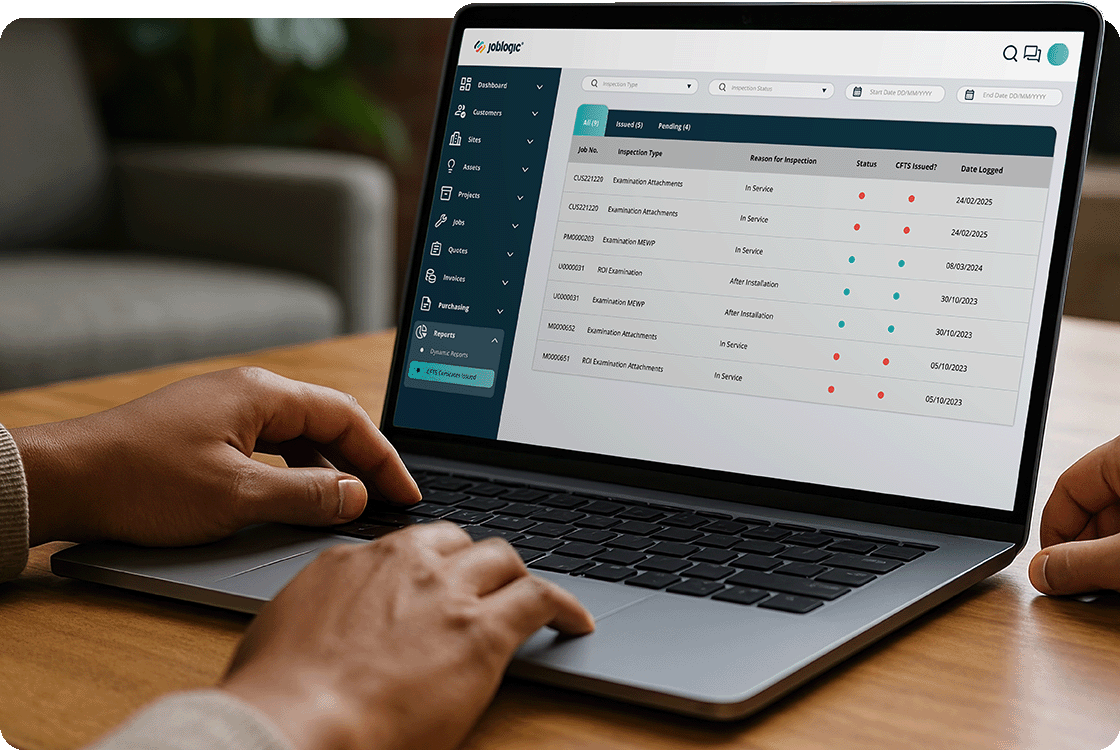
Joblogic CAFM asset list with status indicators shown on a laptop on a wooden table

The same job, logged three different ways

Every scheduler and engineer records slightly different details for the same kind of job, so nobody can say for certain which version is the accurate one when a client questions what actually happened.

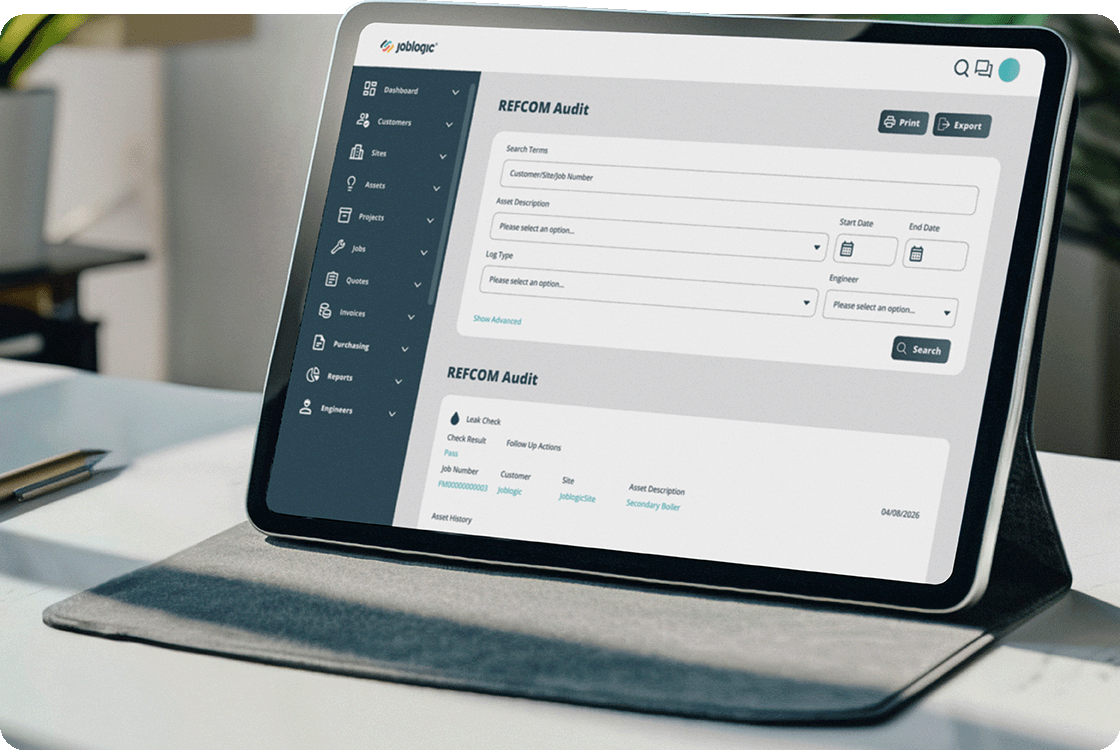
Joblogic REFCOM Audit compliance form displayed on a tablet in a grey folio case

Duplicate jobs slip into the system

A job booked by phone and the same job booked online both get logged separately, so the schedule shows two jobs where there’s only one, and someone has to notice and merge them by hand.

Female electrician in hard hat and orange gloves using a tablet at an electrical panel

Reports depend on who compiled them

Ask two different people for last month’s job numbers and you get two different answers, because each one is pulling from their own spreadsheet, not from one shared version everyone trusts.

One shared record, however many people are entering it

Every scheduler, one live board

Every scheduler and engineer books and updates jobs on the same live board, so a job entered by one person looks and behaves exactly the same as one entered by anyone else on the team.

One record, however the job comes in

Jobs booked by phone, by the portal or by a repeat client all land in the same system automatically, so the same site can’t quietly end up with two separate job records from two different routes in.

One history per asset, no conflicting versions

Every asset carries its own service history and certificate record in one place, so the same boiler or unit can’t have two conflicting histories depending on which engineer last logged a visit.

One dashboard, so reports finally agree

Everyone pulls figures from the same live dashboard instead of their own spreadsheet, so a report built by one manager matches the report built by another, because they’re reading the same numbers.

25%increase in job logging efficiency, Parr FM

Being able to automate certificates and tie them to jobs and assets means we can answer compliance questions straight away.

Brendan OsbornBusiness Operations DirectorTarget Lifts Ltd

Ready for job data your reports can rely on?

One conversation about your operation. A clearer view of what comes next.

small business

I’m the only one who knows if that job record is actually right

Property inspector in orange hi-vis and hard hat holding a clipboard while inspecting a residential roofline

One typo becomes the only record

You type the address, the parts used and the price from memory once you’re back at the van, so if you misremember one detail, that guess is now the permanent record of what happened on site.

Engineer in blue hard hat and gloves using a tool on a pipework manifold or fire suppression system

The same customer, two different files

A regular customer books a job over the phone and another one through the website, and you end up with two separate records for the same site because nothing ties them together automatically.

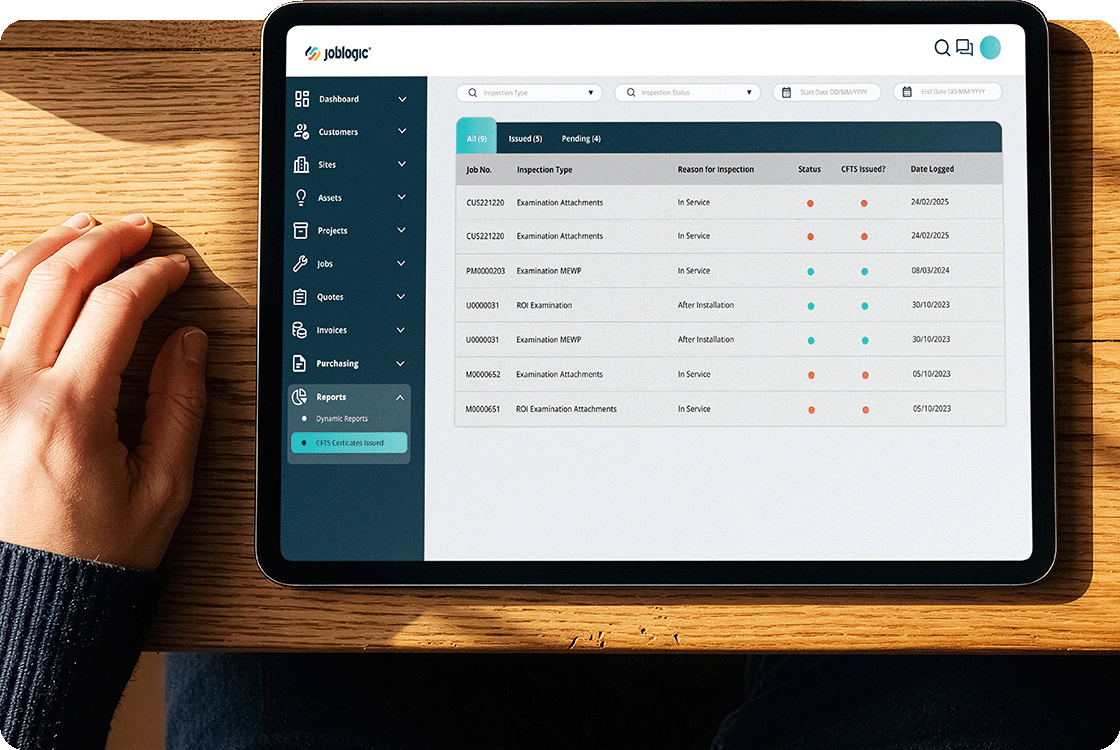
Joblogic job list table displayed on a tablet laid flat on a wooden desk

You can’t remember which quote won

Months later a customer disputes what was agreed, and you’re checking your own memory against a handwritten note, because there was never one place where the final version of the quote actually lived.

One record for every job, from the start

Filled in once, not remembered later

You fill in the job sheet once, on site, with photos and a signature, so there’s one version of what happened, not a memory you’re reconstructing back at the van.

One job record, however they book

A customer books through one portal instead of a mix of calls and forms, so every job lands as a single record from the start, not two versions from two different channels.

The quote you can still check later

Every quote is built and stored in the same place it was sent from, so months later there’s one version to check against, not a memory of what was agreed on the phone.

Ready for one version of the truth?

One conversation about your operation. A clearer view of what comes next.

Which plan keeps your records accurate?

If one person still keys everything in by hand, start with Standard. If several people enter data across a growing team, Premium keeps it consistent. Multi-site groups need Enterprise-level standardisation.

Standard

Standard suits a small team where one person still enters most job details by hand and just needs one place those details actually live.

Job sheets, quotes and certificates captured once on site and stored against that job, so there’s one version of what happened, not a memory to reconstruct later.

See Standard pricing

Premium

Premium suits a growing team where several people enter job data every day and it needs to stay consistent, whoever’s doing the entering.

Shared scheduling, one asset and certificate record, and live dashboards, so a report pulled by one manager matches the report anyone else on the team would pull.

See Premium pricing

Enterprise

Enterprise suits multi-site groups where every region needs to work from the same accurate record, not its own quietly kept version.

Contract-level asset, compliance and job records apply the same way across every site, so a group report reflects one standard, not several regional versions reconciled by hand.

See Enterprise pricing

Where this bites hardest in your sector

Facilities Management

Multiple subcontractors and in-house teams log the same sites differently, so head office consolidates several conflicting versions of what actually happened at each building.

See it in facilities management

Elevator & Escalator

Every lift carries its own certificate and inspection history, and a single missing or duplicated record can stall a safety-critical audit.

See it in elevator and escalator

Healthcare & Equipment

Equipment records need to be precise enough to defend at inspection, so one mistyped service date undermines trust in the whole asset history.

See it in healthcare and equipment

Construction & Real Estate

Multiple contractors and subcontractors report progress on the same project separately, so nobody’s version of what’s actually complete quite matches anyone else’s.

See it in construction and real estate

Public Sector

Contracts get scrutinised and freedom of information requests get filed, so an inconsistent job record isn’t just embarrassing, it’s a defensibility problem.

See it in public sector

Data accuracy questions before you book

Do I still have to retype job details into other systems?

No. You fill in the job sheet once, on site, with photos and a signature attached, and that becomes the record the invoice and any certificate pull from automatically.

What if I make a mistake entering a job on site?

You can correct it at the point of entry, and the change updates the one record everywhere it’s used, rather than leaving an old version behind in an invoice or report somewhere else.

How do you stop the same job being logged twice?

Jobs booked by phone, portal or repeat client land in the same system automatically, so duplicate detection happens at the point of booking rather than being found later during a reconciliation.

Will every engineer actually fill the form in the same way?

Everyone uses the same digital form, with the same required fields, so a job logged by a new starter looks structurally the same as one logged by your most experienced engineer.

Can we trust a report that pulls data from every site?

The dashboard pulls from one underlying record per job, asset and contract across every site, so a group-level report reflects the same data a single site would show, not a separate reconciliation.

What happens when one site’s data quality is worse than another’s?

The same standardised forms and required fields apply everywhere, which narrows the gap, but a site that’s been keeping poor records for years still needs a proper migration and clean-up, not just a switch-on.

Which plan actually fixes inconsistent data for us?

It depends on where the inconsistency starts. One person entering everything by hand usually fits Standard, a growing team needing consistency fits Premium, and multi-site standardisation needs Enterprise. Happy to talk it through on a call.

How long before our records are actually reliable again?

Job sheets and forms are consistent from day one because everyone’s using the same structure. Cleaning up years of historic duplicate or incomplete records takes longer and depends on how much needs migrating.

See what your job data really looks like

Thirty minutes on how job, asset and certificate data moves through your business today, and what a single accurate record would actually change for your reporting.