Hospital healthcare scene | Joblogic

Healthcare and Equipment

Devices tracked. Visits proven. Patient safety never left to chance.

Patients rely on equipment they’ll never think about, from generators and medical gas to lifts and nurse call systems. Keeping it all working means every service happens on time and every visit is on record.

Joblogic schedules planned maintenance, tracks every device, and stores compliance evidence against the right asset. Safety-critical work gets flagged and prioritised, so it never gets treated like a routine job.

Four problems every healthcare and equipment team faces

Critical equipment, scattered sites and evidence nobody can find in time all pull in different directions until something fails.

No way to tell critical from routine

You find out a piece of equipment was safety-critical only after it’s failed, because nothing in your records ever flagged the difference before today.

A device fails before anyone notices

A generator fails, and only then do you learn its planned service got pushed back for the third month running, until the schedule on paper stopped meaning anything.

No shared view across every site

A device fails at a site your own engineers or subcontractors run, and nobody can say how long it had been wrong, because head office never had a view of it.

No proof ready when the inspector calls

A CQC inspection or a client audit lands, and the maintenance records you need sit across three inboxes, two filing cabinets and one engineer’s memory.

Where healthcare and equipment connects to the wider risk

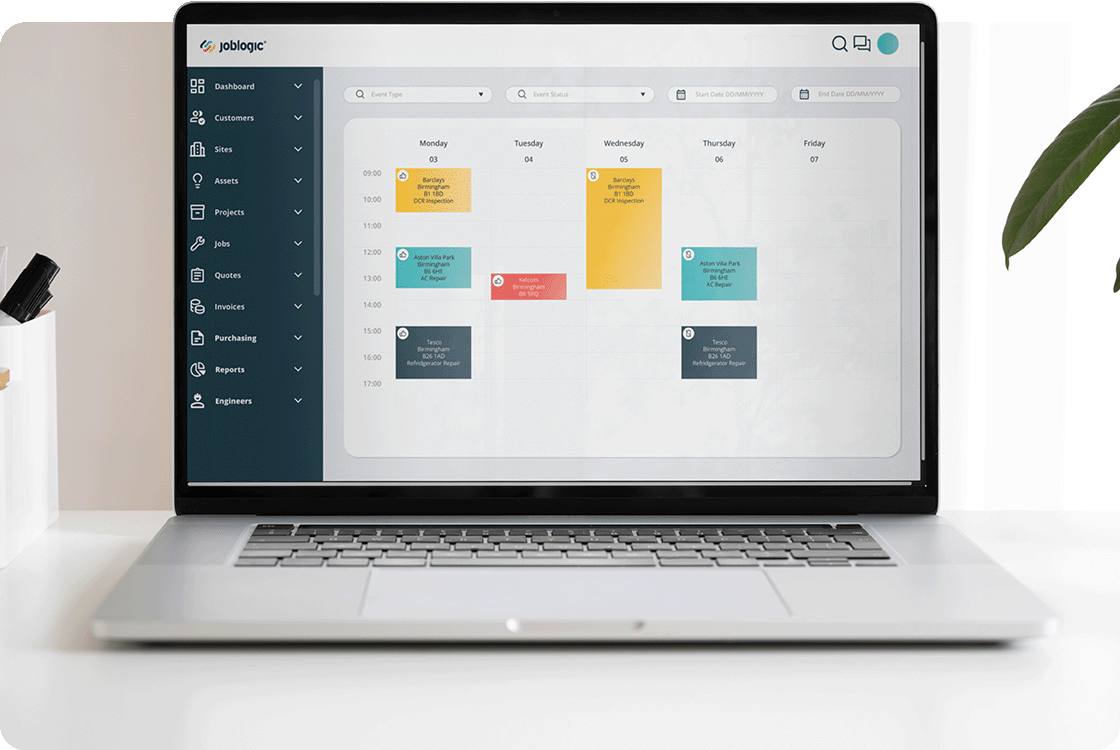
Laptop on a desk showing the Joblogic scheduling calendar with coloured job cards in a weekly view

Plan the service round before it fails

Build planned maintenance around manufacturer-specified intervals across every site, so a device gets serviced on schedule, not after it's already down.
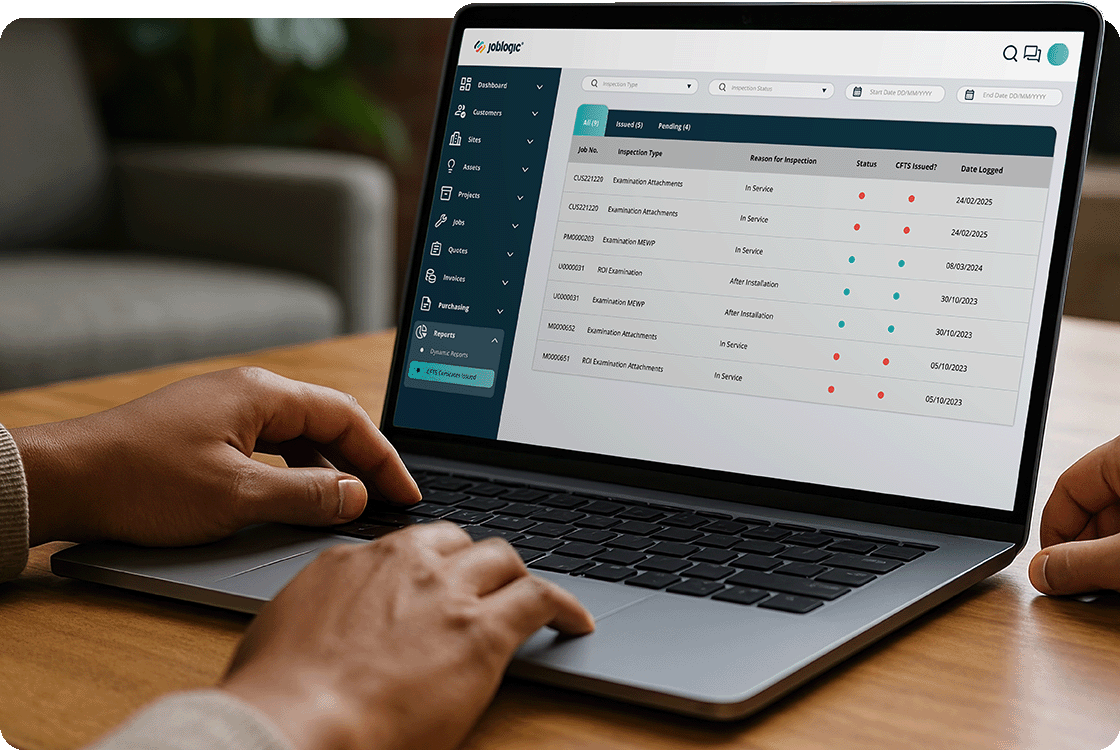
Hands using a laptop on a desk showing the Joblogic job and asset list table with compliance status columns

Turn compliance evidence into an export

Attach every service record, certificate, and manufacturer check to the asset itself, so an inspection or an audit gets an answer in minutes, not days.
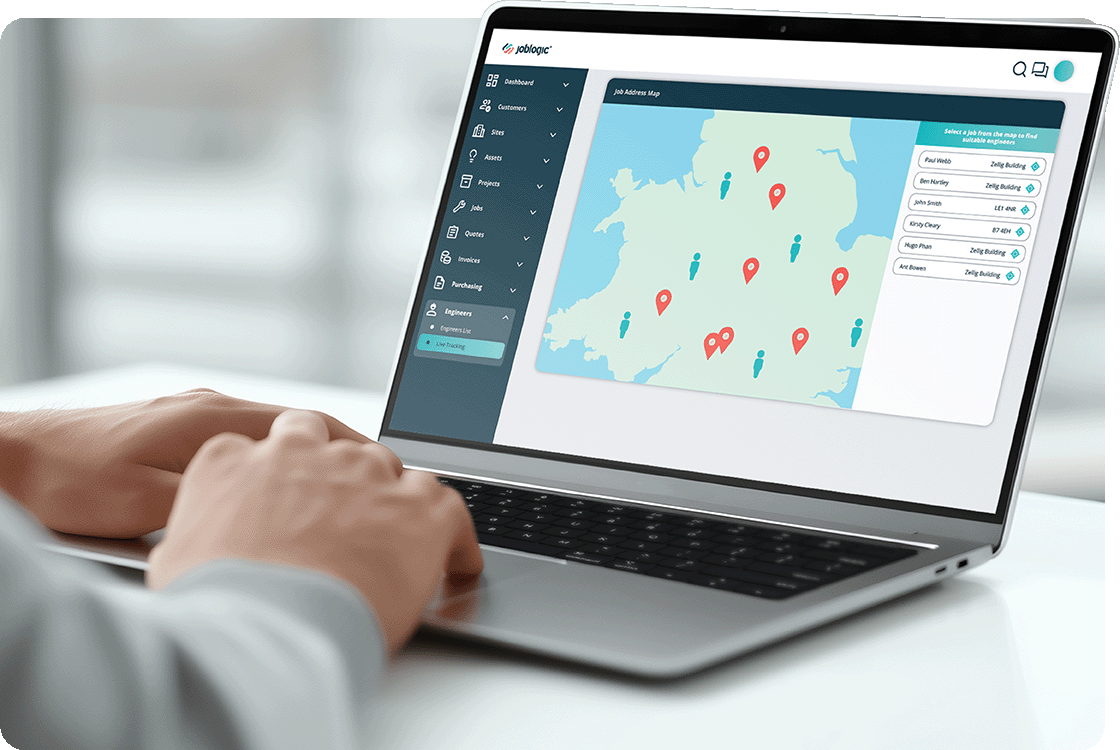
Person at a laptop showing the Joblogic job map view with location pins on a UK map and a job list panel on the right

See every site and every device at once

Check the status of any device, engineer or site across the whole estate from one screen, not a round of phone calls.
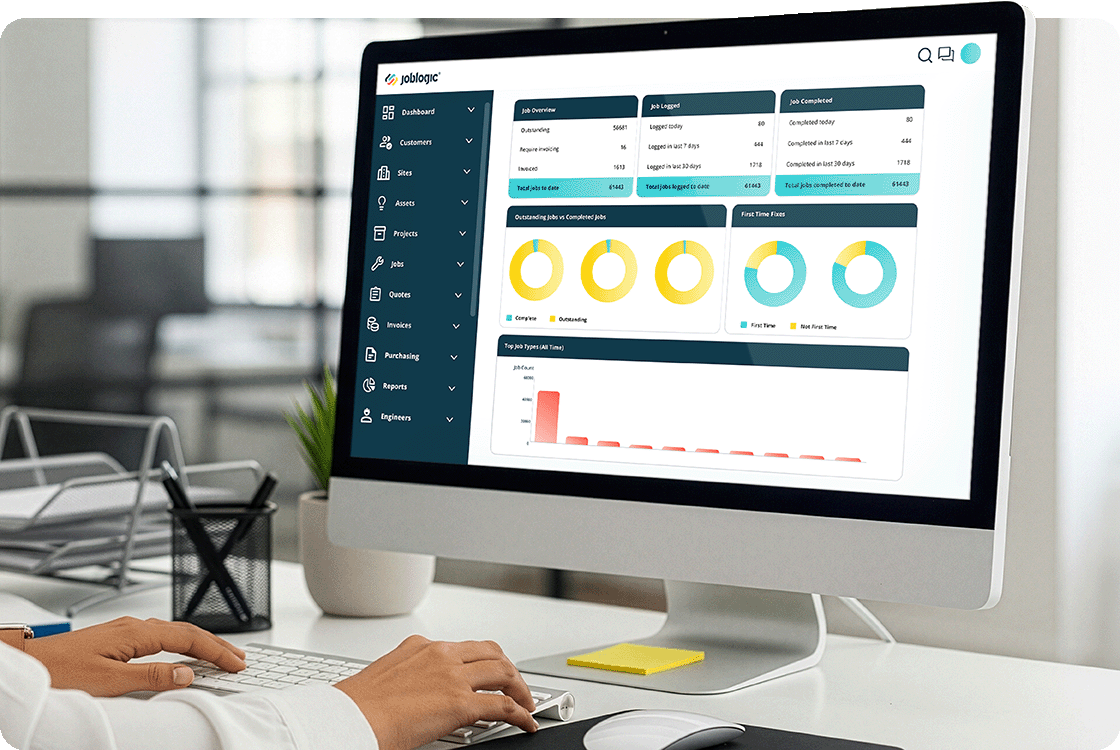
Person at a desktop showing the Joblogic reporting dashboard with donut charts, KPI tiles and a bar chart

Stop equipment failure eating margin

See the cost of every callout, part, and engineer hour against the job, so an emergency fix doesn't quietly outweigh what the contract pays.
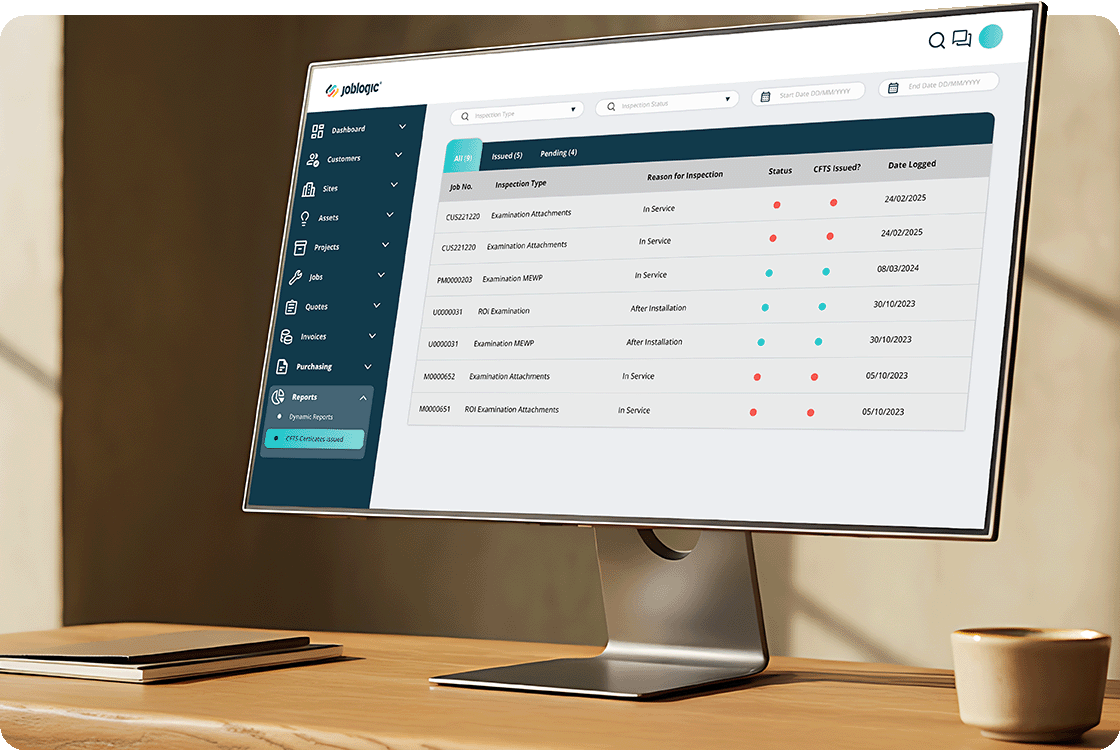
Desktop monitor on a desk showing the Joblogic job and asset list table with compliance status columns

Prove the record when safety is questioned

Produce the full service history behind one device the moment a safety incident, a client or a regulator questions what happened before it failed.

One system across every site and device

Every device, every visit and every certificate tracked from first service to sign-off in one place.

Flag critical before it fails

Every device and plant asset gets its own record, tagged by criticality, so a life-safety failure and a routine fault never queue behind each other by accident.

Service on schedule, not by memory

Service schedules generate against manufacturer-specified intervals per device, so preparation happens on a cycle, not whenever someone remembers to look.

Add a site without rebuilding

Every hospital, clinic, and care home sits in one register, so a new site or contract doesn’t mean rebuilding how you already track the rest of the estate.

Capture evidence on site, not after

Service checks, certificates, and manufacturer sign-offs get captured on the engineer’s phone against the device itself, so evidence never depends on a folder someone forgot to file.

Build the report once, not every time

Build one view of service compliance, asset condition and site performance across the whole estate, and reuse it for every trust, client or board report.

Proof. Not paperwork.

Every service visit, part fitted and manufacturer check attaches to the device the moment the job closes, stored in one system, not a folder in an estates office.

When a CQC inspector, an insurer or a trust’s estates lead asks for the service history behind one device, you export the record instead of searching a store cupboard.
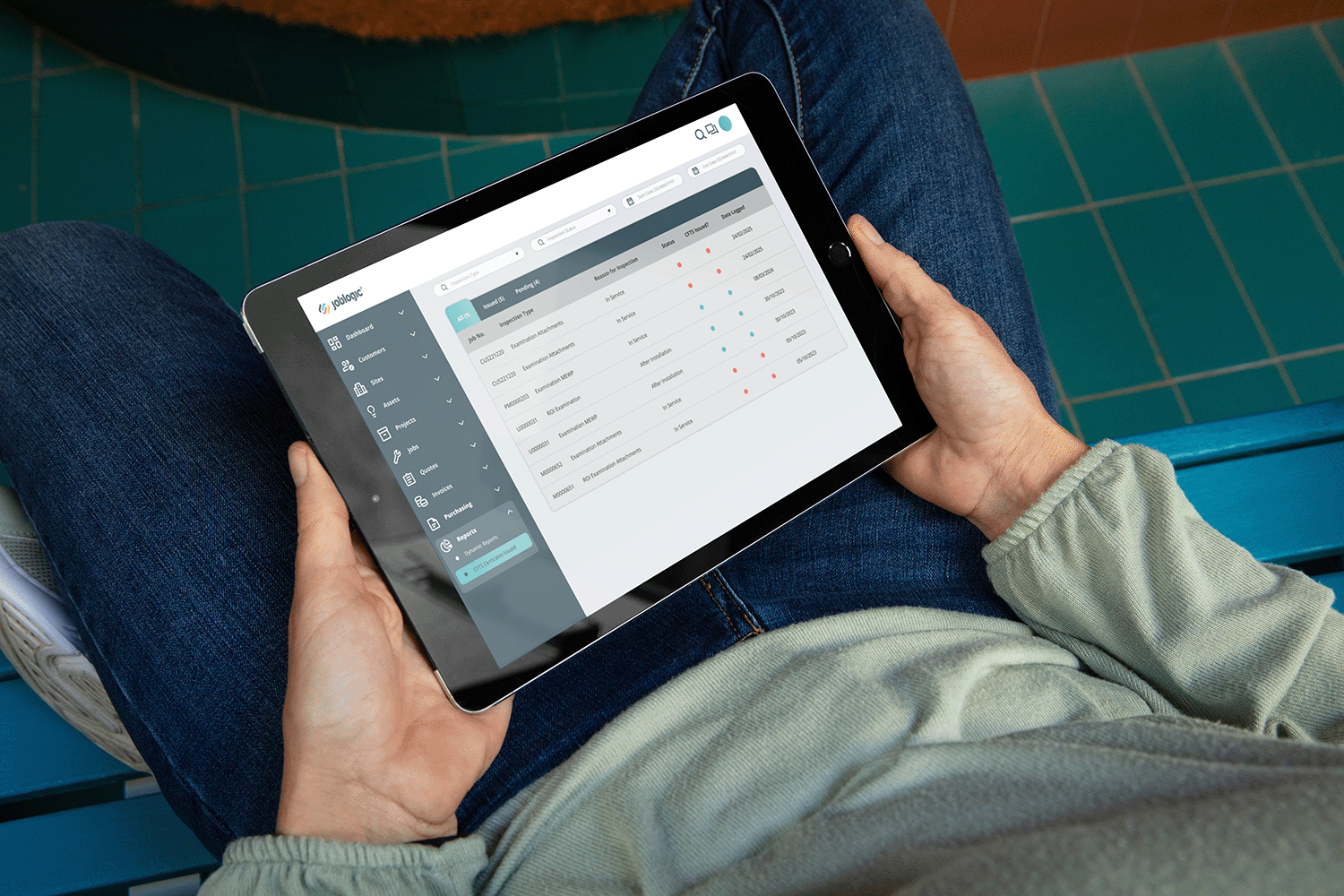
Person seated holding a tablet showing the Joblogic job and asset list with compliance status indicators

Proof, not a pitch

Because Joblogic is continually improving and releasing modules that add more functionality to the system, it really supports us in the culture of continual improvement. It’s transformed the business in terms of how slick it is and how things can happen a lot faster.

Adam SpibySales DirectorHealthcare Matters
95%reduction in paperwork reported by one FM customer, used only as a cross-vertical proxy
80%of engineers use the mobile app daily, cross-vertical, not sector-specific
99.99%platform uptime guarantee, cross-vertical, not sector-specific

What this means for your team

Who this touches depends on how big your operation is. A single care home runs everything through one person; a multi-site NHS trust splits it across a full team.

Business Owner

You run equipment records, servicing, and compliance yourself. Joblogic keeps criticality flags, PPM schedules and CQC-ready evidence straight even when you’re the only one keeping it.

See how it works for owners

Operations Manager

You see the balance between planned servicing and today’s breakdowns across every site, instead of finding out about a critical failure from a phone call.

See how it works for operations

Finance Manager

You track cost against every job as it runs, so an emergency callout that’s quietly losing money gets caught before it’s invoiced, not after.

See how it works for finance leaders

Estate Manager

Your asset register spans hospitals, clinics, and care homes you don’t visit every week. Every certificate and PPM date attaches to the device itself, flagged before it lapses, not after.

See how it works for estate managers

HR Manager

Every engineer and subcontractor’s certifications sit in one record, so scheduling checks who’s actually qualified for a safety-critical device before the visit, not after a compliance gap is found.

See how it works for HR managers

Engineers use it on site, not just in the office

Across the Joblogic customer base, 80% of engineers use the mobile app day to day, a cross-vertical figure, not one specific to healthcare and equipment servicing. On site, engineers log the device serviced, parts fitted and certificate signed before they leave the building. Adoption isn’t the risk here; the paper folder it replaces is.

Smiling bearded male engineer in a yellow hard hat and orange ear defenders wearing navy overalls with reflective stripes, using a tablet in an industrial plant room with large turquoise machinery and silver pipework behind him

Fits the systems your estates team already runs

Connects to the accounting and CAFM systems you already run, and scales from one site to a national trust.

Trusts, sites, and care homes

Team structures and permissions split by trust, site or care home group, so reporting stays accurate as the estate grows across more locations.

CQC and safety compliance

Tracks service intervals against manufacturer schedules and keeps the inspection record against the device, ready for a CQC visit or a client audit.

Healthcare and equipment questions

Does this cover clinical devices or facilities equipment?

Facilities equipment, not clinical devices. This page is written for the plant and building assets that keep a hospital, clinic or care home running: HVAC, generators, boilers, medical gas plant infrastructure, fire and water systems. Calibration and safety testing of clinical devices like infusion pumps or patient monitors sits with specialist biomedical engineering providers, not this platform.

Does this work across an NHS trust or private group?

Yes. The same asset, PPM, and compliance structure holds whether you’re running one care home or a multi-site NHS trust. Team structures and permissions split by trust, site or group as the operation grows, so reporting stays accurate whether you’re managing one building or a hundred.

Can subcontracted engineers get scoped site access?

Yes. Subcontracted engineers and specialist contractors get a portal scoped to the sites and devices you assign them. They log service visits, parts used and certificates there; they don’t see your other sites, your other clients or your commercial data at all.

How do we prove compliance across every single site?

Every service visit, certificate, and manufacturer check attaches to the device the moment the job closes, whether that’s one clinic or a hundred sites. When a CQC inspector, an insurer or a client asks for the record behind one device, you export it instead of searching a store cupboard.

Does this replace how our estates team already works?

No. It gives your estates team one system to work from instead of replacing how they operate. Existing service schedules, contracts, and engineer relationships carry across; what changes is where the record lives, from scattered folders and spreadsheets into one place everyone can search.

How does safety-critical equipment get treated differently?

Every asset carries a criticality flag, set when the record is created, so a life-safety device and a routine fixture never queue behind each other by default. That flag is only as good as the data behind it: this depends on someone tagging criticality correctly during setup, not something Joblogic determines on its own.

Does this scale from one hospital to a whole trust?

Yes, in principle. The same asset, contract, and compliance structure holds whether you’re running one hospital or a multi-site trust, and permissions split by site or region as the estate grows. We haven’t validated this against a large NHS trust deployment yet, so treat the largest end of this as a scoping conversation.

See it across your estate

Thirty minutes on your operation: criticality-tagged asset records, planned maintenance that survives the busiest week, and compliance evidence ready before a CQC inspector or a client ever asks.