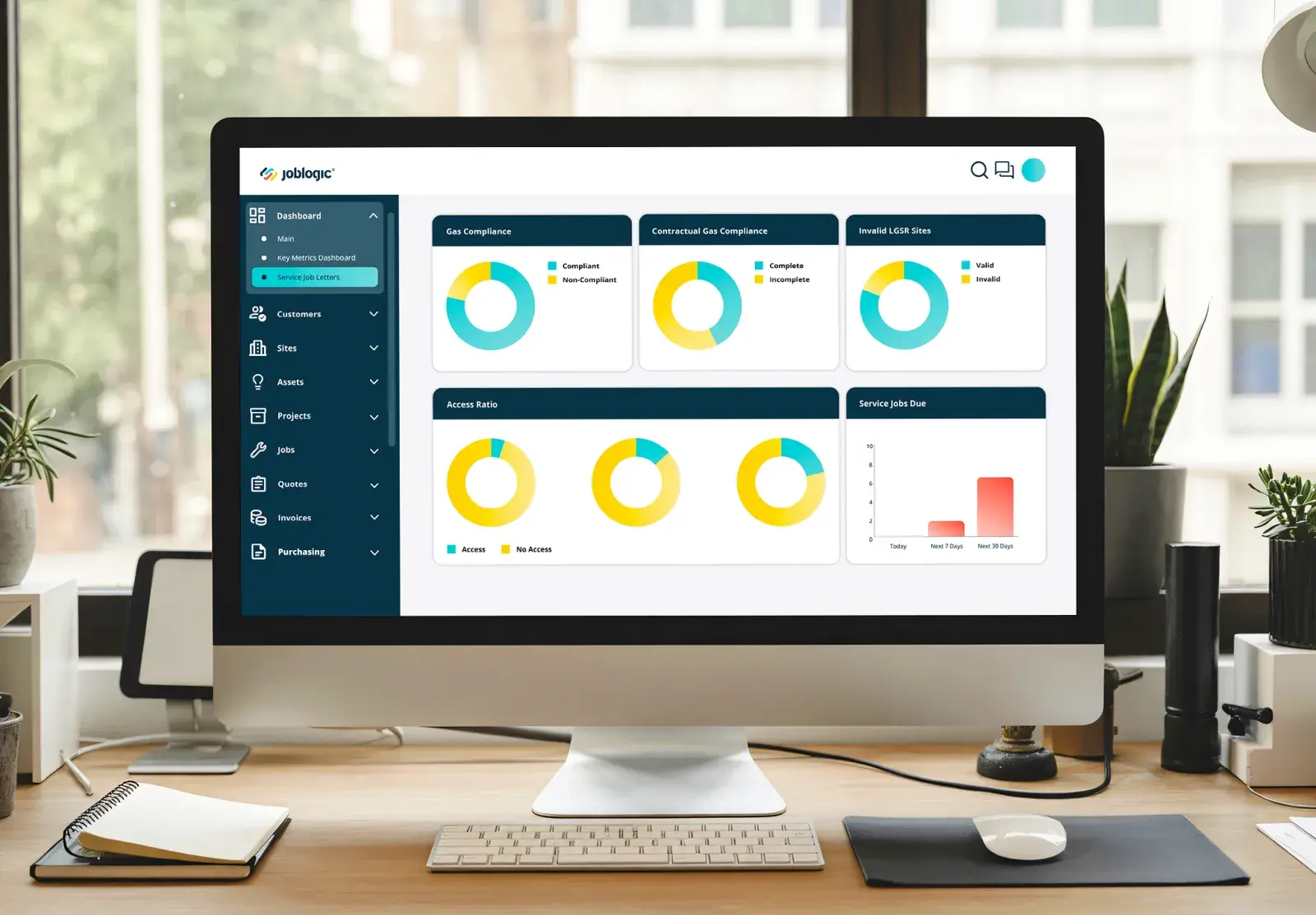
Premium dashboard, live view

Challenge · Visibility

You only find out what happened on site after it’s over

A job gets booked, an engineer goes out, and the office finds out what actually happened only when the engineer gets back, the paperwork turns up, or a customer rings to ask why nobody’s arrived yet. By then the moment to act on it has already passed.

Joblogic connects the job, the engineer’s location and the customer’s expectation into one live record, updated the moment something changes on site. What becomes visible is the gap between when something happens and when someone finds out, closed.

Where does your visibility break down?

Enterprise

At multi-site scale, visibility becomes a reporting exercise: head office sees what happened at each site only once someone has compiled it, so leadership manages yesterday’s picture while today’s jobs are already moving on without them.

Enterprise

Growing business

As the team grows, visibility stops being one phone call away and starts depending on which engineer answers, which job list is up to date, and which customer happens to ring in with an update first.

Growing business

Small business

For a small team, visibility means the owner or one office person calling the engineer directly to find out what’s happening, because there’s no other way to check, and the answer changes depending on who you manage to reach.

Small business

Enterprise

By the time job and engineer status from every site rolls up into one report, it’s describing a day that’s already over

Smiling professional man working at a laptop in a bright modern open-plan office

Every site reports status its own way

Each site or region has its own way of recording job progress and engineer location, so building one group-level view means reconciling formats first, before anyone can actually compare performance across the business.

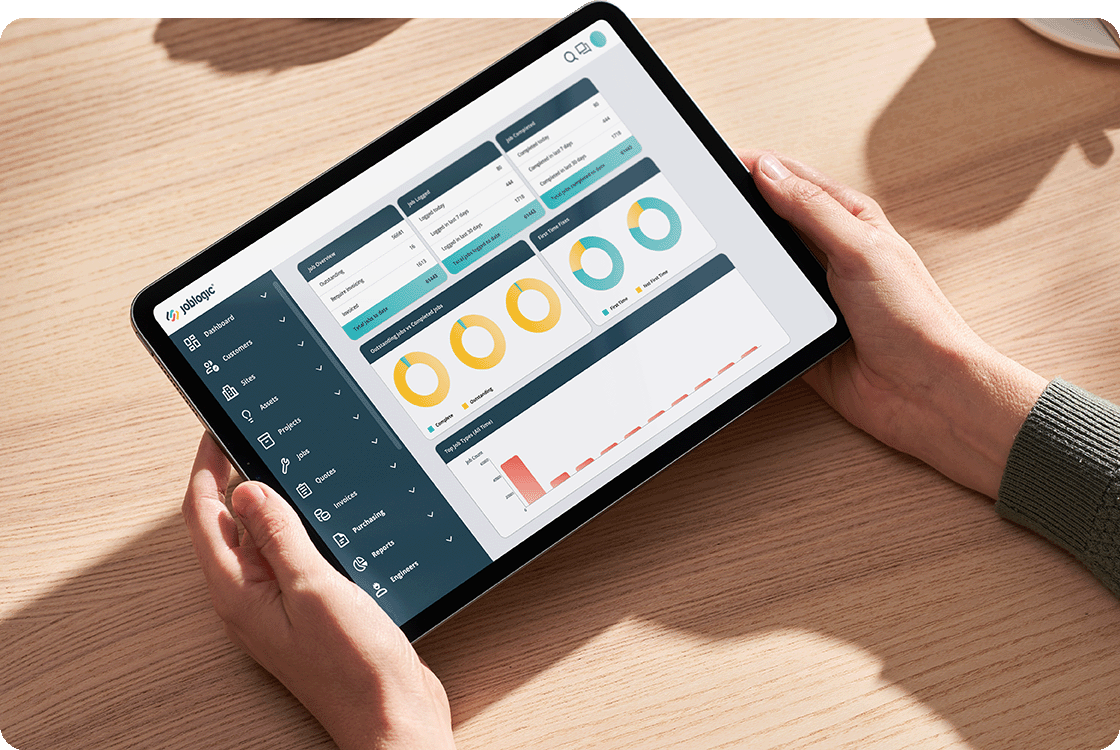
Hands holding a tablet showing the Joblogic reporting dashboard with KPI doughnut charts

SLA breaches surface at the client review

A missed SLA on site often isn’t visible at head office until the client raises it at a contract review, by which point it’s a relationship problem instead of a scheduling one.

Professional man with glasses working at a laptop in a bright office with large windows

The board sees last week’s picture, not today’s

Leadership reporting on job and engineer status across the group is usually a snapshot someone compiled from several local systems, so the business is managed against a picture that’s already several days out of date.

One visibility standard, held at every site

Group performance without the wait

One dashboard rolls up job status, engineer location and SLA position across every site and region, so leadership sees group performance without waiting for a report to be compiled.

SLA gaps show before the client does

Each contract carries its own SLA and reporting rules, applied automatically to every site under it, so a gap shows at contract level before it becomes a breach the client has to raise.

The whole fleet, not just your depot

Fleet location across every site sits on one map instead of a separate view per depot, so a regional manager sees the whole operation, not just the patch they can see from their own office.

Asset compliance, ready on demand

Asset history and status update from the point of service at every site, so a group-level compliance and maintenance position exists on demand instead of being rebuilt for every audit.

£6.5m to £20mmaintenance department turnover growth since 2018, East West Connect
95%reduction in paperwork, Tech Asset Management

Since adopting Joblogic in 2018, our maintenance department turnover has grown from £6.5 million to £20 million. That growth is a direct result of capturing every job, streamlining invoicing, and gaining complete visibility across the business.

Sam AllenDirector of MaintenanceEast West Connect

Ready to standardise visibility across every site?

One conversation about your operation. A clearer view of what comes next.

Growing business

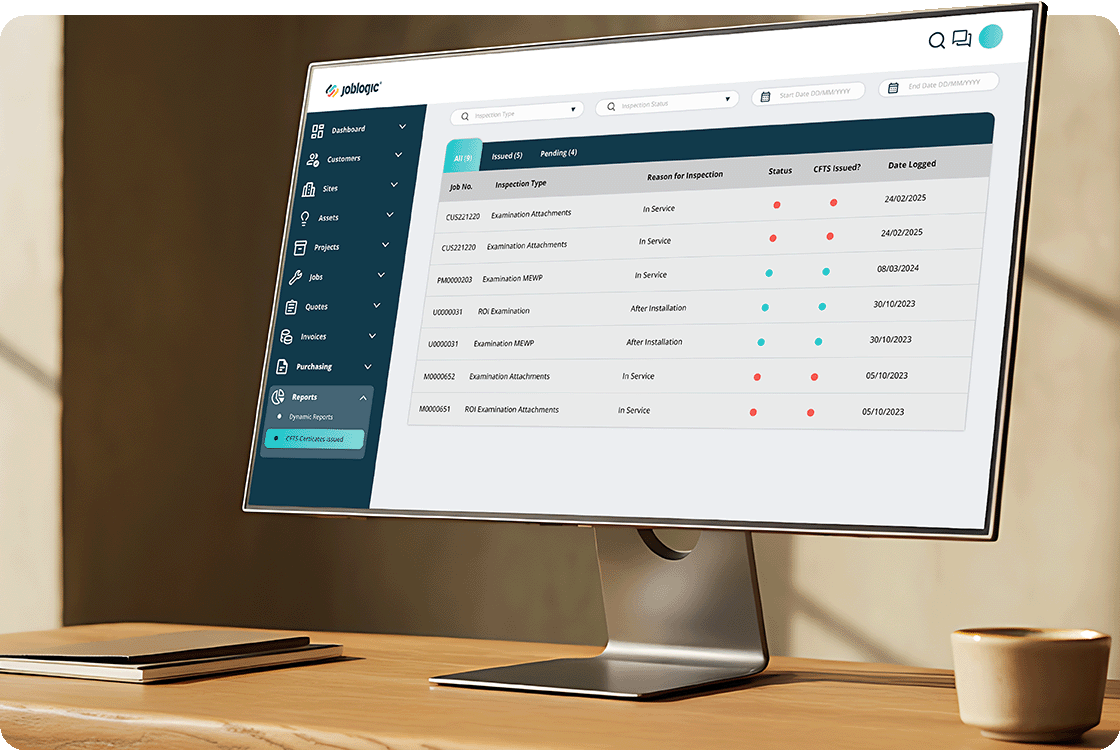
With ten jobs running at once, the only up-to-date picture is whatever the last phone call told you

Joblogic job list table with status indicators open on a desktop monitor

Ten engineers, ten versions of today

Each engineer updates the office in their own way, a text here, a call there, so building one picture of today’s jobs means chasing five separate people instead of checking one place.

Engineer in yellow hi-vis jacket using a smartphone in an industrial setting, holding his hard hat

Delays surface as complaints, not warnings

A job running late doesn’t show up until the customer it was meant for calls to complain, by which point there’s no time left to reschedule around it or warn the next customer in the queue.

Engineer in yellow hi-vis and hard hat using a tablet outside a commercial building

The schedule shows the plan, not reality

The plan for the day says where every engineer should be, but nobody’s updating it as jobs actually run long, finish early or get reshuffled on the road, so it stops being trustworthy by mid-morning.

One live view the whole team works from, not five

One job, moved once, seen by everyone

Every scheduler and engineer works from the same live board, so a job moved by one person updates for everyone else immediately, instead of five different versions of today’s plan.

One screen instead of five phone calls

One dashboard shows job status, engineer location and delays across the whole team, so a manager checks one screen instead of ringing round five engineers for an update.

The whole team’s location, one map

A dispatcher sees the whole team’s live location on one map, not one engineer at a time, so reallocating a job to whoever’s actually closest takes seconds, not a round of phone calls.

Clients check status without calling in

Clients check their own job status and history in a portal, so a bigger customer book doesn’t mean more calls asking the office for an update that’s already visible online.

25%increase in job logging efficiency, Parr FM
~1 minuteaverage invoicing time, down from around 15 minutes, Parr FM

Joblogic has enabled us to provide real-time information to our clients without the need for various other software platforms. The engineers are tracked, meaning greater ETAs can be provided.

Chris ClaypoleMaintenance ManagerBeechcroft BMS

Ready for one view the whole team trusts?

One conversation about your operation. A clearer view of what comes next.

small business

I only know what happened on site once the engineer tells me

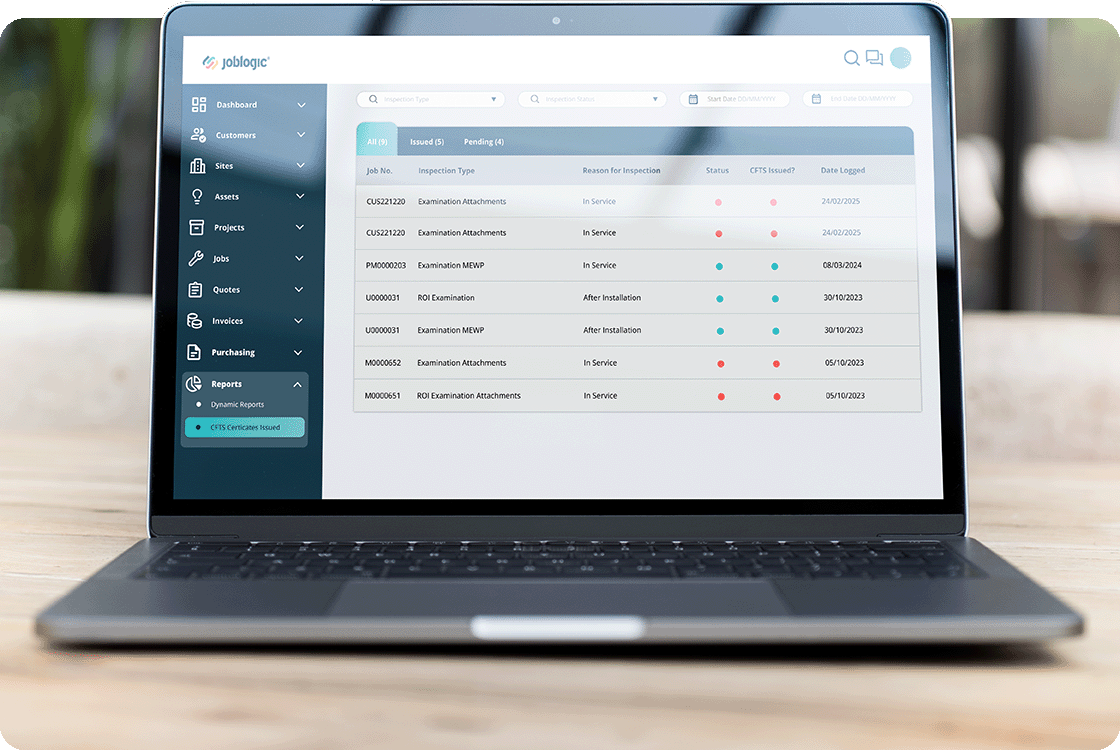
Joblogic job list table open on a laptop placed on an outdoor wooden table

Customers ask before you can answer

A customer rings to ask if the engineer’s on the way, and you’re checking your own memory or a text message, because there’s no record of where the job actually stands right now.

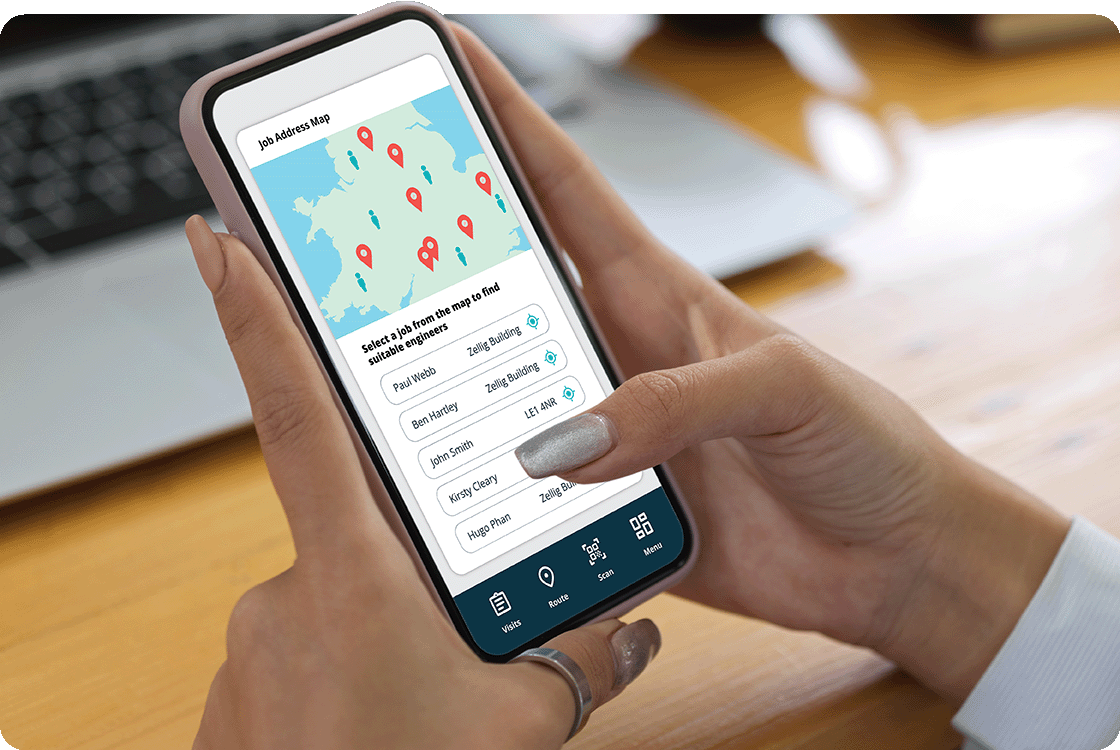
Woman's hands holding a smartphone showing the Joblogic job location map

A delay only shows up when it’s already late

You find out a job’s running behind when the next customer calls to ask where the engineer is, not from anything that would have let you warn them first.

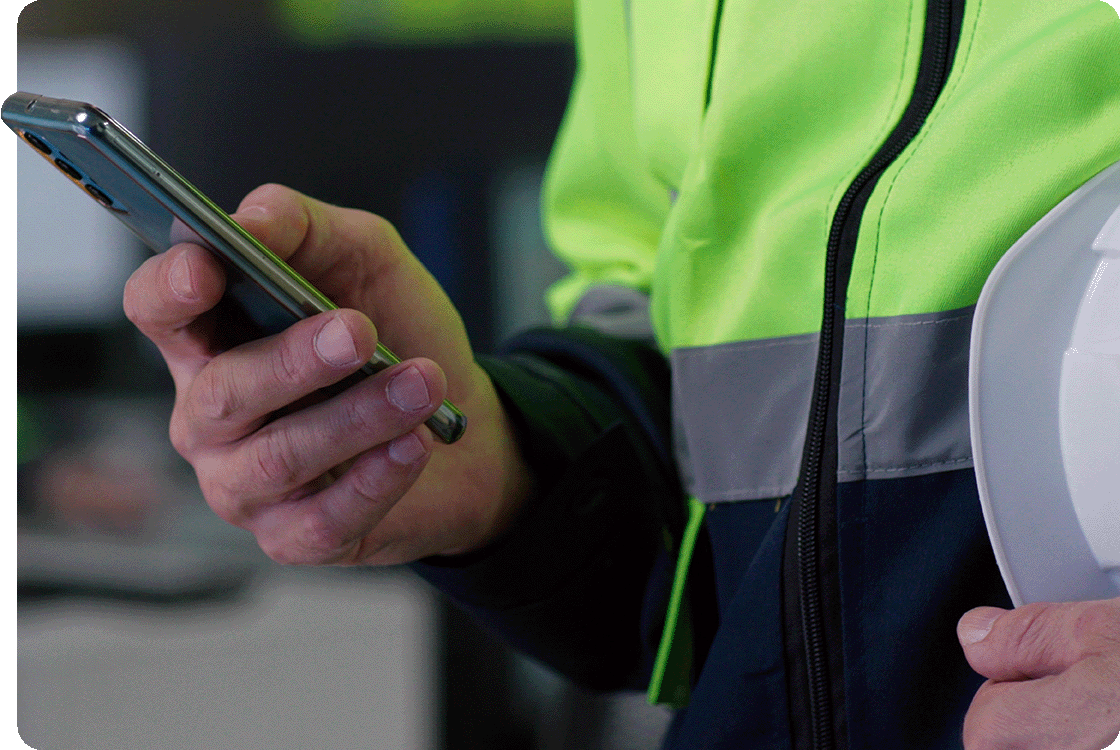
Close-up of engineer's hands using a smartphone, with hi-vis jacket and hard hat visible

One phone call is your whole reporting system

Checking progress on a job means ringing the engineer directly, and if they don’t pick up, you genuinely don’t know whether they’re stuck in traffic, still on site, or already finished.

See where the job stands without calling

Stop ringing to ask where they are

Your engineer’s location updates live on a map from their phone, so you can see whether they’re on the way, on site or already done, without ringing to ask.

Live status, not a delayed update

Every job carries a live status, booked, on the way, on site, complete, so you know where it stands the moment it changes, not when someone remembers to tell you.

Customers get updated before they call

The customer gets an automatic update when the engineer’s on the way, so you’re not the one fielding a call to ask something the system could have already told them.

Before Joblogic, tracking our engineers relied on endless time sheets and manual processes. It was a nightmare. Now, everything is digital, reducing our admin workload and making job tracking easy.

Response Building Maintenance

Ready to see the job as it happens?

One conversation about your operation. A clearer view of what comes next.

Which plan gives you the visibility you need?

If visibility means stopping the chasing calls, start with Standard. If it means one live view for a growing team, Premium fits. Multi-site groups need Enterprise reporting.

Standard

Standard suits a small team where one person needs to see job status without ringing the engineer, not build a group-wide report.

Live job status and engineer location on your phone, with automatic customer updates, so you always know where a job stands without picking up the phone.

See Standard pricing

Premium

Premium suits a growing team where visibility has to hold across several engineers, not just the one person who used to track it all.

One live view of job status, engineer location and customer updates across the whole team, so a bigger book doesn’t mean less visibility.

See Premium pricing

Enterprise

Enterprise suits multi-site operations where visibility has to be consistent and reportable at group level, not just accurate at any single site.

Job, engineer and SLA status roll up across every site and region into one live view, so head office sees the business as it stands, not as it was reported.

See Enterprise pricing

How visibility bites in your sector

Facilities Management

Multiple sites and subcontractors report back in different ways, so a facilities manager rarely has one live view of what’s actually happening today.

See it in facilities management

Fire Safety

A missed inspection or an out-of-date certificate stays invisible until an audit or an incident forces the question.

See it in fire safety

Construction & Real Estate

Multiple trades and subcontractors move through the same site, so knowing who did what and when depends on someone chasing every party for an update.

See it in construction and real estate

Security

Guards and engineers are spread across sites at all hours, so a control room learns a post is uncovered only once it’s already gone quiet.

See it in security

Elevator & Escalator

A lift or escalator fault needs reporting within minutes, but status usually only reaches head office once an engineer is already there.

See it in elevator and escalator

Visibility questions before you book

Can I see where my engineer is without calling them?

Yes. Engineer location updates live on a map from the mobile app, so you can check progress on your phone instead of interrupting them with a call.

Do customers get told automatically, or do I still have to call?

Customers get an automatic update when the engineer’s on the way, so you’re not the one making that call. You can still ring if you want to, it’s just no longer the only way they find out.

How do I stop chasing five engineers for updates?

A live dashboard shows job status and location for the whole team on one screen, so checking progress means glancing at a screen instead of ringing round the team one by one.

Will this work the same for a new starter as an experienced engineer?

Yes. Everyone updates status the same way through the same app, whatever their experience, so a job logged by a new starter is exactly as visible as one logged by your longest-serving engineer.

Can head office see status across every site, not just one?

Yes. Job, engineer and SLA status roll up into one group-level dashboard across sites and regions, so head office doesn’t wait for someone to compile a report from each location.

How do you handle different reporting formats across regions?

Every site and region works from the same live data structure, so there’s no reconciling formats before comparing performance, the group-level view is already consistent by design.

Which plan actually gives us the visibility we need?

It depends on where visibility breaks down today. One person wanting to stop chasing calls usually fits Standard, a growing team needing one shared view fits Premium, and multi-site reporting needs fit Enterprise.

How long before we’re actually seeing live status?

Most teams have engineers logging live status and location within the first couple of weeks. Group-level reporting across every site takes longer, depending on how many locations and how much historic data need bringing in.

See what’s happening in your operation

Thirty minutes on how job and engineer status moves through your business today, and what becomes visible when it’s live in one place instead of scattered across calls and paperwork.