No record of what’s been serviced
You plan the next service from memory and last season’s paper trail, so the tractor that’s been struggling for months fails in the one week you can’t afford it to.

Agriculture
Machinery breaks in the field, not the workshop, worst of all during the six weeks a season allows for planting or harvest. Engineers travel long distances between farms carrying paper job sheets and no record of what was serviced last time.
Joblogic gives Service Managers, Operations Managers and Finance Managers one system for machine history, seasonal scheduling and route planning across every farm and depot, so the busiest six weeks of the year don’t run on memory and a printed map.
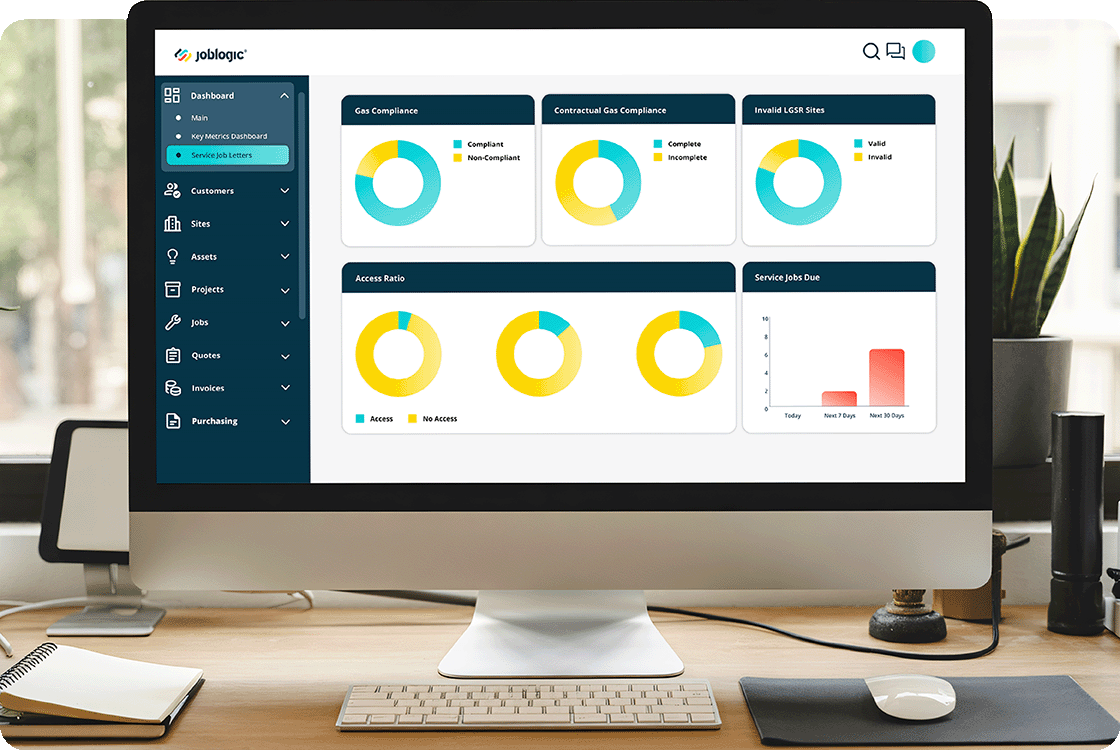
Long travel, tight seasons and machinery that won’t wait all pull in different directions until something fails.
You plan the next service from memory and last season’s paper trail, so the tractor that’s been struggling for months fails in the one week you can’t afford it to.
You need the same machine ready on the same farm the same fortnight everyone else does, and your engineers can’t be in six fields at once, so someone’s breakdown waits.
You send whichever engineer answers the phone, not the one closest, because nobody’s routing against the map, and half a shift disappears on the road before the first job starts.
A dealer disputes a warranty claim or an insurer questions a breakdown mid-harvest, and you can’t produce the service history to back up either side of the argument.

Build the pre-season service run before planting or harvest starts, so machines are ready for the fortnight that matters instead of failing inside it.
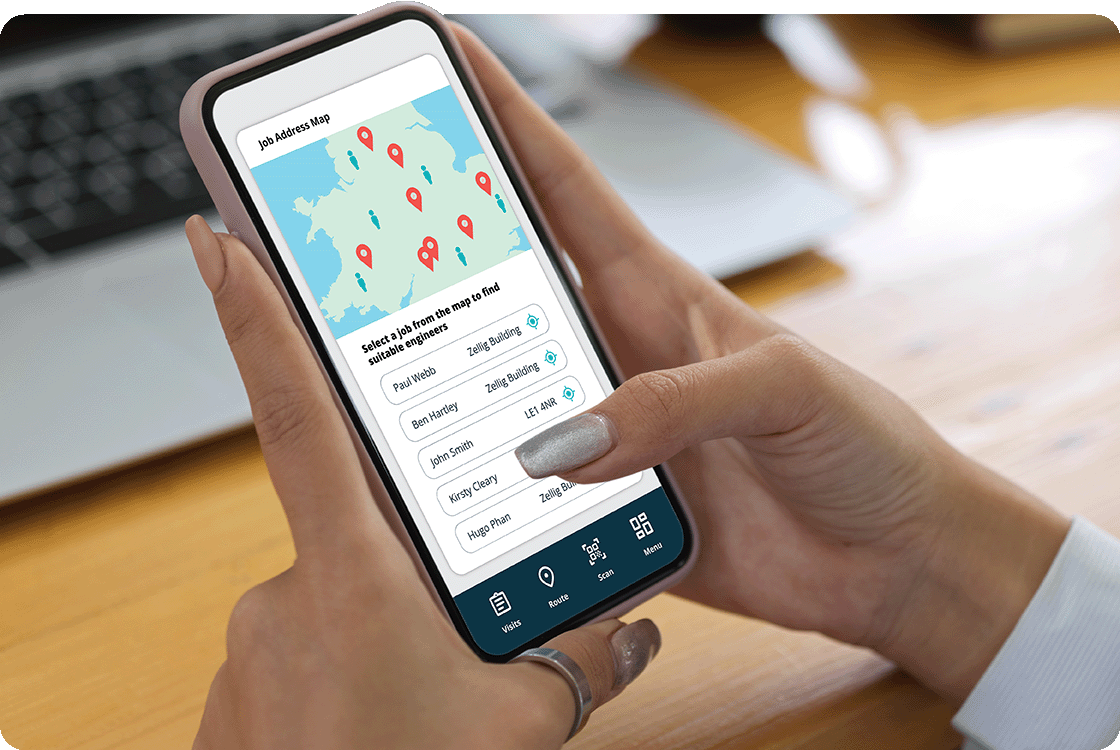
Route engineers by geography, not guesswork, so fewer miles are lost between farms and more of the day goes to the job itself.
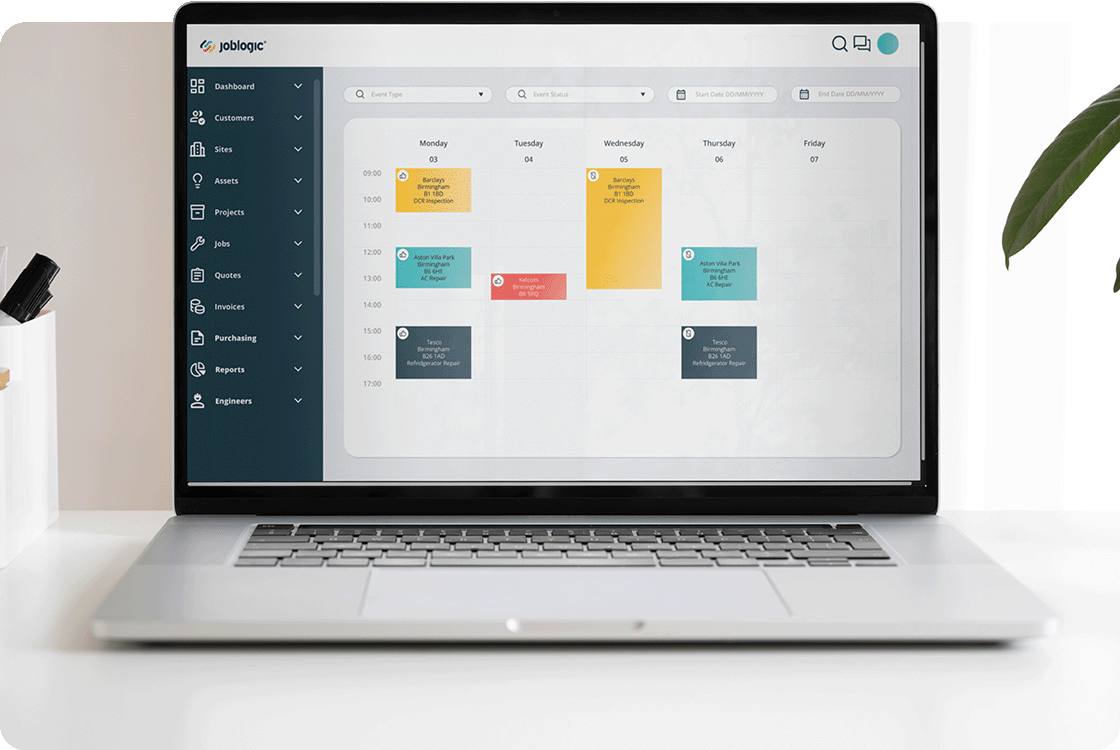
Check the status of any machine, engineer or farm across the whole patch from one screen, not a round of phone calls.
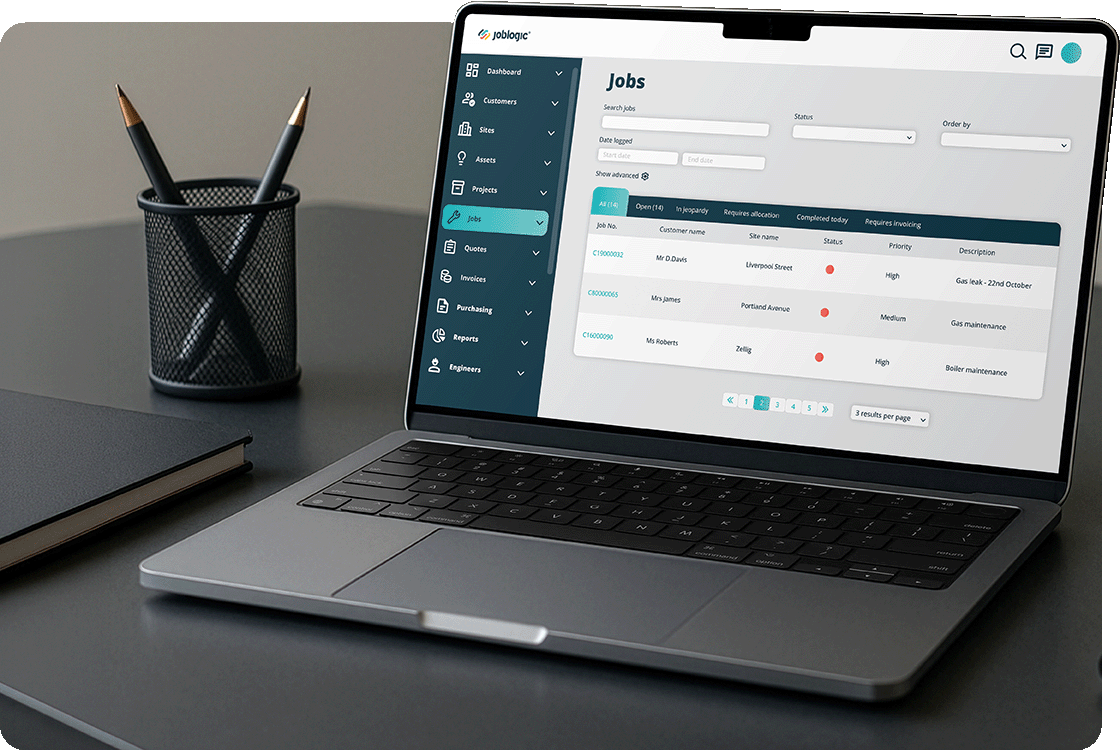
See travel time and parts cost against every job as it runs, so money lost on the road gets caught before invoicing, not after.
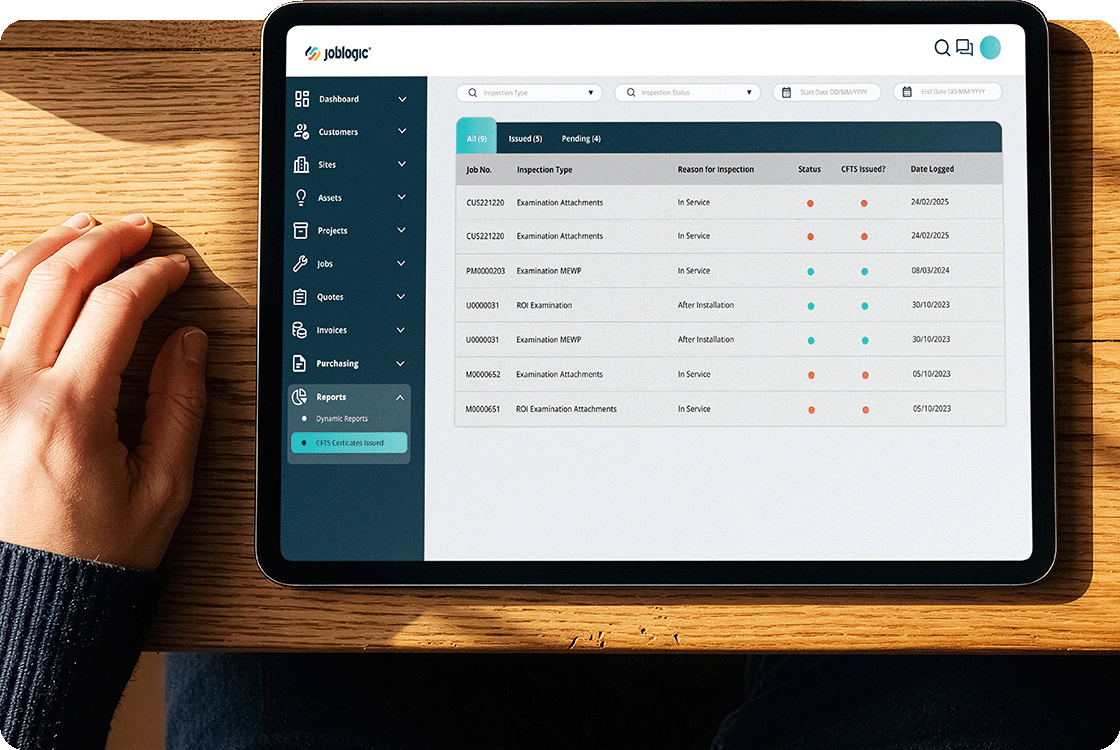
Produce the full service record for one machine the moment a warranty claim, an insurer or a farmer questions what happened before a breakdown.
Every machine, every visit and every route, tracked from the yard to the invoice in one place.
Every machine gets its own record, from tractor to irrigation pump, with every visit logged against it, so the engineer sees what’s actually been done before touching it.
Pre-season service schedules generate automatically per machine, so preparation happens weeks before planting or harvest starts, not the week everyone else needed it too.
Jobs get assigned by location and skill, not who picks up the phone first, so the nearest qualified engineer takes the callout instead of losing the morning to the road.
Full service history exports per machine, per farm or per contract, so a warranty dispute or an insurance question starts from a record, not a memory of who did what.
Every farm, depot, and machine type sits in one register, so adding a new region or client doesn’t mean rebuilding how you already track the rest.
Every service visit, part fitted and technician note attaches to the machine the moment the job closes, stored in one system, not a job sheet left in the cab.
When a dealer disputes a warranty claim or an insurer asks about a harvest breakdown, you export the machine’s history instead of chasing job sheets that never left the field.
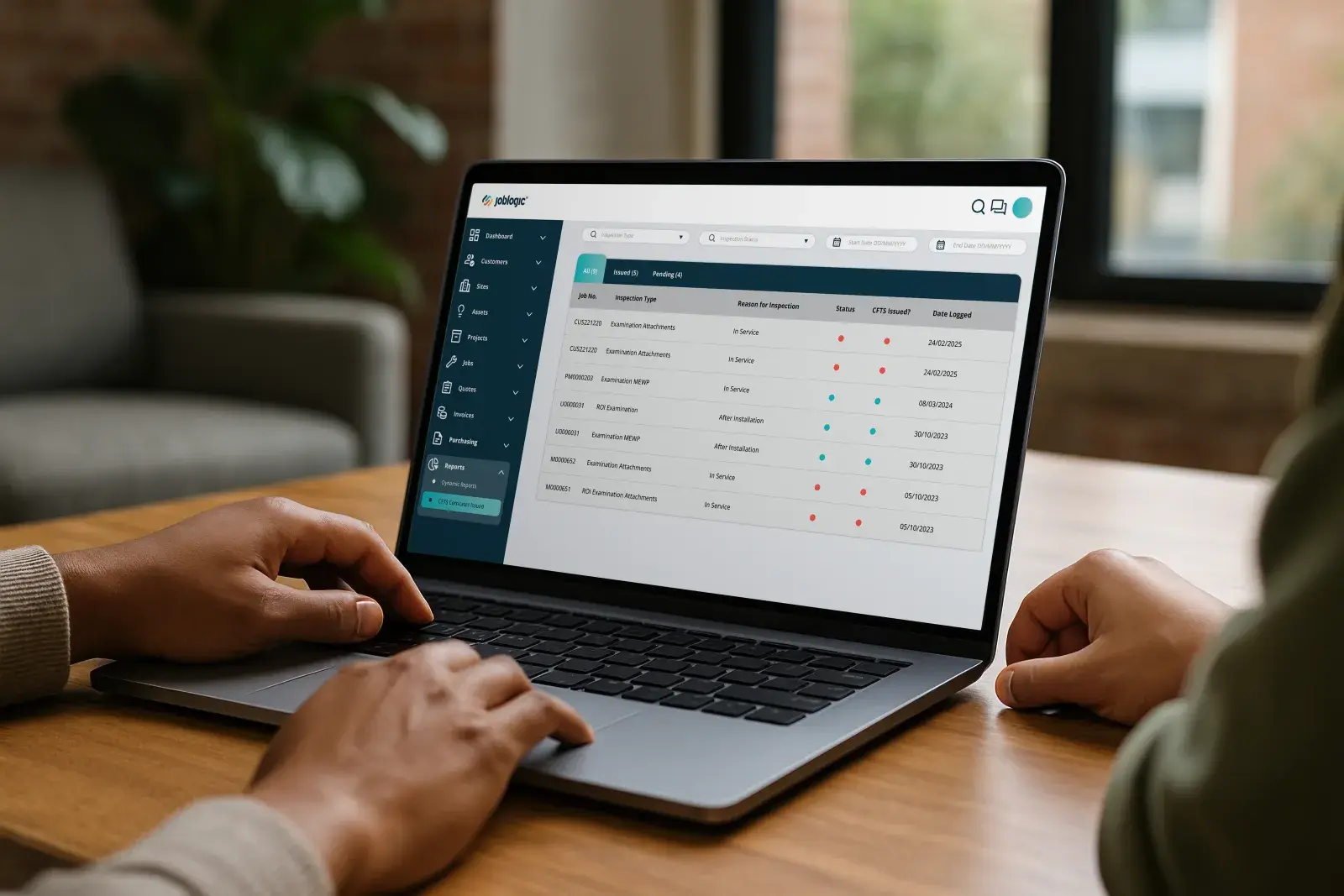
Who this touches depends on how big your operation is. A five-person agricultural service operation runs everything through one owner; a multi-depot network splits it across a full team.
You handle scheduling, machine records, billing, and warranty questions yourself. Joblogic keeps every machine’s service history proven, so a dispute doesn’t mean digging through old job sheets.
See how it works for ownersYou see the balance between the pre-season schedule and today’s breakdowns across every farm and depot, instead of chasing engineers for an update.
See how it works for operationsYou track travel time and parts cost against every job as it runs, so a visit that’s quietly losing money gets caught before it’s invoiced.
See how it works for finance leadersYour vans cover a huge rural patch every week. Joblogic tracks vehicle location, mileage, and fuel per vehicle, and routes engineers by geography, so fewer miles get lost between farms.
See how it works for fleet managersYou need the right part on the van before the visit, not after. Joblogic ties parts availability and purchase orders to the job through Parts Arena, so nothing stalls for a missing part.
See how it works for stock managersAcross the Joblogic customer base, 80% of engineers use the mobile app day to day, a cross-vertical figure that holds for agricultural equipment engineers too. On site, engineers log parts used, capture photos of machine condition and close out the job before they’ve left the yard gate. Adoption isn’t the risk here; the paper job sheet it replaces is.

Connects to the accounting and parts systems you already run, and scales from one depot to a national network.
Integrates with accounting platforms including Xero, Sage, and QuickBooks, plus Parts Arena for live parts availability across the dealer network.
Team structures and permissions split by depot, branch or client account, so reporting stays accurate as the operation covers more rural ground.
Tracks service intervals against manufacturer schedules and, where machinery falls under PUWER or LOLER, keeps the inspection record against the asset itself.
Not entirely, and we won’t claim it does the work for you. Pre-season schedules and route planning spread the load ahead of the rush, so machines are prepped and engineers are routed efficiently before the surge hits. The surge itself, more jobs than hours in six weeks, is a capacity problem no software fixes outright; it makes the capacity you have go further.
Yes. The asset register isn’t built around one machine type or manufacturer. A tractor, a combine, an irrigation pump and a grain dryer each get their own record: service history, parts used and every visit logged against it, in the same system as everything else you service.
Not by magic, but by geography. Jobs get assigned to the engineer who’s actually nearest and qualified, not whoever answers the phone first, so travel time between farms drops and the working day covers more ground. It doesn’t shrink the map, it just stops wasting the miles you already drive.
Yes. Subcontracted or dealer-network engineers get a portal scoped only to the jobs and machines you assign them. They log service visits and parts used there; they don’t see your other clients, your other farms or your commercial data at all.
No. Parts Arena integration connects to live supplier stock and pricing, so ordering sits inside the job. It doesn’t replace your dealer accounts or move you onto a different parts network; it just puts availability where the planner and engineer can already see it.
Every service visit attaches to the machine the moment the job closes, with the date, the technician and the parts used against it. If a dealer, an insurer or a farmer asks for the history behind one machine, you export the record instead of chasing old job sheets.
Both. The same asset, PPM, and route structure holds whether you’re running one depot or several regions. Team structures and permissions split by depot or region as the operation grows, so oversight doesn’t get harder as the patch does.
Thirty minutes on your operation: service history against every machine, scheduling that survives planting and harvest, and route planning that gets engineers to the right farm faster.