Dynamic scheduler | Joblogic

Challenge · Workforce pressure

Just one engineer away from falling behind

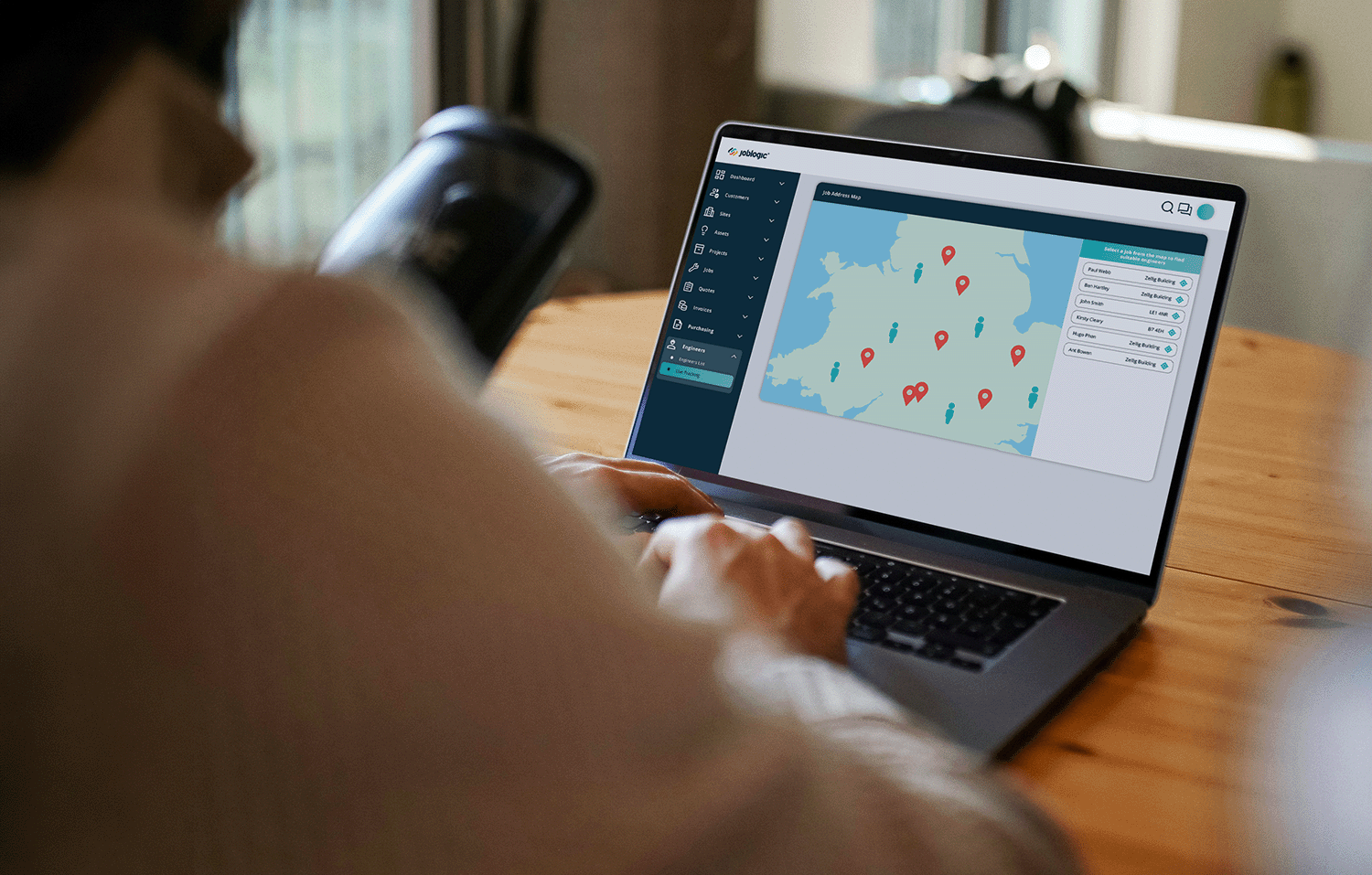
One engineer off and the whole week wobbles. Joblogic shows who’s free, who’s qualified, and who’s stretched too thin, so the next job goes to the right person without a phone call. 

Where does your workforce pressure show up?

Enterprise

Across multiple sites, workforce pressure becomes a reporting problem before it becomes a hiring one. Skills, certifications, and utilisation vary site to site, and leadership only sees the shortfall once it has already cost a contract or an SLA.

Enterprise


Growing business

As headcount climbs past a handful of engineers, workforce pressure shifts to matching the right skills to the right job, fast, without one scheduler holding it all in their head. Onboarding lags behind hiring, and utilisation becomes a guess, not a number.

Growing business

Small business

With one or two engineers, workforce pressure means you can’t afford anyone off sick, on holiday, or looking elsewhere. You’re the scheduler, the trainer, and the cover, often on the same day, with no spare capacity to absorb a bad week.

Small business

Enterprise

By the time head office sees which sites are understaffed or under-skilled, the SLA has already been missed

Male and female engineers in hi-vis and hard hats reviewing a laptop in an industrial facility

Skills data is different in every regional system

Each region tracks certifications and availability its own way, in its own spreadsheet or its own legacy tool. Head office can’t see where the real skills gaps sit until a client audit or a missed SLA forces someone to go and check manually.

Two engineers in grey overalls and hard hats in a heavy industrial facility, one writing on a clipboard

Averages hide the site that’s badly understaffed

Group-level utilisation figures can look healthy while one site is running two engineers short every week. Nobody escalates it because the aggregate number never trips a threshold, until that site’s SLA performance collapses.

IT technician using a laptop in a server room with server racks in the background

Standardising onboarding across sites never sticks

Head office writes one onboarding standard and every region runs its own version of it within a quarter. New sites inherit whatever the outgoing manager happened to do, and the gap between the best site and the worst site keeps widening.

Enforce one workforce standard across every site

The gap the group average hides

Every site’s utilisation, skills coverage and vacancy risk rolls up into one dashboard, and drills back down to the site level in one click. Leadership sees where the gap actually is, not just that group average has slipped.

A filter, not a round of phone calls

Certifications, skill tags and site history sit against every engineer’s record, group-wide. When a contract needs a specific ticket, the pool of who qualifies is a filter, not a round of phone calls to regional managers.

One subcontractor standard, every region

Subcontractor compliance, insurance and job records follow the same standard whichever region brought them on. One group-wide record replaces regional exceptions and the audit risk that comes with them.

One safety standard, no regional opt-out

Every engineer working alone, on any site, is covered by the same check-in and escalation rule, set once at group level. Regional teams can’t quietly opt out of the safety standard to save time.

40%workforce productivity up 40 percent, Response Building Maintenance Services
25%first-time fix rate up 25 percent, William Austin Services

Ready to see workforce gaps before the SLA slips?

One conversation about your operation. A clearer view of what comes next.

Growing business

Every new contract means another round of scrambling to find engineers with the right skills

Two engineers in yellow hi-vis and orange hard hats reviewing a tablet next to industrial pipework

Utilisation is a guess, not a number

You know some engineers are booked solid and others are quiet, but you’re going on memory, not data. You can’t tell who’s actually free until you’ve made three phone calls to check.

Two engineers in yellow hi-vis vests reviewing a laptop together in an industrial plant room

Onboarding can’t keep pace with hiring

You’re hiring faster than you can train. New engineers get sent out half-ready because the business needs the coverage now, and mistakes on site cost more to fix than the training would have.

Female electrician in hard hat and orange gloves using a tablet at an electrical panel

Certified engineers get sent to the wrong job

With more engineers and more compliance requirements, matching the right qualification to the right job stops being obvious. Someone without the right ticket ends up on site, and you find out only when the client queries it.

Keep scheduling consistent as headcount grows fast

The right engineer, not whoever answers first

Every scheduler works from the same live view of skills, certifications and availability across the whole team. Jobs go to the right engineer automatically as volume rises, instead of whoever answers the phone first.

Same team, more jobs done

Routes get built around live location, skill and job priority instead of postcode guesswork. Engineers spend more of the day on jobs and less of it driving between them, so the same headcount covers more work.

Onboarding that doesn’t get harder as you grow

Every engineer, however new, works from the same mobile app with the same job steps. Onboarding a fifth engineer takes the same setup as onboarding the first, not another week of shadowing.

One record, not a spreadsheet per supplier

When your own engineers are stretched, subcontractors log in to the same job, with the same forms and the same compliance checks. You get one record of who did what, not a separate spreadsheet per supplier.

50%job-related man-hours cut by half, RDA Service & Installation

We’ve slashed job-related man-hours by 50% with Joblogic. Every job is now monitored, processed, updated, and invoiced in half the time, doubling our operational efficiency.

Barry RussellGeneral ManagerRDA Service & Installation

Ready to make onboarding keep pace with growth?

One conversation about your operation. A clearer view of what comes next.

Small business

You lose a day’s work every time one engineer calls in sick or quits

HVAC engineer in coveralls and hard hat drilling into an outdoor air conditioning unit

No backup when someone’s off sick

One engineer off sick means a full day of jobs gets pushed, and you’re the one ringing round customers to explain why. There’s no second person to shift onto the round.

Field engineer standing beside a white van in a residential street, checking his smartphone

Hiring is slow, expensive, and a gamble

Every hire is a bet you can’t easily undo. You only find out if someone can do the job once they’re out with your customers, and a bad hire costs you months, not just a few weeks’ notice. 

Electrician in a checked shirt and blue hard hat working on overhead electrical wiring in a building under construction

Training the new starter falls on you

You don’t have an onboarding process, you have you, showing someone the ropes on the job while your own work list doesn’t get any shorter.

See who’s free and who’s qualified, instantly

No more ringing round to check who’s free

The planner shows every engineer’s skills, certifications and diary in one screen. You assign today’s job to the person who’s actually qualified and free, without ringing around first.

New starters ready from day one

Your one or two engineers get jobs, notes and customer history on their phone. New starters can do the job on day one without shadowing you for a week first.

Quality that doesn’t depend on experience yet

Every completed job gets a photo, a signature and notes captured on site. A new engineer follows the same steps as you would, so quality doesn’t depend on experience yet.

An absolutely fantastic product. A must for any service company who wants to save money and increase cash flow. As a result of Joblogic, the business is running much more efficiently, saving on paperwork and unnecessary journeys to the office.

StephenOwnerWalker Gas

Ready to stop covering every gap?

One conversation about your operation. A clearer view of what comes next.

Which tier matches your workforce size?

If you’re still covering gaps yourself, start with Standard. Once utilisation and onboarding span a growing team, Premium adds the control. Multi-site operations need Enterprise to hold one workforce standard.

Standard

Suits small teams where one or two people handle scheduling, hiring and onboarding alongside everything else, and need visibility without extra admin.

Covers scheduling by skill, mobile job sheets and a simple engineer app, so one person can run the diary and a new starter can work from day one.

See Standard pricing

Premium

Fits growing teams juggling several engineers, faster hiring and inconsistent onboarding, where one scheduler can no longer hold utilisation in their head.

Adds route scheduling, subcontractor coordination and job-level reporting, so utilisation and onboarding progress are visible across the whole team, not one person’s memory.

See Premium pricing

Enterprise

Suits multi-site operations where workforce gaps hide inside a healthy group average until one site’s SLA performance collapses.

Adds group-wide dashboards, a shared field engineer standard and one compliance record across sites, so leadership sees the shortfall before the client does.

See Enterprise pricing

How workforce pressure hits your sector

HVACR

F-Gas certified engineers are scarce and expensive to hire, so every refrigeration breakdown competes for the same small pool of qualified people.

See it in HVACR

Electrical Maintenance

Every job needs a qualified electrician, not just a spare pair of hands, so a single certification gap can stall a whole week’s schedule.

See it in electrical maintenance

Fire Safety

Specialist fire engineers take months to train and certify, so losing one mid-contract leaves compliance-critical sites uncovered overnight.

See it in fire safety

Plumbing Heating & Drainage

Gas Safe engineers are in short supply nationally, and seasonal demand spikes mean the shortage bites hardest exactly when customers need it least.

See it in plumbing, heating and drainage

Roofing

Skilled roofers are seasonal and hard to retain over winter, so utilisation swings hard between busy and quiet months.

See it in roofing

Common questions on workforce pressure

What happens if my only qualified engineer leaves tomorrow?

Job history, certifications and customer notes stay with the business, not the person who left. A replacement or temp engineer can see everything that engineer knew about a job before turning up, so the handover isn’t starting from nothing.

Can a brand new engineer actually use this on day one?

Yes. The mobile app walks an engineer through each job step, so someone new to Joblogic, not necessarily new to the trade, can complete and close a job correctly without a supervisor standing over them.

How do you stop double-booking engineers as we scale?

Every engineer’s diary, skills and location sit in one planner, so a job can’t be assigned to someone who’s already committed elsewhere. The scheduler sees the conflict before it’s booked, not after the engineer is double-booked on site.

Does onboarding get easier once we’re past ten engineers?

The onboarding steps don’t change with headcount. The same job sheet format, the same mobile app and the same skill tags apply whether you’re training your third engineer or your thirtieth, so growth doesn’t mean reinventing the process each time.

How do you spot understaffed sites before head office does?

Utilisation and skills coverage roll up by site, not just group average, so a site running short shows up on its own line in the dashboard. Head office sees it at the same time a regional manager would, not weeks later.

Can we enforce one onboarding standard across every region?

The job sheet, compliance forms and skill tagging are set once at group level, so a regional manager can’t quietly run their own version. It’s partial for legacy paper processes still being migrated site by site, and that’s an honest limit, not a hidden one.

Which pricing tier actually fixes a workforce problem?

It depends on where the gap is. Standard covers scheduling and mobile job sheets for small teams. Premium adds route scheduling and reporting for growing headcount. Enterprise adds group-wide dashboards and standardisation across sites.

How long before new engineers are actually using this?

The mobile app is built around job steps engineers already know, so most pick it up within their first job, not their first week. Full team rollout timing depends on team size and how much legacy data needs migrating.

See how Joblogic handles your workforce

Bring your own scheduling problem to the call. We’ll show scheduling, mobile job sheets and reporting against how your team actually works, not a generic script.