Enterprise
Job status lives in different systems at every site and region, so nobody at the centre can say with confidence what’s happening today, only what happened last month once the reports finally land.
Enterprise
Challenge · Job management and scheduling
A job gets booked over the phone, scribbled on a whiteboard, or dropped into a diary nobody else can see. The engineer only finds out where to go when they ring in. The office only finds out it went wrong when the customer calls to complain.
Joblogic connects the booking, the schedule, and the engineer’s phone into one record. Every job shows where it is, who’s on it, and what’s been done, as it happens. So the first person to spot a problem is you, not the customer.
Job status lives in different systems at every site and region, so nobody at the centre can say with confidence what’s happening today, only what happened last month once the reports finally land.
EnterpriseMore engineers, more jobs a day, and the whiteboard stops working. Different people book, schedule and close jobs differently, so nobody trusts the plan by lunchtime, least of all the person who has to explain it to a customer.
Growing businessYou’re the one holding the schedule together: a diary, a whiteboard, a handful of phone calls. It works until you’re on a job yourself and someone else needs to know what’s happening.
Small businessEnterprise

One site runs its own version of the schedule and its own paper trail for jobs. Head office finds out how consistent that actually is only when a client audit or a bad month forces someone to go and look.
By the time job data from every site is collected, cleaned and turned into a board report, the picture it shows is already a month old. Decisions get made on what the business looked like, not what it looks like now.
A missed appointment or a late job at one site becomes a client escalation before it becomes a number anyone at head office has seen. By the time the pattern is visible in the reporting, the client has already raised it in the contract review.
Every site plans against the same scheduling structure, not its own adapted version of one. Group operations can see how every region is booking work, without asking each site to report in first.
Job, SLA and engineer data roll up from every site into one live dashboard, not a monthly export somebody assembles by hand. Leadership sees this week’s performance this week, across every contract.
Each contract’s SLA rules, sites and rate cards sit in one place, not a spreadsheet per account manager. Job performance rolls up to the contract level automatically, wherever the job happened.
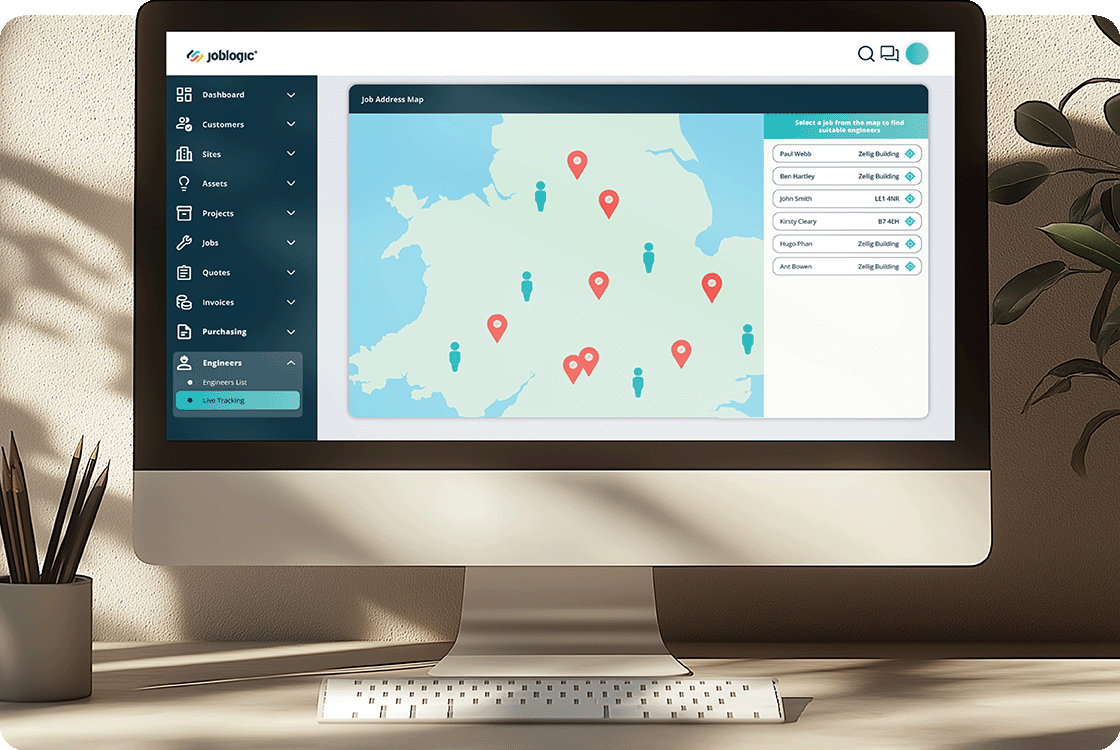
Job status is visible group-wide the moment it changes, not after a site sends in its own update. A missed appointment at any location shows up centrally before the client has to raise it.
Since adopting Joblogic in 2018, our maintenance department turnover has grown from £6.5 million to £20 million. That growth is a direct result of capturing every job, streamlining invoicing, and gaining complete visibility across the business.
One conversation about your operation. A clearer view of what comes next.
Growing business

You’ve added a second scheduler to keep up with the volume, and now two people are booking against the same engineers without seeing each other’s diary. Jobs clash, and you find out when an engineer’s already double-booked.
One engineer notes the parts used, another doesn’t. One takes photos, another forgets. Multiply that across a growing team and the job history you’re relying on for invoicing depends entirely on who did the job, not what actually happened.

By the time job status filters back to the office, whatever went wrong that morning is already a complaint. You’re managing more engineers and more jobs than ever, with less real-time visibility than when the team was half the size.
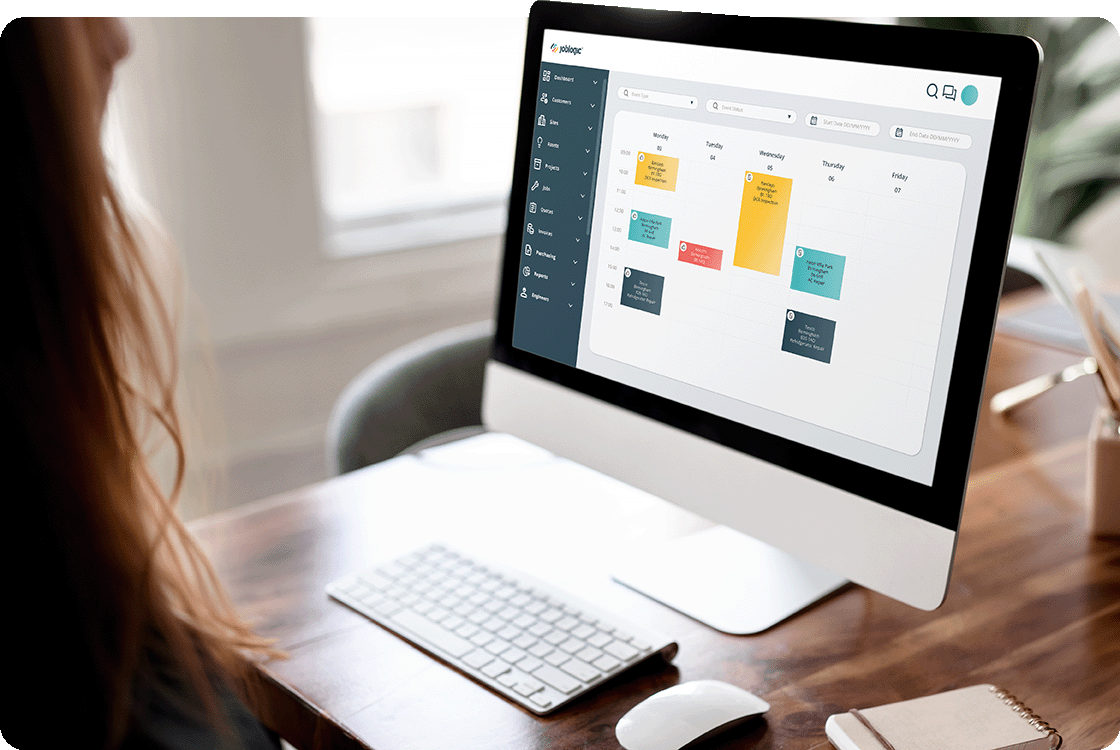
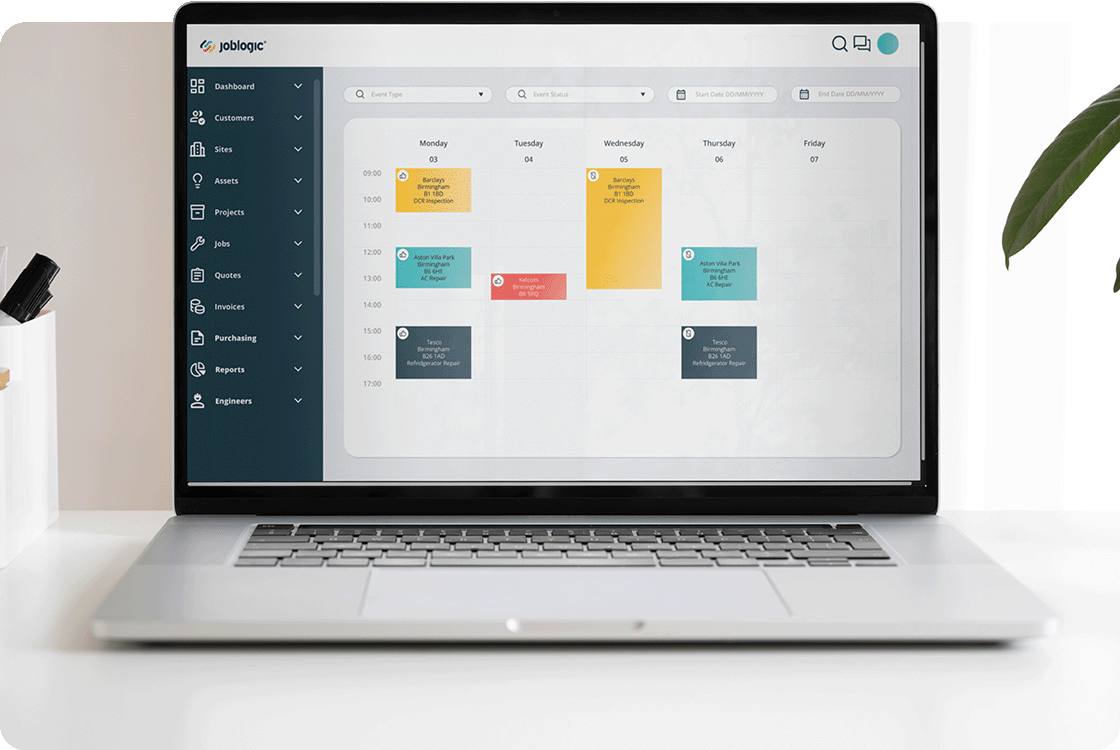
Every scheduler works from the same live diary, not their own version of it. Whoever’s planning today sees every engineer’s job, everywhere, so two people stop booking the same slot by accident.
Jobs get grouped by location and skill automatically, not worked out by whoever’s free to think about it. Engineers spend more of the day on jobs and less of it driving between them.
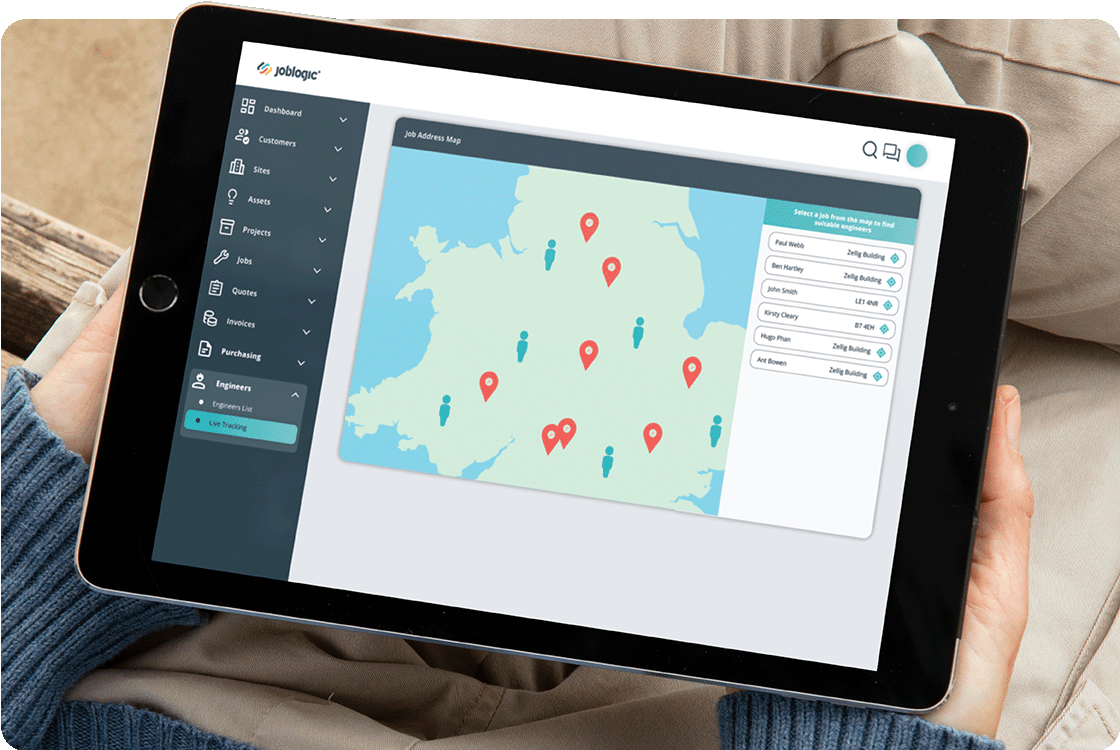
Every job’s status updates as the engineer works, visible to the whole office, not just whoever answered the phone. You see today’s jobs today, not at the end of the day.
Every engineer fills in the same digital form, not their own version of the job sheet. The parts, photos and notes on file are consistent whichever engineer did the job.
Joblogic has enabled us to provide real-time information to our clients without the need for various other software platforms. The engineers are tracked, meaning greater ETAs can be provided.
One conversation about your operation. A clearer view of what comes next.
Small business

You take the booking, write it down somewhere only you can find, and carry the rest in your head. It works, right up until you’re on a job yourself and the phone rings with something else urgent.

You’re the switchboard as much as the boss. Every engineer calls you between jobs to find out where they’re going next, and every call pulls you away from whatever you were actually meant to be doing.

The job’s done, the customer’s happy, and the paperwork sits in a van or a bag for a week before you see it. By the time you invoice, you’ve half forgotten what you actually did on site.
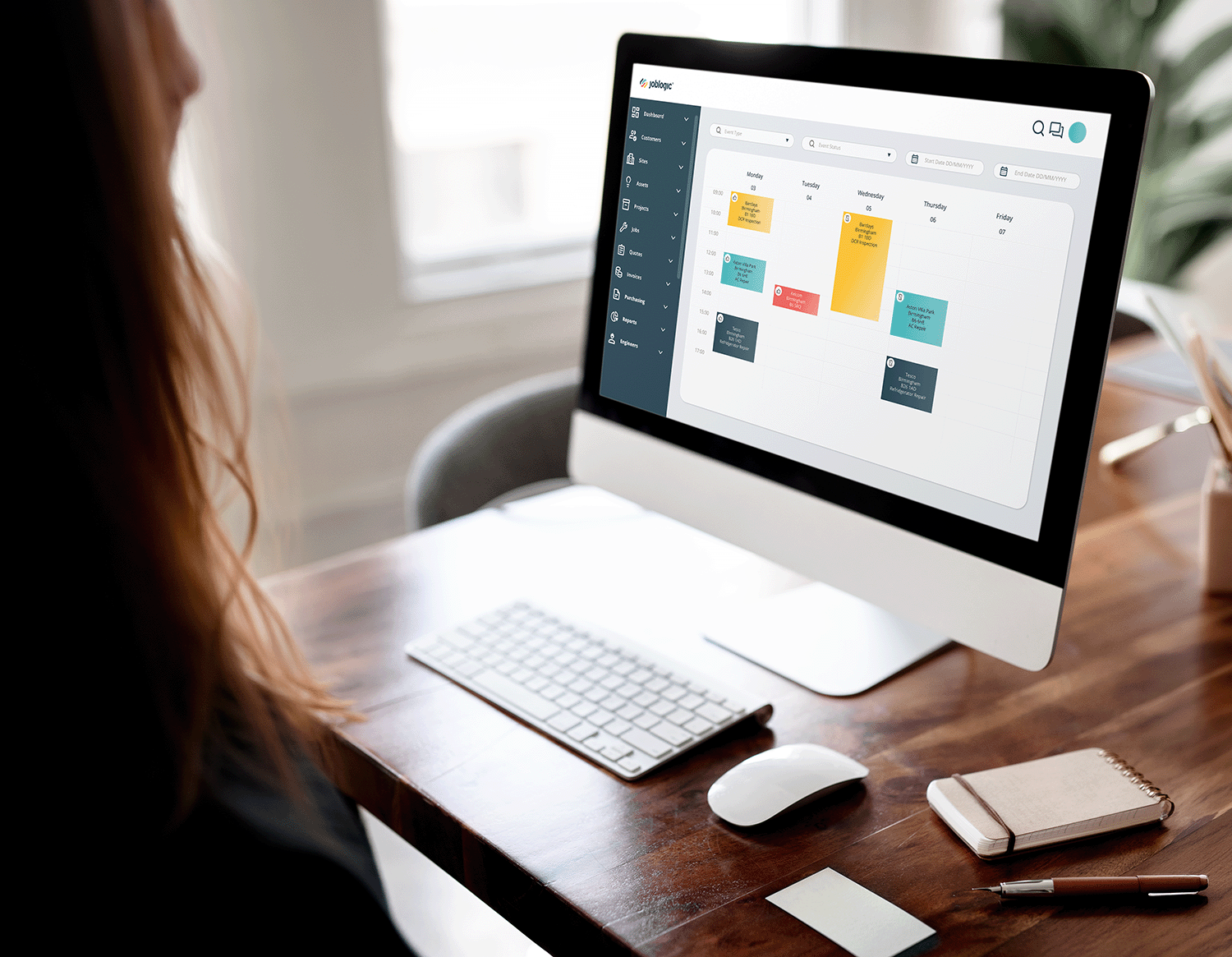
You book a job once, into a calendar you can actually see. It shows every engineer, every slot and every job at a glance, so nothing gets double-booked or forgotten between calls.
The engineer fills in the job sheet on their phone, on site, as the work happens. Parts, notes and signatures attach to the job immediately, instead of turning up in a bag a week later.
The engineer’s phone becomes the job record: address, access notes, history and the next job, all in one app. You stop being the person they ring to find out where to go.
The customer gets an automatic update when the engineer’s on the way and when the job’s done, instead of ringing you to ask. Fewer calls in, more time to actually run the job.
Thanks to Joblogic we can drill down easily on jobs and quotes. The software also links easily to accounting software, which reduces a lot of the information needing to be input manually.
One conversation about your operation. A clearer view of what comes next.
If you’re the one running the diary yourself, Standard fits. If you’ve got more than one scheduler and rising job volume, look at Premium or Enterprise instead.
Standard suits a small team where one person plans the schedule and everyone needs to see today’s jobs without extra admin layered on top.
Covers job scheduling, mobile job sheets and customer updates, so bookings, engineer status and paperwork sit in one place instead of a diary, a phone and a bag of receipts.
See Standard pricingPremium suits a growing team with more than one scheduler, where job volume and staff turnover mean consistency now matters more than raw capability.
Adds route scheduling, live job tracking and standard mobile forms, so every scheduler works from one diary and every engineer records the job the same way.
See Premium pricingEnterprise suits a multi-site or multi-contract operation that needs the same job standard enforced everywhere, with reporting that rolls up to one view.
Adds contract management, group-level reporting and dashboards, so job and SLA performance is visible across sites and contracts, not stitched together by hand each month.
See Enterprise pricingHard and soft services run across sites you rarely visit, so job status has to travel back to you, not the other way round.
See it in facilities managementA breakdown call in a heatwave has to jump the queue without wrecking the rest of the day’s planned jobs, every single time it happens.
See it in HVACRSeasonal spikes turn a manageable schedule into a queue overnight, and coping depends on scheduling that doesn’t rely on one person’s memory.
See it in plumbing, heating and drainageEvery inspection carries a legal test date, so a scheduling miss isn’t a bad day, it’s a compliance gap with a client’s name on it.
See it in fire safetyReactive callouts and planned work compete for the same engineers every day, so whichever job gets scheduled last is the one that slips.
See it in building maintenanceYes. Standard is built for a single scheduler managing the whole diary. Jobs, engineers and customer updates run from one screen, so you don’t need a second person just to keep the calendar straight.
The mobile app covers job details, job sheets, photos and signatures on a phone. No laptop needed for engineers on the road; the office view runs on desktop for planning.
Yes. Every scheduler works from the same live diary, so two people booking at the same time see each other’s changes immediately, instead of double-booking the same engineer.
Engineers fill in the same digital job sheet and forms whichever site or contract they’re on. The record doesn’t depend on which engineer happened to do the job that day.
Yes. Job, SLA and engineer data roll up into a live group dashboard automatically. Leadership doesn’t wait for sites to compile a report to see what’s happening this week.
Not identically, but every site works within the same contract, SLA and job structure at group level. Local teams keep their own routines; the standard record and the reporting stay the same everywhere.
It depends on team size and how many people schedule jobs, not headcount alone. Standard suits one scheduler, Premium suits several, Enterprise suits multiple sites needing one standard enforced across all of them.
It depends on team size, existing data and how many sites or contracts need setting up. A single-site team can be live in days; multi-site rollouts get a phased plan with a named implementation lead.
Thirty minutes on how your jobs actually get booked, scheduled and closed out today, and what changes when all of it runs from one system.