Premium dashboard, live view | Joblogic

Challenge · Customer experience and trust

Customers stop trusting you long before they say so

A job runs late, an engineer turns up without warning, or a customer chases three times for an update nobody sent. None of it gets logged as a complaint. It just quietly becomes the reason they don’t renew, and you only hear about it at the next contract review.

Joblogic connects the job, the engineer’s status and the customer update into one automatic flow, so an ETA, a delay or a finished certificate reaches the customer without anyone remembering to call. What becomes visible is which customers are happy, and which are quietly deciding not to come back.

Where does customer trust break down?

Enterprise

Across dozens of sites and contracts, customer trust becomes a satisfaction score head office sees once a quarter, by which point the client’s facilities team has already decided how the framework review is going to go.

Enterprise
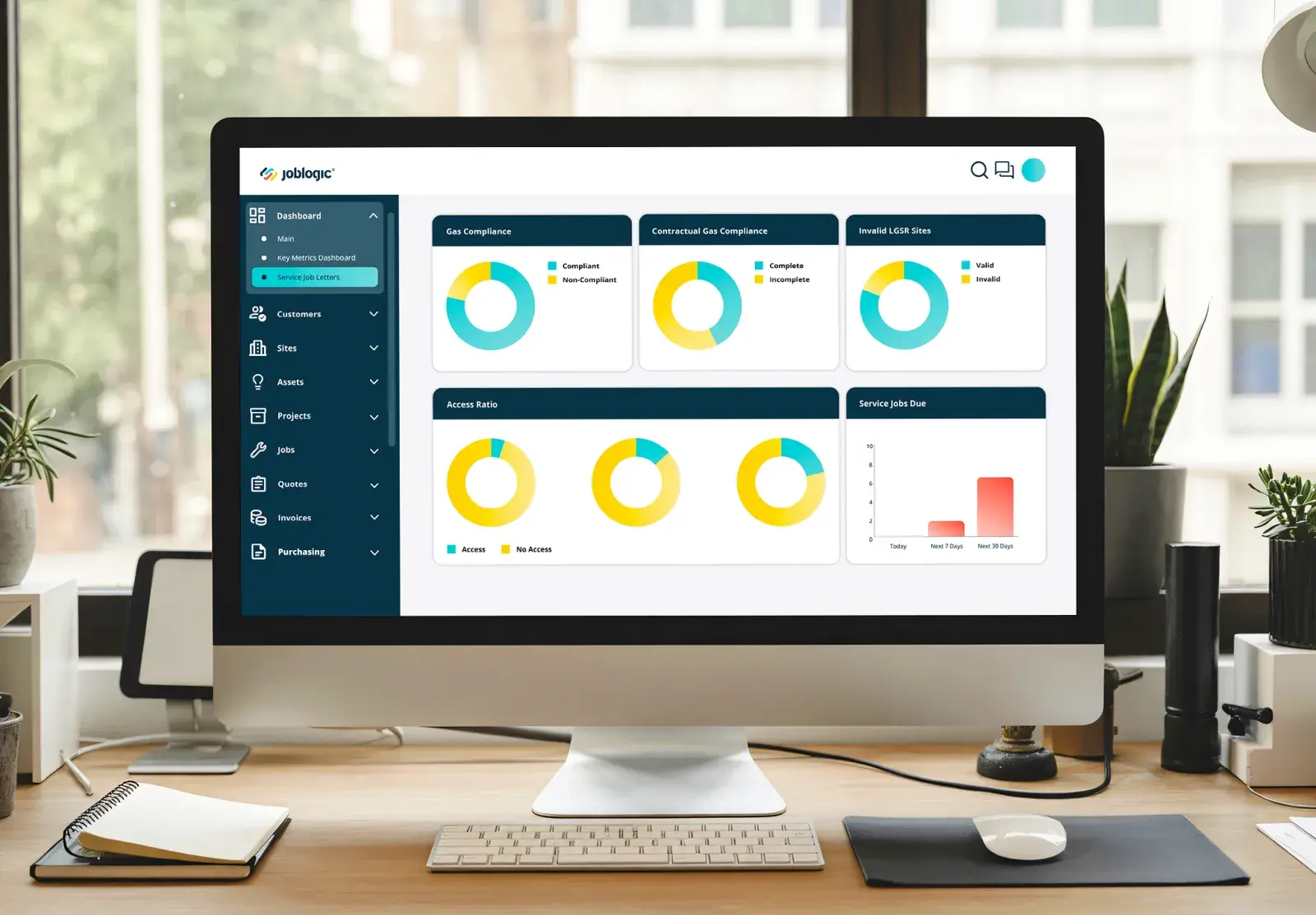
Growing business

As the team grows, some engineers text updates and some don’t, so one customer gets warned about a delay and the next one doesn’t. Nobody’s tracking who had a bad experience until the same complaint comes round twice.

Growing business

Small business

For a small team, trust is whatever you personally remember to tell the customer. Ring them with an ETA, warn them about a delay, and they trust you. Forget once, and that’s the story they tell next time someone asks who they use.

Small business

Enterprise

By the time a bad experience shows up in a satisfaction report, the client’s already decided how the contract review goes

Professional woman with red hair and glasses checking her smartphone in an office lobby

Every site handles complaints its own way

One site logs a complaint in an inbox, another mentions it verbally at a weekly call, and a third doesn’t record it at all. By the time head office asks for a group view, half the real picture never made it into any system.

Professional man in a suit at a desk with a laptop, checking his smartphone

One bad site experience colours the whole account

A client running fifty sites judges the whole framework contract on the worst one. If a single site keeps missing updates or turning up late, that reputation attaches to the account, not just the site, however well the other forty-nine perform.
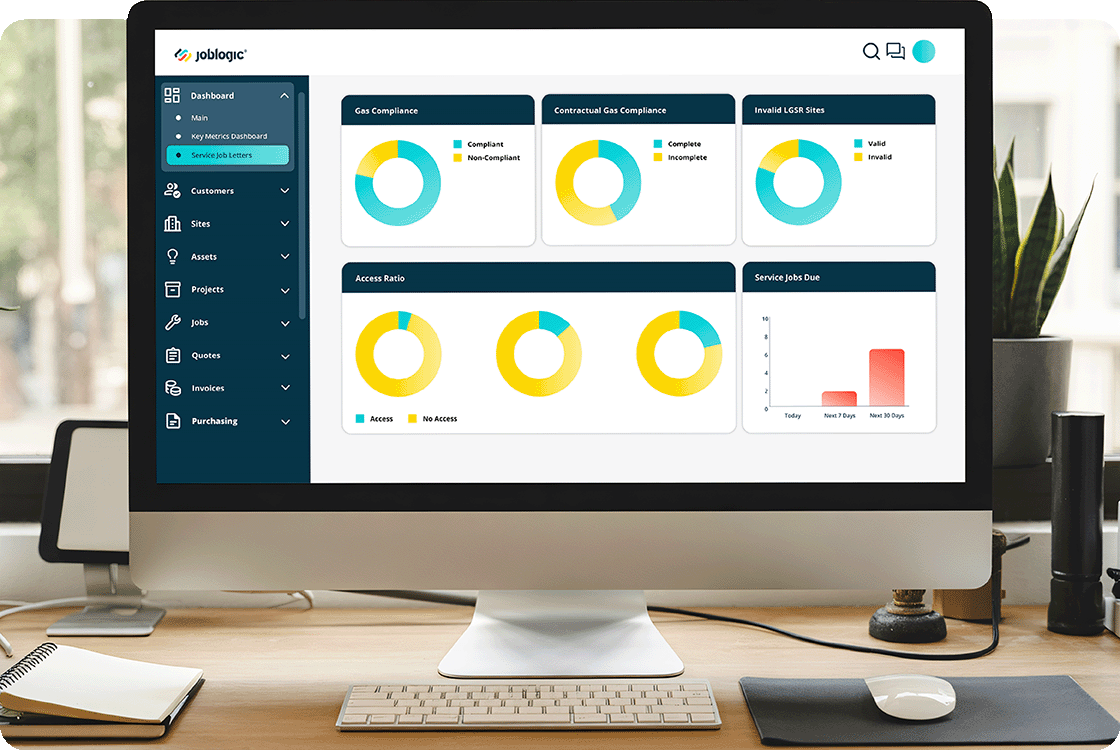
Joblogic reporting dashboard open on a desktop computer, showing KPI doughnut charts

No consistent standard across every region

Some regions text customers automatically, others rely on the engineer remembering, and a few still don’t do it at all. The client experiences three different standards under one contract, and reasonably assumes there’s only one.

One customer standard, enforced everywhere

The same experience, every region

Every client account, at every site, sees the same portal for status, certificates and history, so a national framework client gets one consistent experience, not one version per region.

See a region slipping before the client does

Complaint volume, response times and satisfaction figures roll up by site into one group dashboard, so head office sees which region is slipping before it shows up at the client’s next contract review.

The standard the client signed up to, everywhere

Every framework contract carries its own response-time and communication standard, set once at group level, so a site can’t quietly run a lower bar than the one the client actually signed up to.

Five sites, one identical experience

Automatic updates apply the same way at every site in the group, so a client with sites in five regions gets five identical experiences, not four good ones and one nobody’s checked.

99.99%platform uptime guarantee

Ready for one customer standard across every site?

One conversation about your operation. A clearer view of what comes next.

Growing business

With ten engineers on the road, some customers get a warning about a delay and some just get silence

Engineer in orange hi-vis and hard hat using a tablet on a safety platform in an industrial facility

Some engineers text, some just show up

One engineer texts the customer before every visit and another doesn’t think to, so whether a client gets a warning about a delay depends entirely on who happened to be assigned the job.
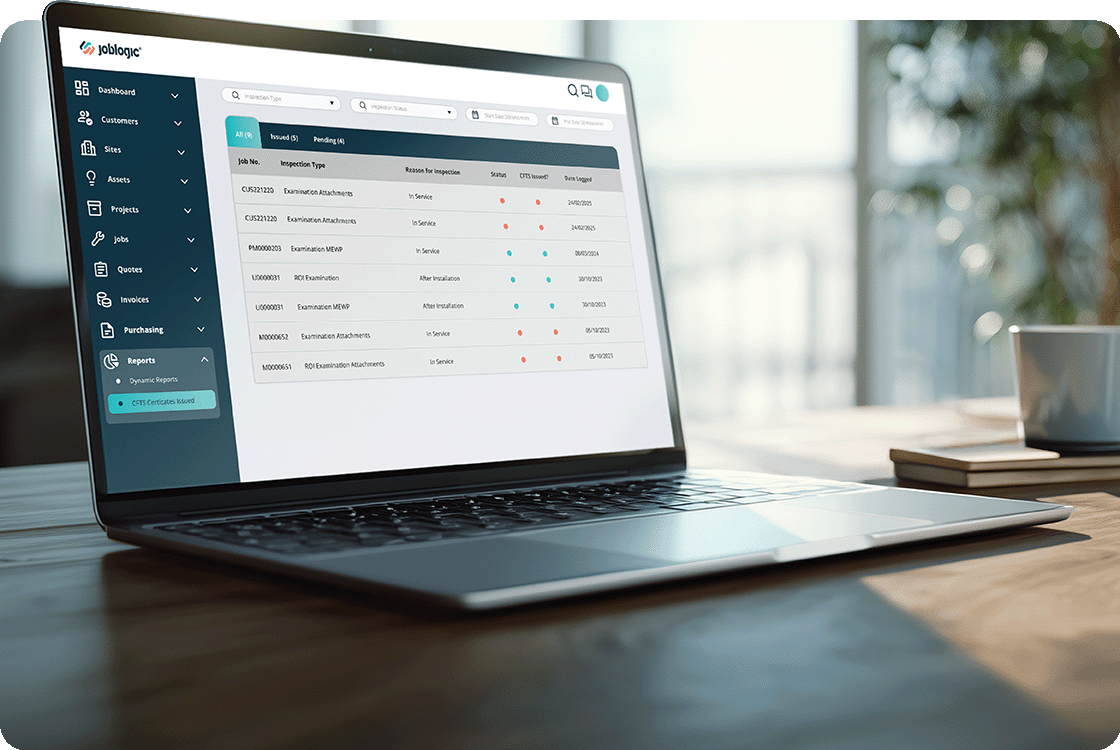
Joblogic job list table open on a laptop on a desk with a coffee cup

The same complaint keeps coming back

You hear the same complaint from three different customers in the same month and don’t connect them, because each one landed with a different scheduler who dealt with it and moved on.
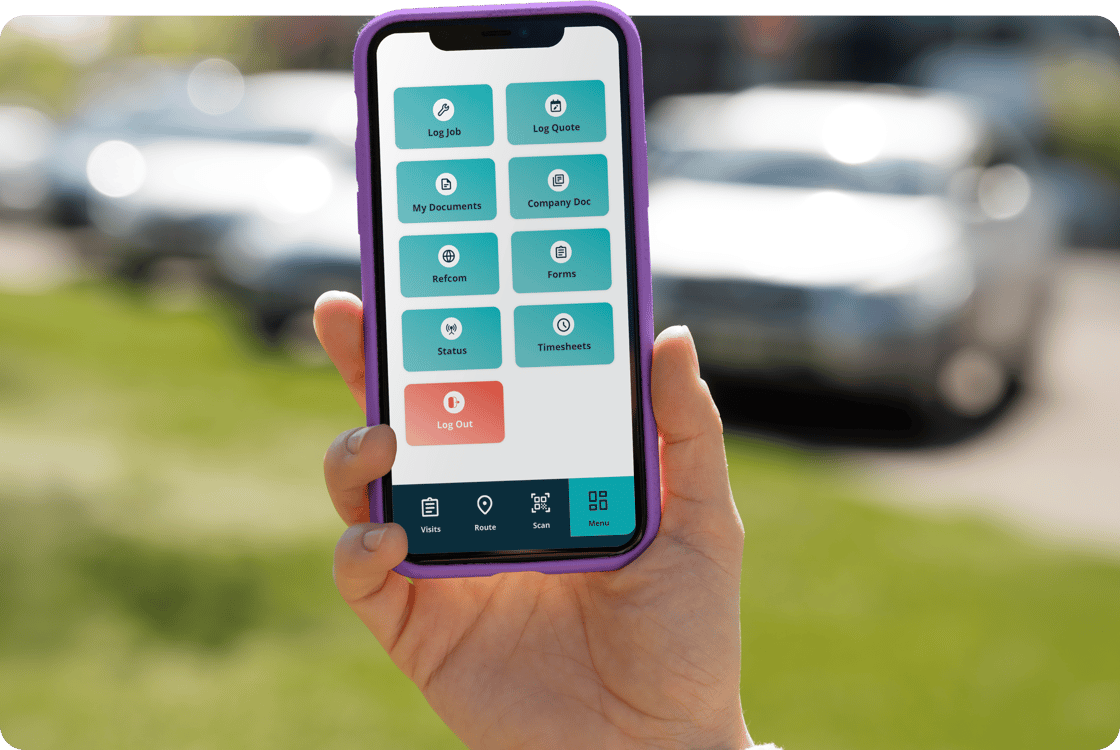
Person holding a smartphone outdoors showing the Joblogic mobile app home screen

New starters don’t know your good habits

Your best engineer has always called ahead and sent a photo when the job’s done, but nobody wrote that down as the standard, so the newest hire has no reason to know that’s what customers expect.

The same standard of update whichever engineer’s on site

The same update, whoever booked the job

Every engineer’s update goes out the same way automatically, so a customer booked through your newest starter gets exactly the same warning about a delay as one booked through your most experienced scheduler.

More customers, not more calls

Every customer on your books checks status and certificates through the same portal, so a bigger customer list doesn’t mean more calls landing on whoever picks up the phone first.

An ETA that reflects where the team is today

One live schedule shows every engineer’s real position, so the ETA a customer’s given reflects where the team actually is that day, not a guess made when the job was first booked.

See the pattern, not three separate complaints

Complaints and delays across every job roll into one dashboard, so a pattern across three different customers shows up as a pattern, not three separate calls handled by three separate people.

Joblogic has enabled us to provide real-time information to our clients without the need for various other software platforms. The engineers are tracked, meaning greater ETAs can be provided.

Chris ClaypoleMaintenance ManagerBeechcroft BMS

Ready for a consistent customer standard?

One conversation about your operation. A clearer view of what comes next.

small business

Customers only find out what’s happening if you remember to call them

Field engineer standing beside a white van in a residential street, checking his smartphone

You’re the customer’s whole update system

If a job’s running late, the only way the customer finds out is if you personally think to ring them. Forget, and the next call you get is them asking why nobody bothered to warn them.
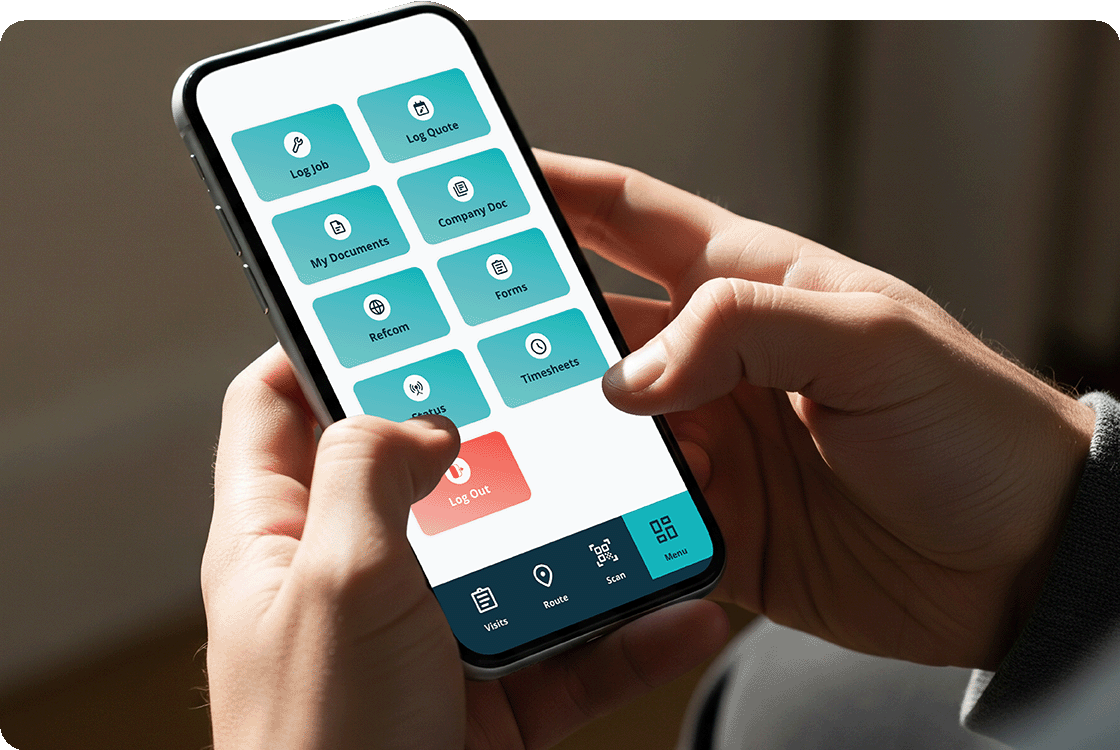
Close-up of hands holding a smartphone displaying the Joblogic mobile app home screen

A missed ETA feels like a broken promise

You said you’d be there by two, and at half past two the phone starts ringing. It doesn’t matter that the job before it overran, all the customer remembers is that you didn’t turn up when you said.

Engineer in orange hi-vis and hard hat using a tablet next to a gas pressure gauge in a plant room

You can’t prove what you promised them

Months later a customer disputes what was agreed on the phone, and it’s your word against theirs, because there was never anywhere the conversation actually got written down at the time.

Give customers an answer without a phone call

They find out before they have to ask

The customer gets an automatic message when the engineer’s on the way or running late, so you’re not the one who has to remember to ring, and they’re not the one left wondering.

Questions answered without interrupting your day

A customer can check their own job status, past visits and certificates without ringing you, so a question that used to interrupt your day gets answered by the portal instead.

Give a real answer when they ring

Every job carries a live status, so when a customer rings to ask where the engineer is, you can give them a real answer instead of a guess based on when they left the last job.

We’re saving thousands of hours every year on paperwork alone. That time goes straight back into serving clients better.

Layne TaylorService ManagerTechniFire Solutions

Ready for customers who don’t chase you?

One conversation about your operation. A clearer view of what comes next.

Which plan builds customer trust?

If you’re the one remembering to call customers yourself, start with Standard. Once several people handle updates, Premium keeps it consistent. Multi-site accounts need Enterprise-level standardisation.

Standard

Standard suits a small team where you’re still the one remembering to call customers with an update or an ETA.

Automatic customer updates and a self-serve portal mean a job’s status and certificates are visible without you personally picking up the phone every time.

See Standard pricing

Premium

Premium suits a growing team where several people update customers, and the standard needs to be the same whoever’s on the job.

Shared scheduling and automatic notifications keep every customer’s experience the same, plus dashboards that surface a complaint pattern before it repeats a third time.

See Premium pricing

Enterprise

Enterprise suits multi-site accounts where one region’s customer experience shapes how the client judges the whole framework contract.

Group-level portals, dashboards and contract-level response standards apply the same way at every site, so a client sees one experience regardless of which region they’re dealing with.

See Enterprise pricing

Where trust is won or lost by sector

Facilities Management

Tenants judge the whole contract on how quickly they hear back, so reputation rests on communication as much as the work itself.

See it in facilities management

HVACR

A heatwave breakdown call is already stressful, so how fast you communicate an ETA matters as much to the customer as the fix itself.

See it in HVACR

Catering & Hospitality

A broken fridge or oven during service is visible to every guest, so fast, clear communication becomes part of the customer’s story.

See it in catering and hospitality

Sports & Entertainment

An event doesn’t get a second chance if a system fails on the day, so the venue’s trust depends on speed and visible follow-through.

See it in sports and entertainment

Customer trust questions before you book

How do customers get updated without me making every call myself?

Automatic notifications go out when a job’s booked, when the engineer’s on the way, and when it’s finished, so most updates don’t need you to pick up the phone at all.

Can I prove what I told a customer if they dispute it later?

Anything sent as an automatic notification or logged on the job record has a timestamp attached. A conversation that happened purely over the phone, outside the system, still isn’t recorded, and that’s a genuine limit.

How do you stop one engineer’s habits being the only good ones?

The notification and update rules apply to the job, not the person doing it, so a job assigned to a new starter triggers exactly the same customer communication as one assigned to your most experienced engineer.

How would I even notice a complaint pattern across different customers?

Every job and its outcome sit on one dashboard, so three complaints logged by three different schedulers about three different customers still show up next to each other, instead of staying three separate, unconnected conversations.

Can head office see a satisfaction problem before the client raises it?

Complaint volume and response times roll up by site into a group dashboard, so a region falling behind shows up there before it reaches a quarterly business review or a framework renewal conversation.

Can every site actually be held to the same standard?

The notification and portal rules are set once at contract or group level, so a site can’t quietly run its own version. Legacy processes at a newly acquired or migrating site are the honest exception while that transition happens.

Which plan actually improves customer trust for us?

It depends on who’s currently doing the updating. One person calling customers themselves usually fits Standard, a growing team needing consistency fits Premium, and multi-site accounts need Enterprise-level standardisation across every region.

How quickly do customers actually notice things have changed?

Automatic notifications start from the first job logged after go-live, so customers notice within days. Fixing a reputation that’s already been damaged by past experience takes longer, and depends on the relationship, not the software.

See what your customers actually experience

Thirty minutes on how updates, ETAs and certificates currently reach your customers, and what a consistent standard would change however many sites or engineers you run.